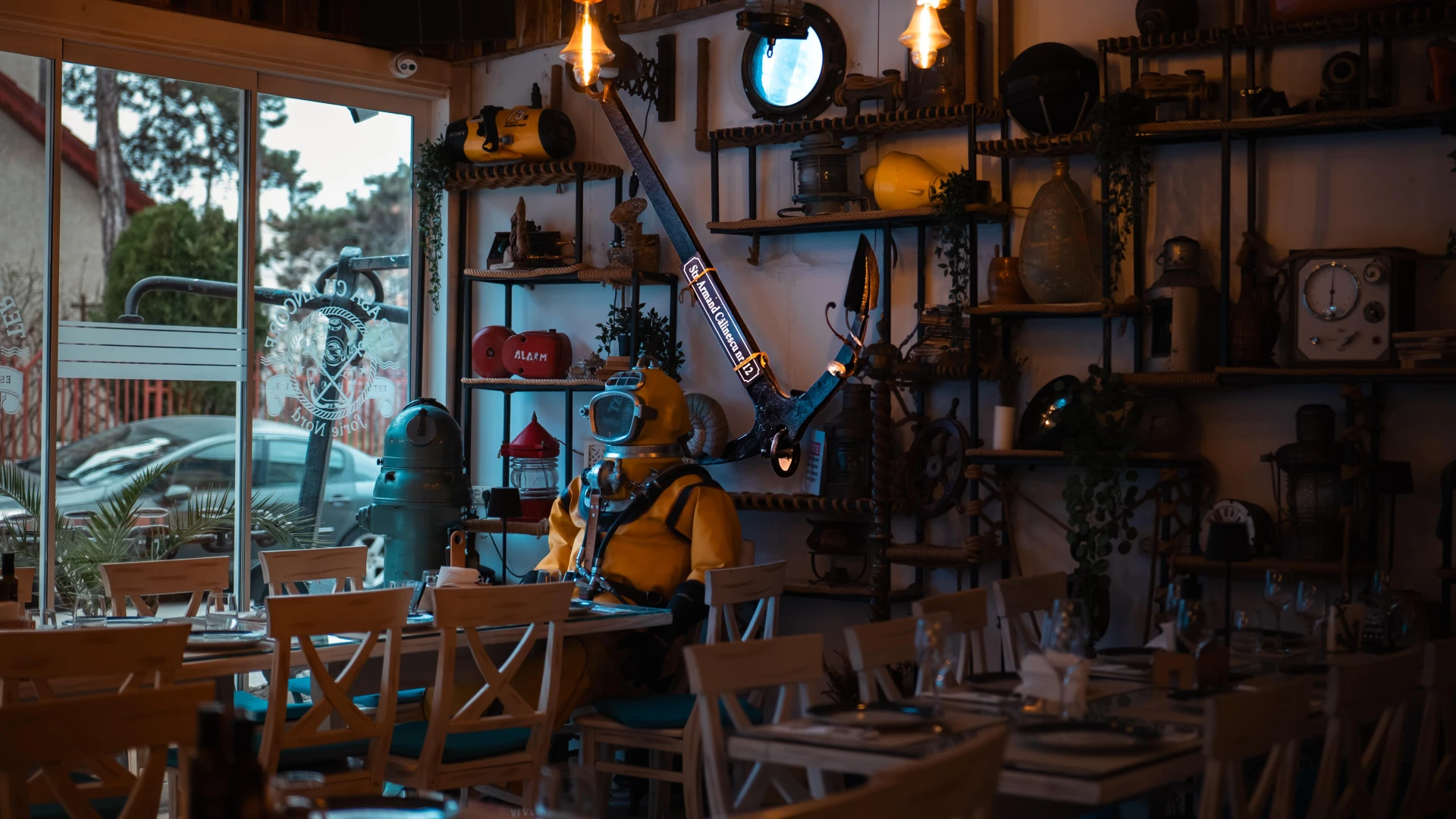
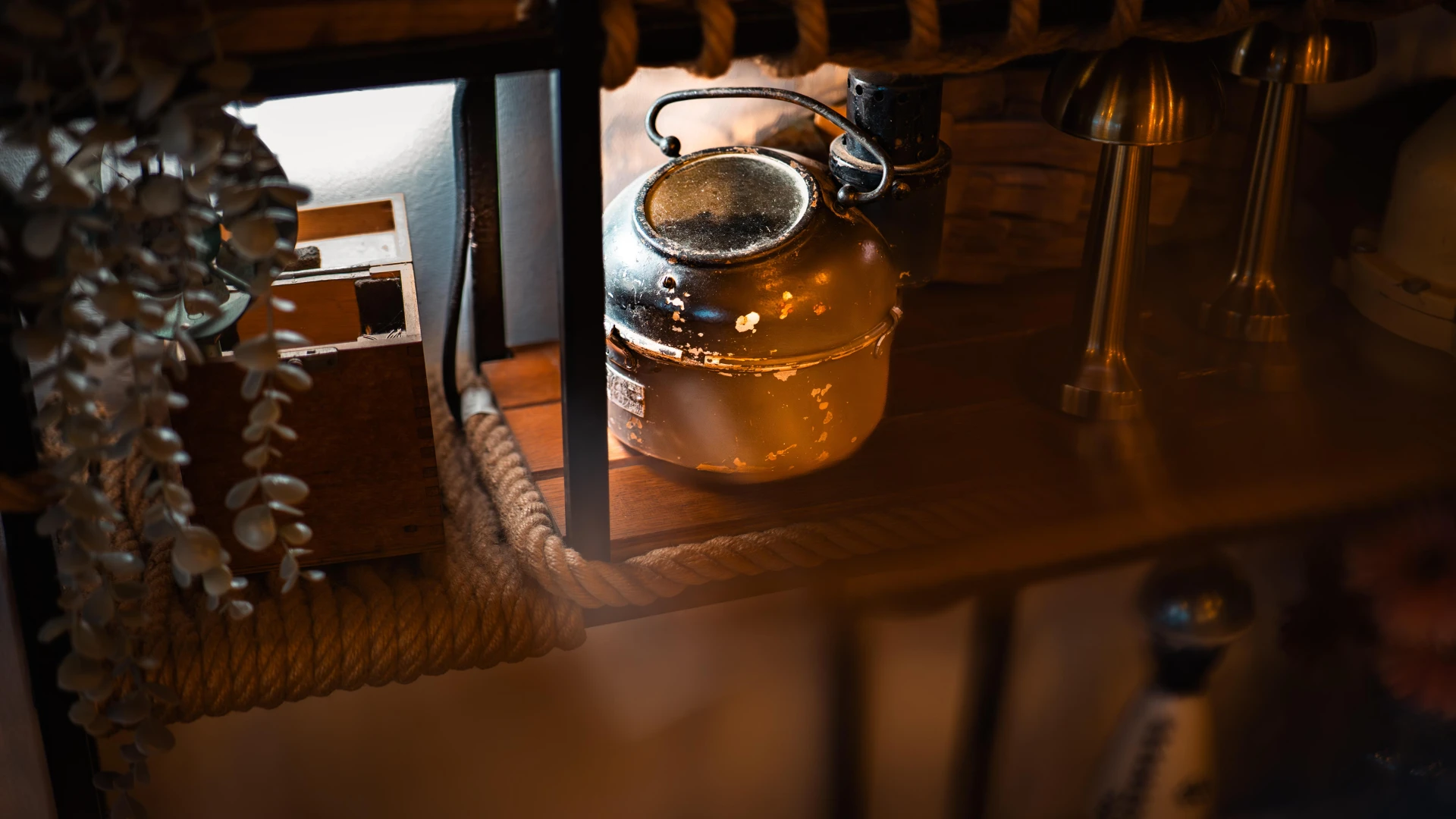
This Admiralty anchor is a crucial element in maritime navigation, widely used on commercial and military vessels to ensure stability during anchoring. With its classic design, it is renowned for its reliability and durability in all sea conditions. Recovered and restored, this historical piece stands as a reminder of maritime traditions and the importance of safety at sea.
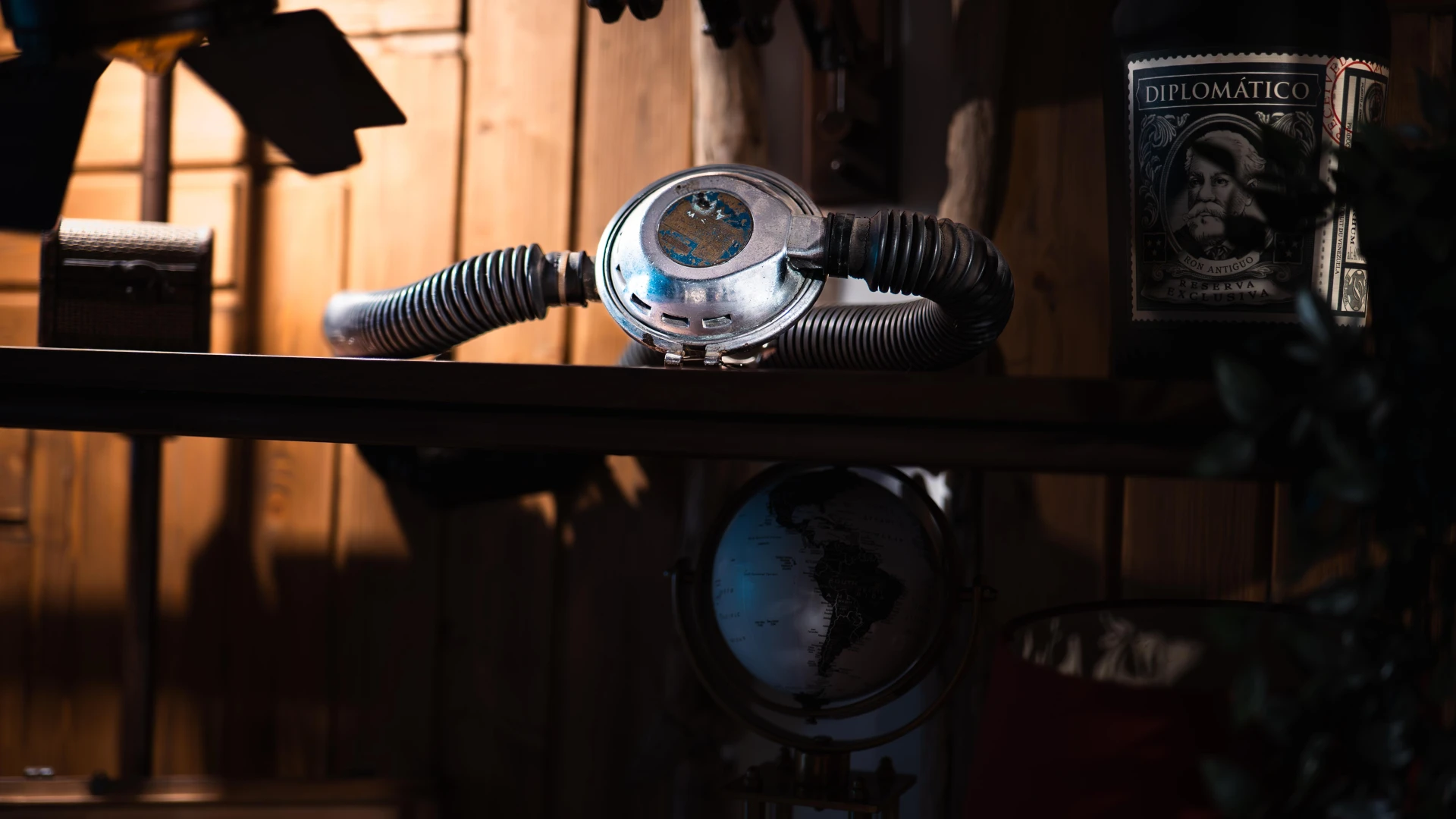
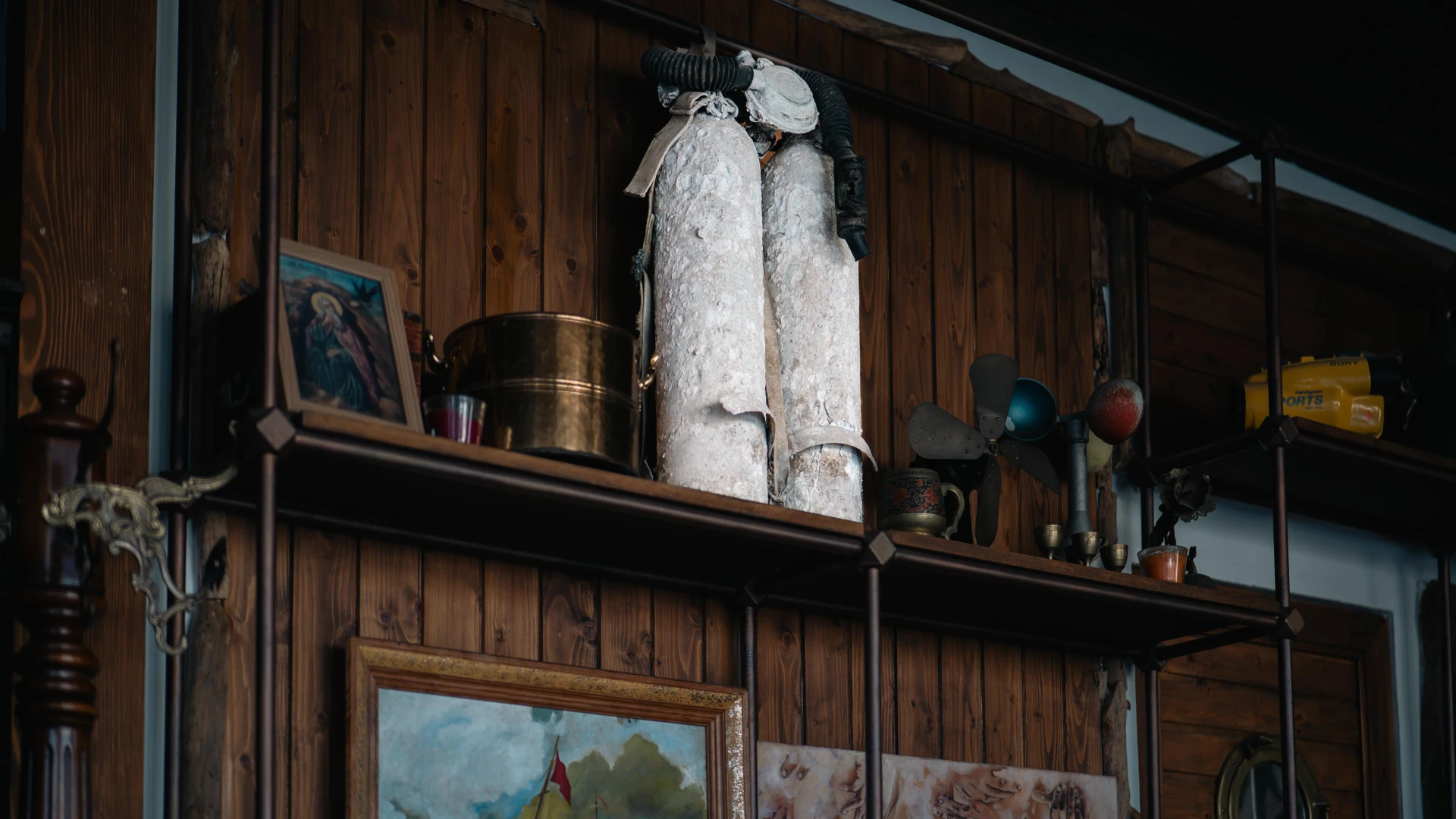
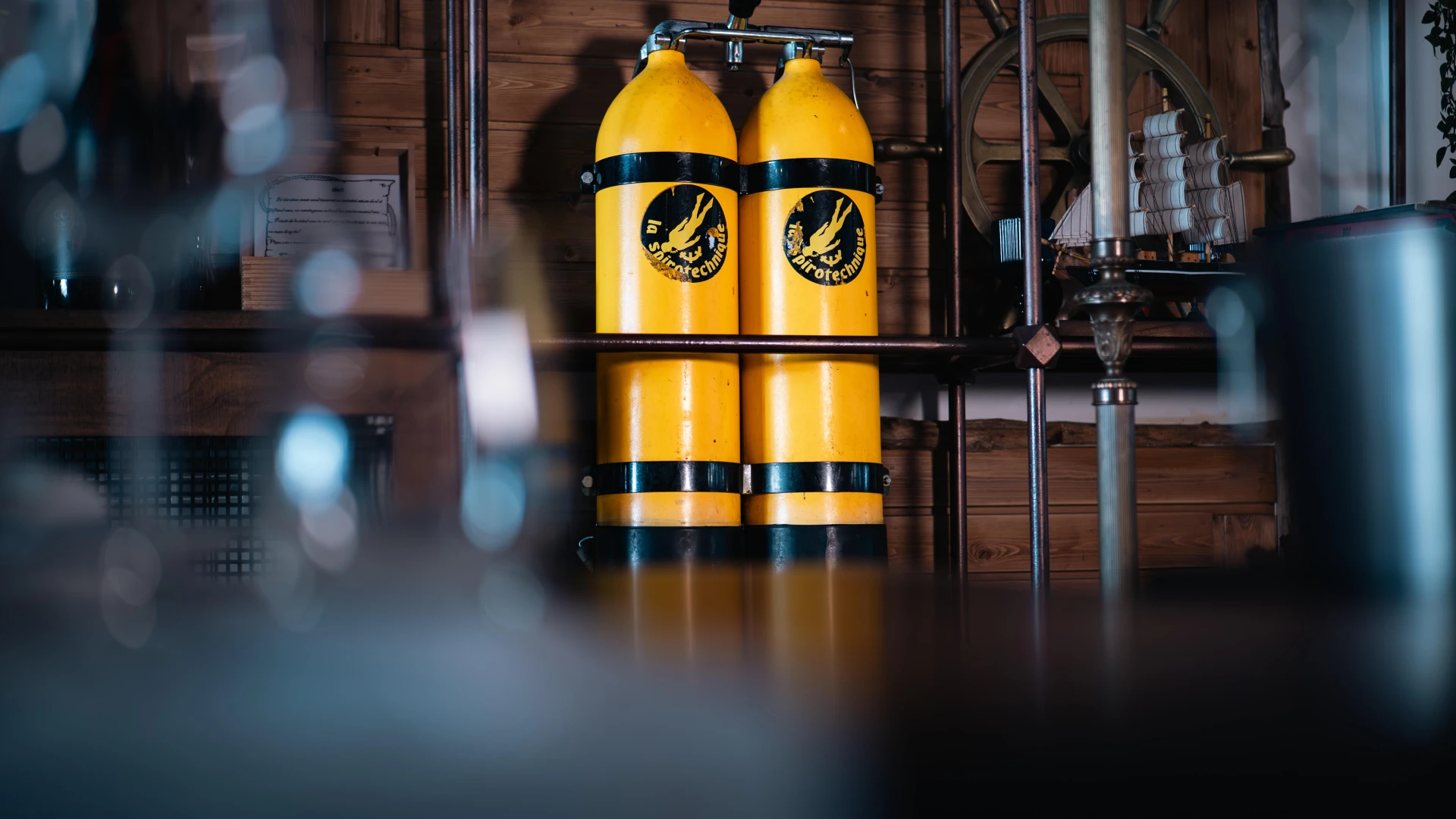
This aluminum double cylinder, equipped with a Mistral regulator, was part of the revolutionary diving equipment used by the legendary explorer Jacques-Yves Cousteau. Manufactured by Spirotechnique, this piece played a crucial role in shaping modern diving by providing divers with an optimized compressed air supply for underwater exploration. This particular unit was recovered from the Black Sea by military diver Haralambie Ștefan, serving as a rare testament to diving history and technological advancements. A remarkable artifact, now exhibited at Terasa cu Ancore.
This naval telephone switchboard, equipped with a dynamo, was used on military, commercial ships, and submarines to ensure reliable internal communications. Designed for maximum reliability in extreme conditions, it allowed crew members to stay connected across key ship compartments, even in the event of a power failure. Its robust system and moisture-resistant technology made it a standard in maritime communications. Now displayed at Terasa cu Ancore, it showcases the evolution of naval technology.
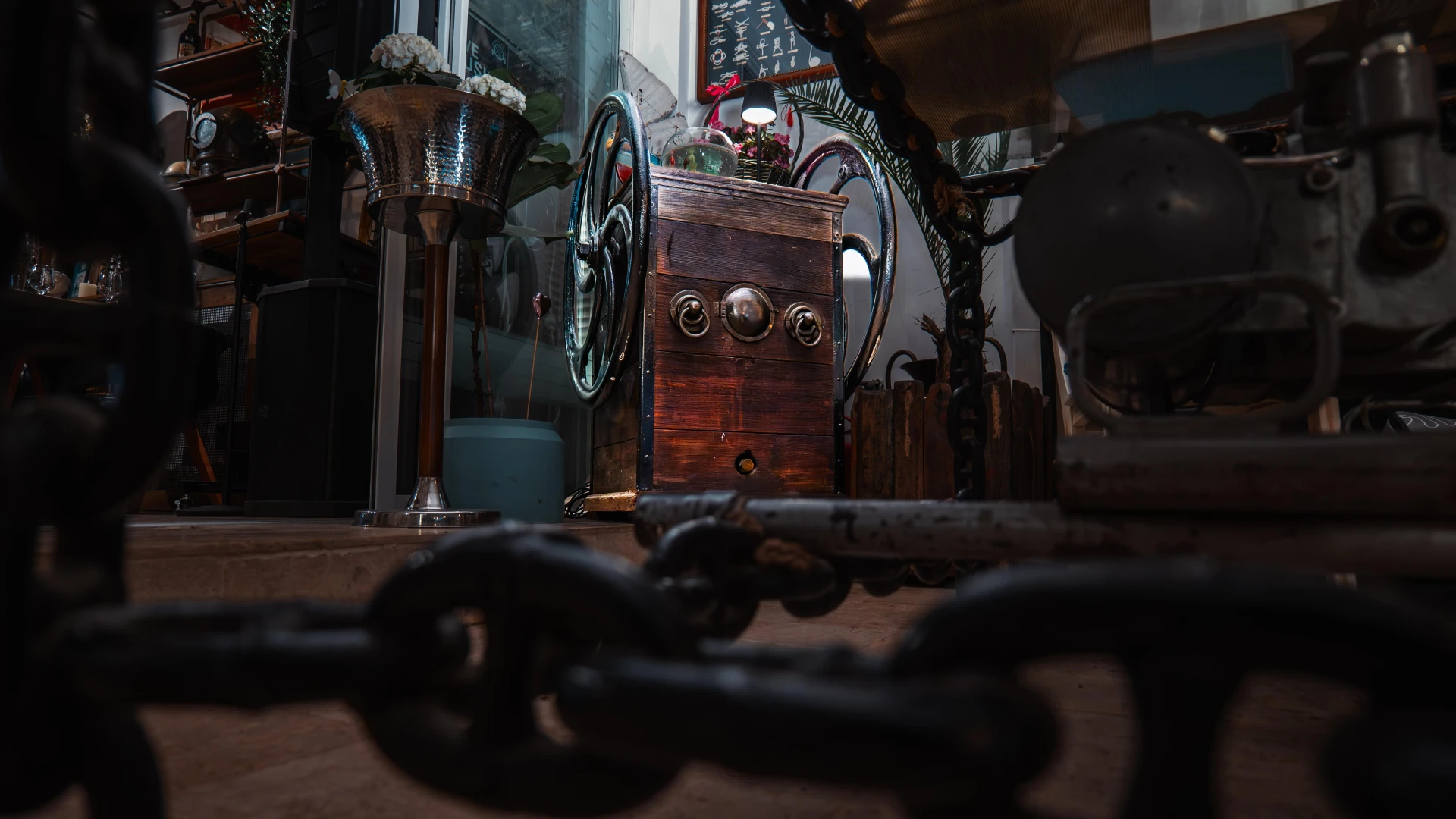
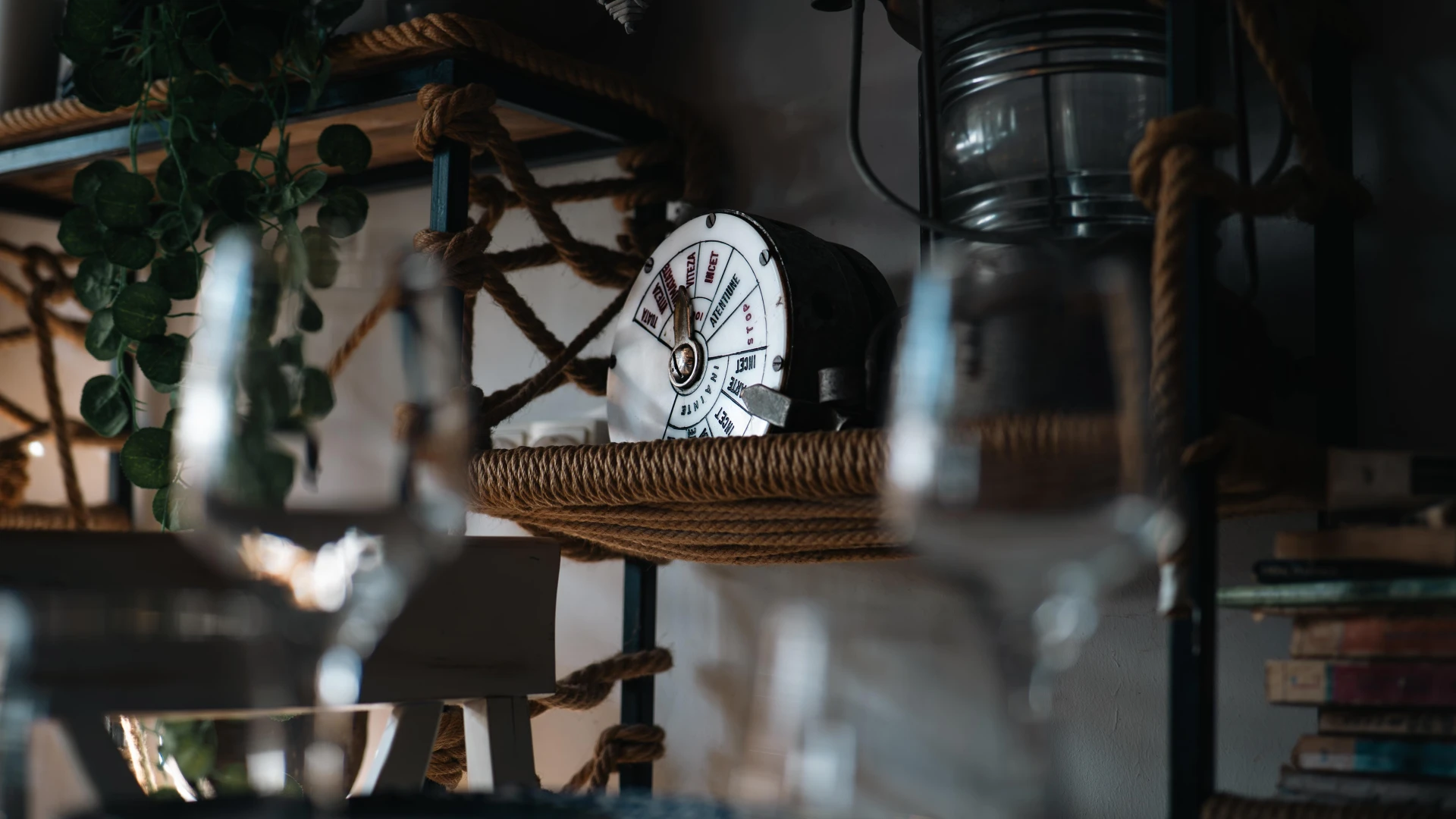
This manual engine order telegraph, built by Eiwa Seiko Co. Ltd., was used to transmit orders from the bridge to the engine room. A key component in traditional maritime navigation, this British model ensured precise control over ship operations before being replaced by modern electronic systems. With its durable design and mechanical precision, it played a crucial role in ship maneuvering and safety. Now displayed at Terasa cu Ancore, it remains a remarkable piece of maritime engineering.
This naval speaker was part of traditional onboard communication systems, used on commercial and military vessels. Built to withstand harsh maritime conditions, it ensured clear message transmission among the crew. Its durable design highlights the importance of coordination and safety at sea, making it a crucial element of shipboard life. Now preserved at Terasa cu Ancore.
This Pragotron ship clock, manufactured in former Czechoslovakia, was used by a ship commander in the control room of a commercial vessel. The ZPA Pragotron model was known for its accuracy and was widely used in train stations, factories, and public institutions across Eastern Europe from the 1950s-60s. Its industrial design and robust mechanism showcase the reliability and technology of its era. A genuine maritime historical piece.
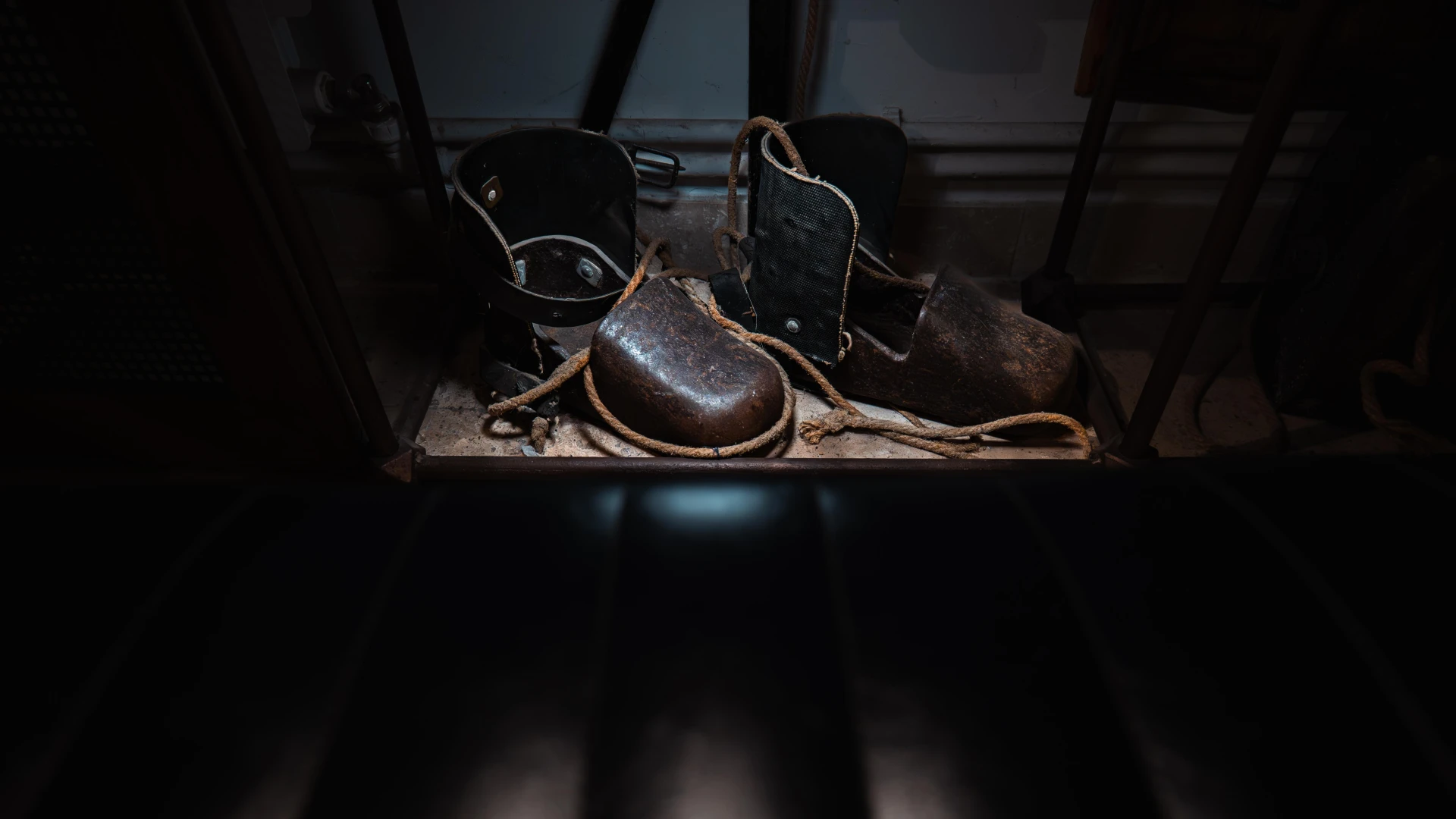
These heavy Russian diving boots, made of solid cast iron and weighing around 10 kg, were essential for professional divers to maintain balance underwater. Their robust design showcases the engineering excellence of past underwater exploration equipment. A true maritime relic, now displayed at Terasa cu Ancore.
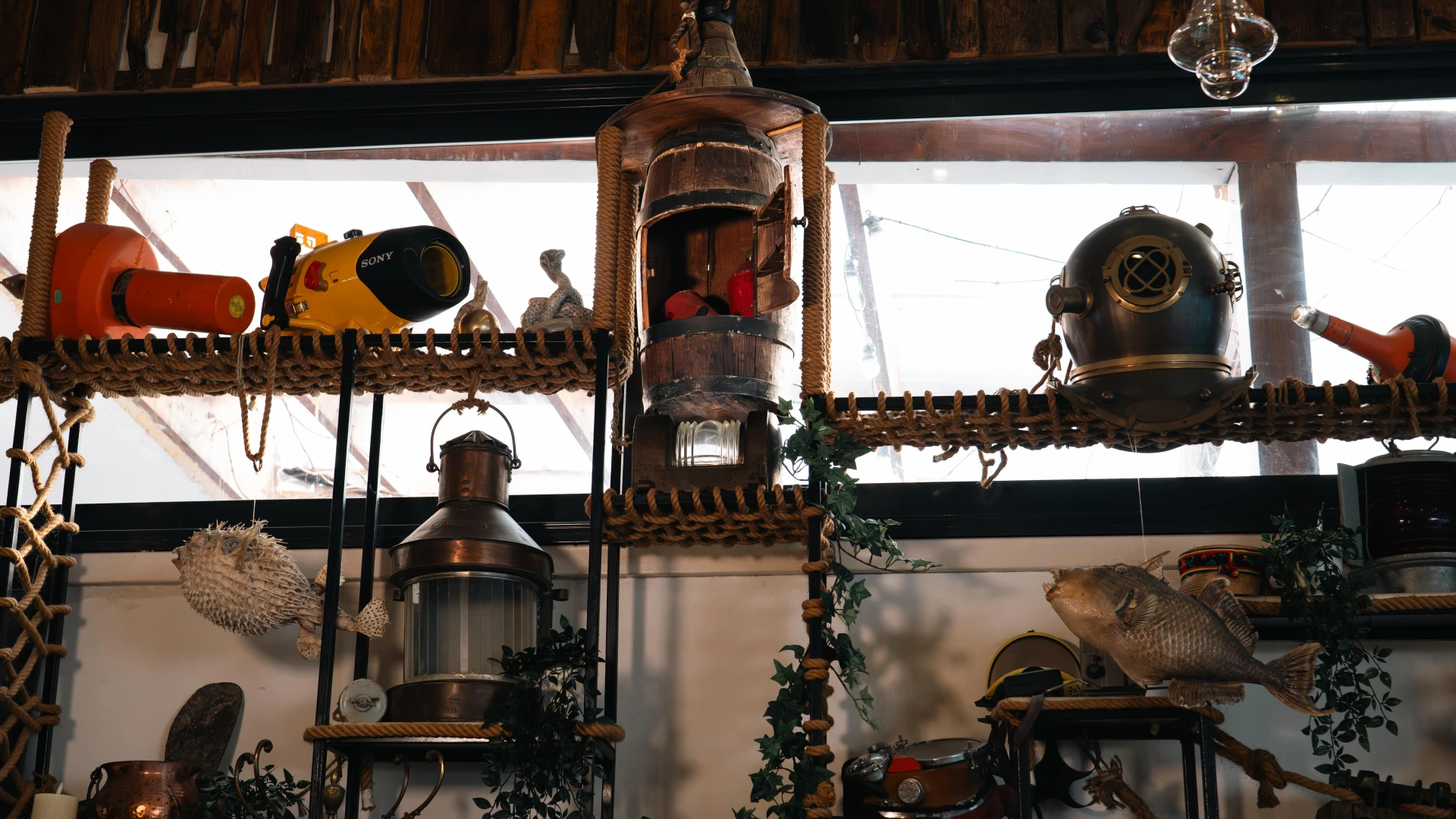
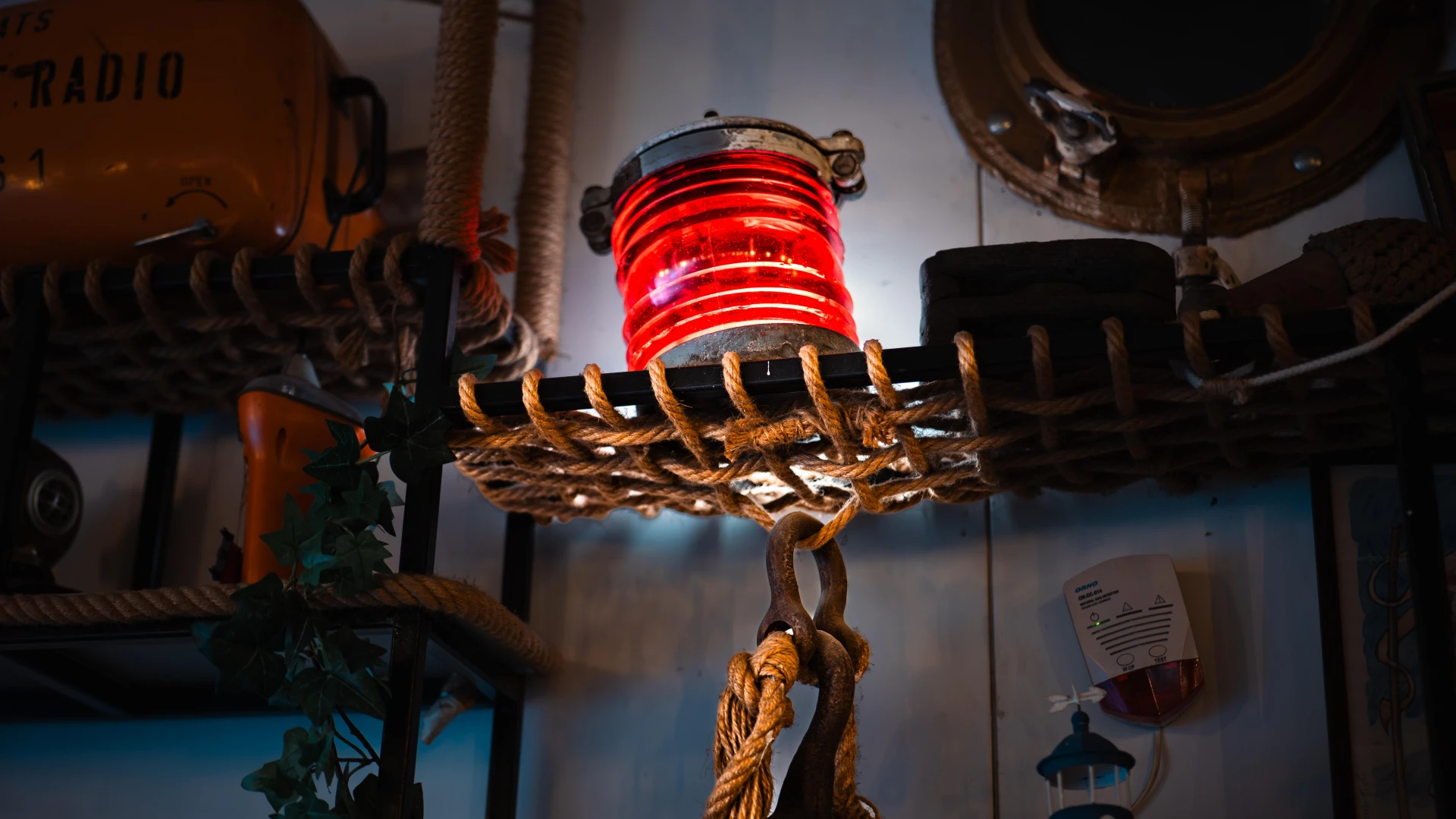
This red navigation light was used for indicating a vessel’s direction at night or in low visibility conditions. Placed on port or starboard, it played a critical role in collision prevention and compliance with international maritime regulations. Built with thick resistant glass and a durable metal casing, this light remains a symbol of safety and orientation at sea.
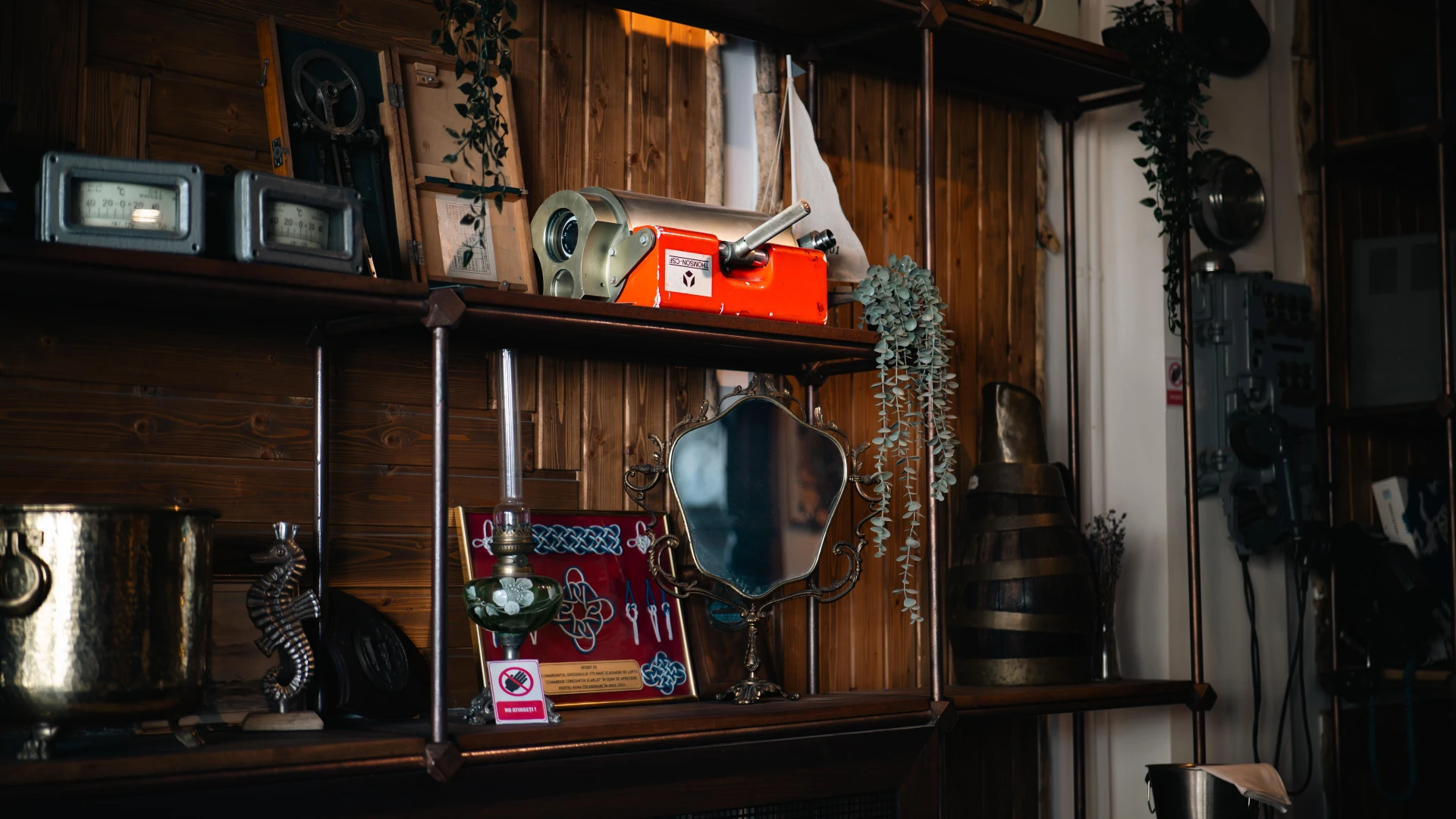
This underwater camera housing, designed by Spirotechnique, was used for marine exploration and underwater operations. It features surface-supplied power, while its optical and electronic system was developed by Thomson-CSF, ensuring high-quality imaging even at great depths. Equipped with a buoyancy compensator and ergonomic handle, it provided stable control underwater. A remarkable innovation in diving technology, now displayed at Terasa cu Ancore.
This bronze ship wheel, dating back to the 1950s, belonged to a steam-powered commercial vessel, representing the golden age of maritime trade. Crafted with exceptional engineering, it played a crucial role in steering and maneuvering ships through vast oceanic routes. Built for endurance and precision, these wheels were designed to withstand the harshest sea conditions. Today, this historic artifact is displayed at Terasa cu Ancore, preserving the legacy of classic navigation.
This watertight maritime telephone was a crucial device for emergency communication on military and commercial ships. Built with a shockproof and waterproof metal casing, it was used on decks and in engine rooms, ensuring clear transmission of commands even in extreme conditions. Featuring a moisture-proof system, this robust model played a key role in secure onboard communications for decades.
This naval telephone exchange was a vital communication system used on military and commercial ships, ensuring efficient crew coordination. Built to withstand extreme humidity and vibrations, it was commonly installed on submarines and warships for reliable signal transmission even in harsh conditions. Now a historical naval artifact, this resilient piece of maritime technology is displayed at Terasa cu Ancore, showcasing traditional naval communication methods.
A maritime pilot ladder, known as a Pilot Ladder, has been transformed into a stunning display showcasing over 120 varieties of rum. This authentic nautical piece, once used for boarding ships, is now an iconic design element at Terasa cu Ancore. A true symbol of maritime adventure and exotic refinement.
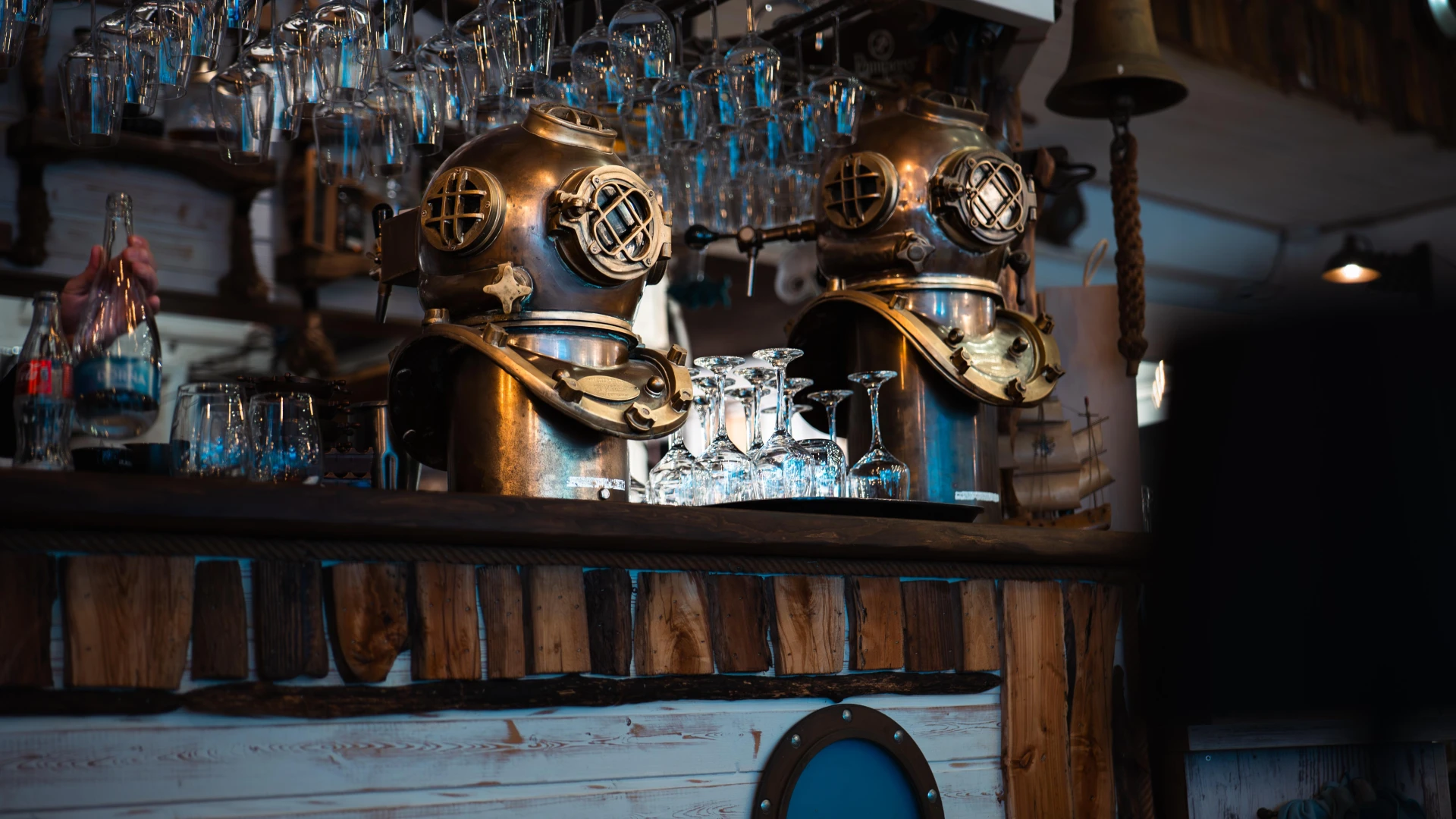
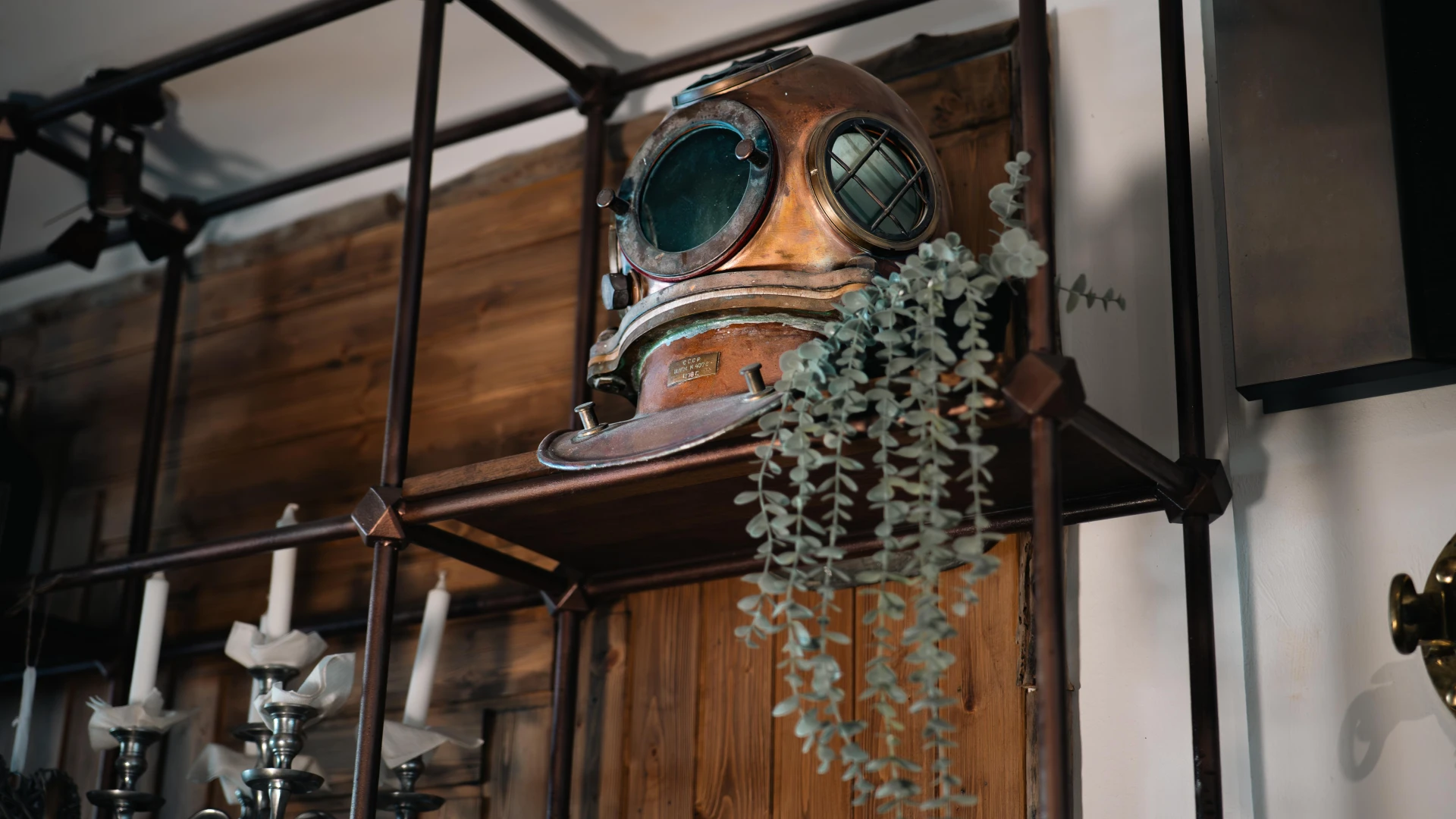
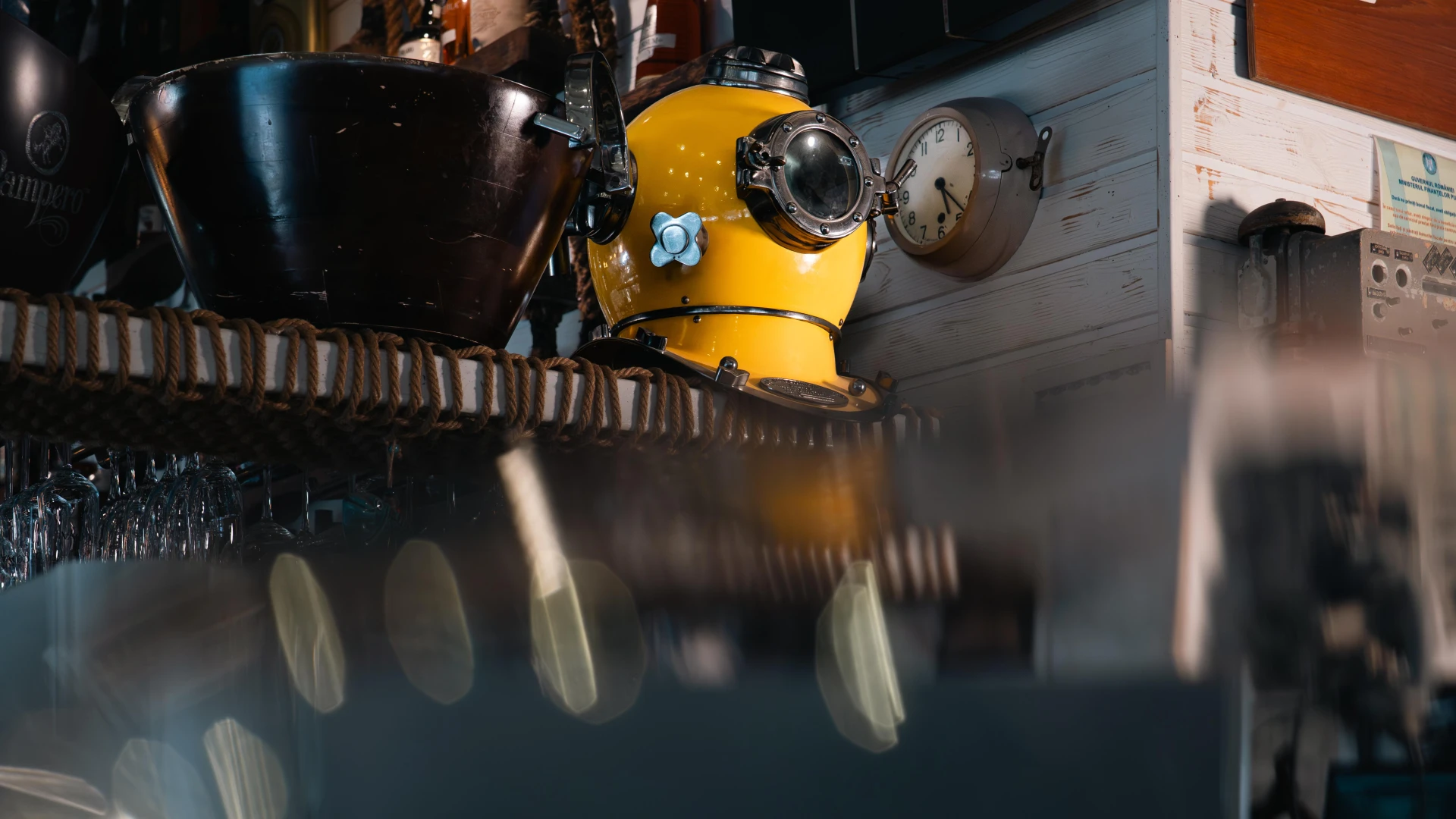
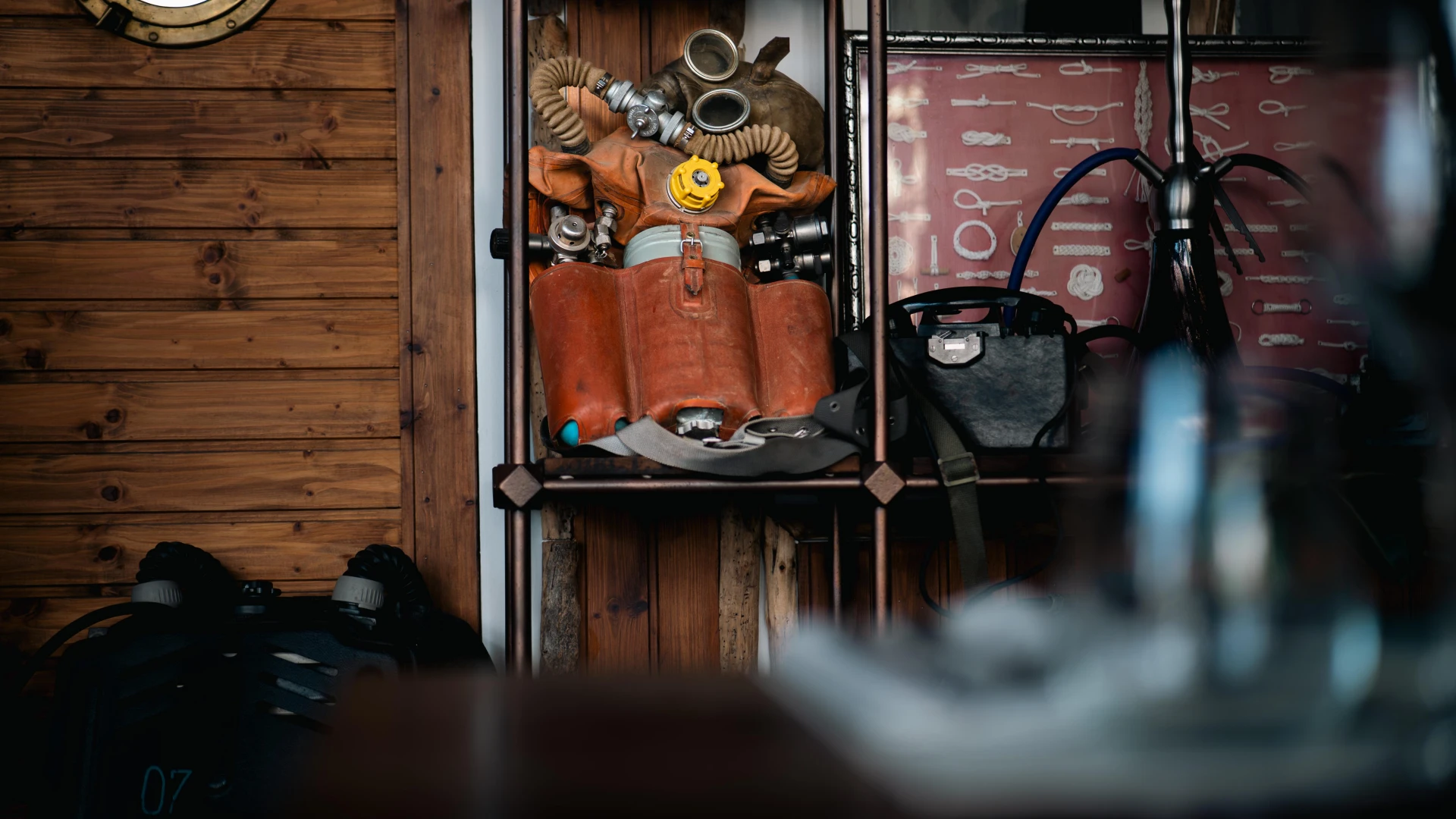
This Russian heavy diving gear includes a suit that is over 100 years old, originally used in industrial underwater operations, paired with a Russian helmet from 1981. The lead-plated vest provides stability at depth, while the robust metal helmet ensures protection and underwater communication. This set is a remarkable example of Soviet maritime engineering, used successfully by professional divers in extreme underwater conditions.
The Aalborg RT 144C marine radio, manufactured in Denmark, was used for VHF communication on commercial and military vessels. With a durable design and adjustable frequencies, this system ensured clear and stable transmissions, even in harsh maritime conditions. As a crucial tool for safe navigation, it enabled ships to stay connected with ports and other vessels. This historic piece, a symbol of reliability in maritime radio communication, is now displayed at Terasa cu Ancore.
This wooden nautical pulley, over 200 years old, was an essential tool on sailing ships, used to hoist sails and lift heavy objects. Crafted from solid wood and metal, this robust mechanism was widely employed on merchant and military vessels, showcasing durability and efficiency in extreme maritime conditions. A true relic of traditional naval engineering.
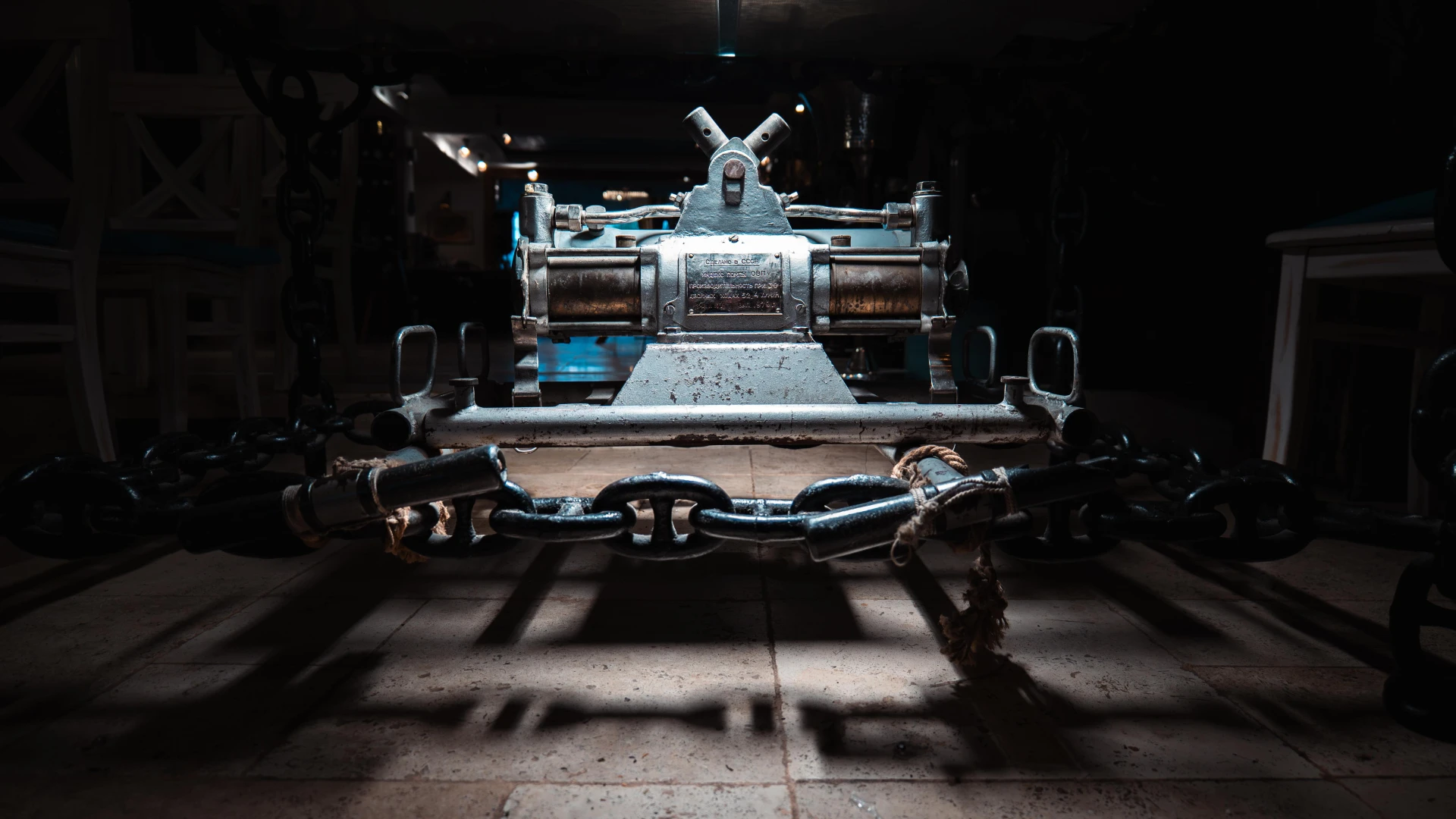
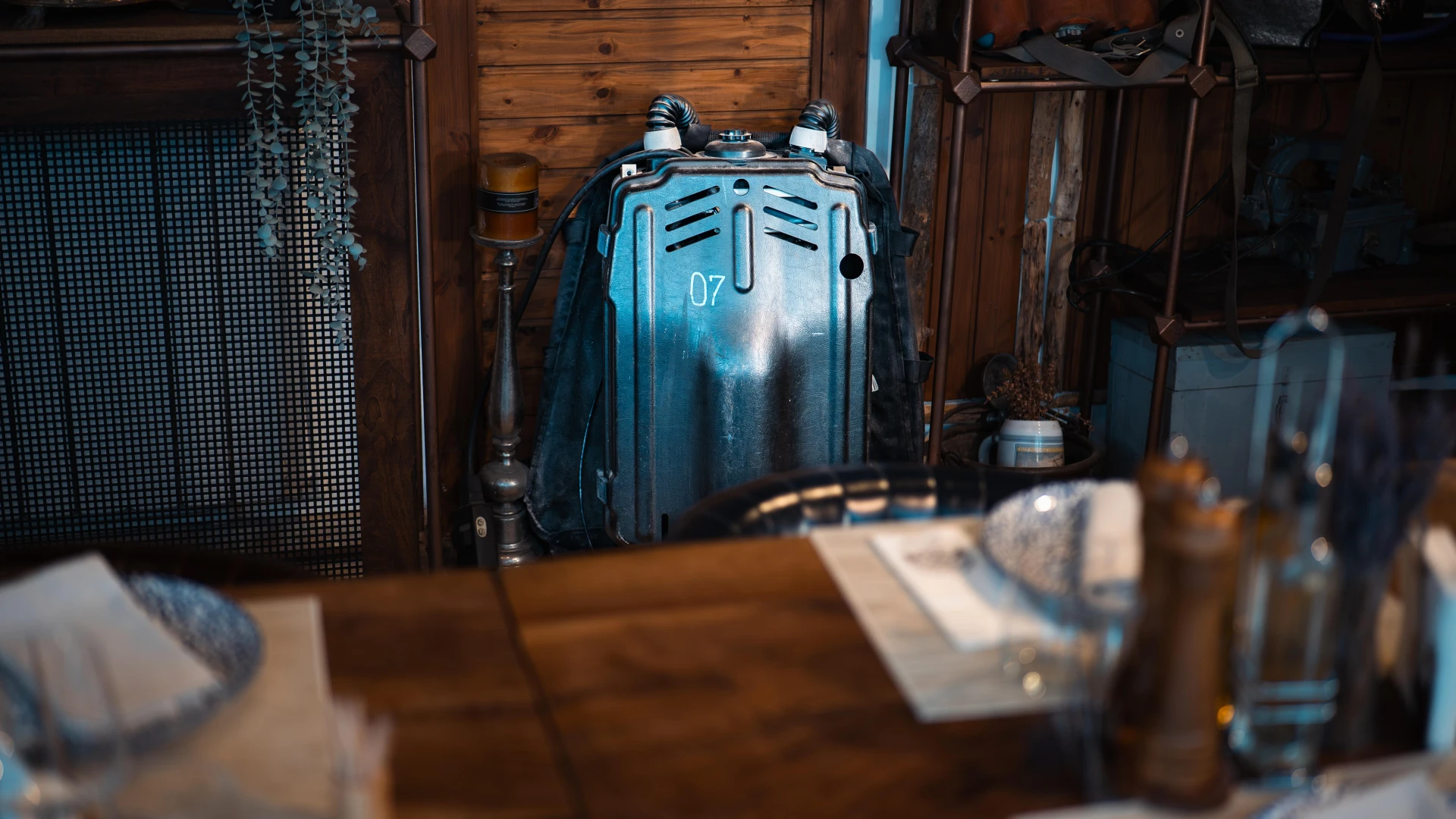
This Russian air compressor, designed for a single diver, was used on small boats and vessels. Built from durable metal, it was manually operated to provide breathable air during dives. Its compact and efficient design made it ideal for individual underwater missions, ensuring a steady air supply in demanding environments. A crucial relic of past diving technology.
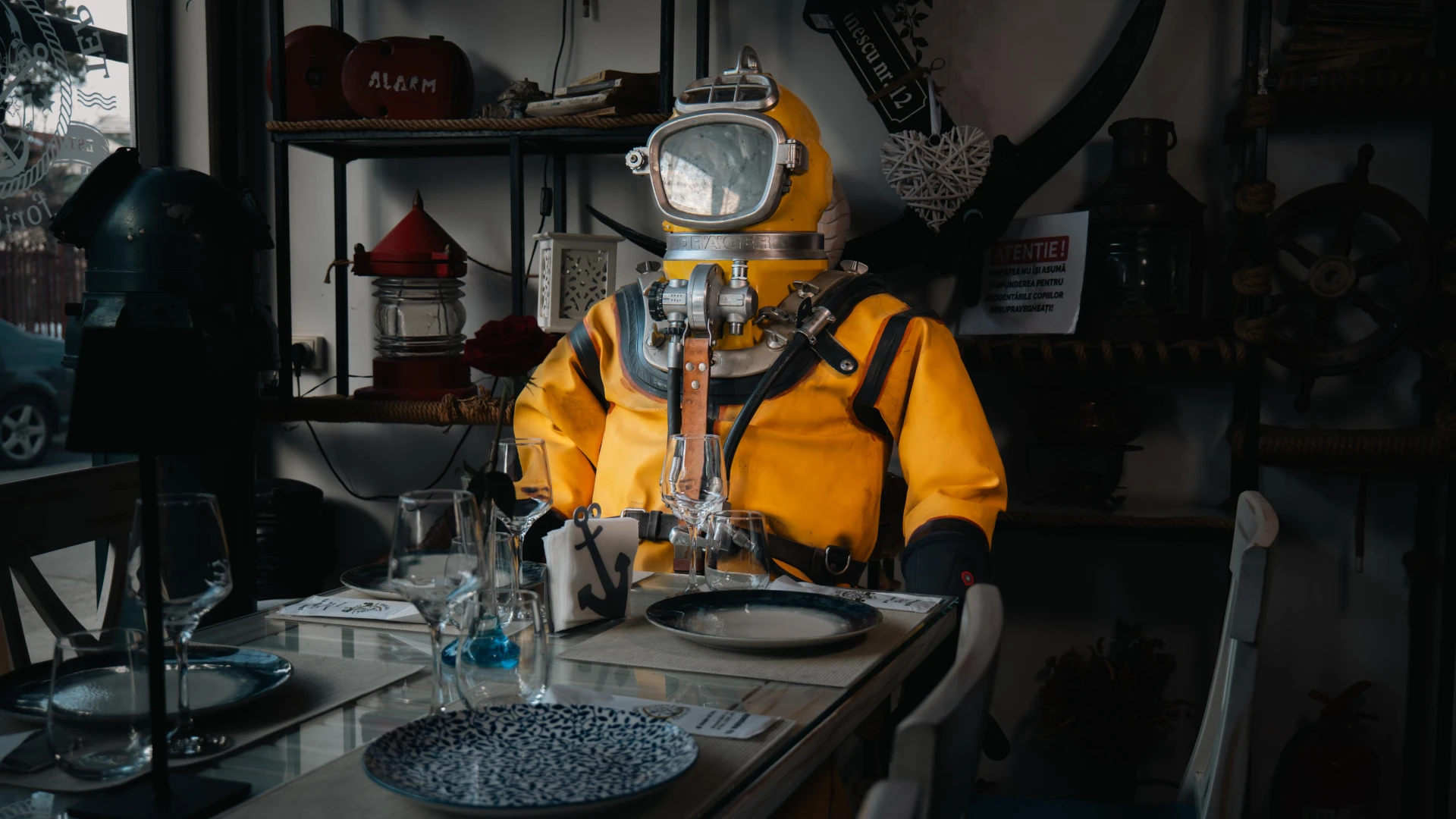
Designed for extreme missions, this Dräger heavy diving suit (1960-1970) was used for contaminated water operations and surface-supplied underwater work. Made from materials resistant to chemicals and biological hazards, this suit provided maximum protection and complete sealing. A true symbol of industrial diving, it played a crucial role in high-risk technical interventions, proving unmatched reliability and safety.
This Soviet naval radar, produced during the CCCP era, was used on commercial and military ships for target detection and maritime tracking. With Russian inscriptions, this advanced system enabled precision navigation and tactical surveillance, essential for naval operations. Durable and highly reliable, it was a core instrument in Soviet fleets, enhancing maritime security. This historic model is now displayed at Terasa cu Ancore, showcasing past radar technology.
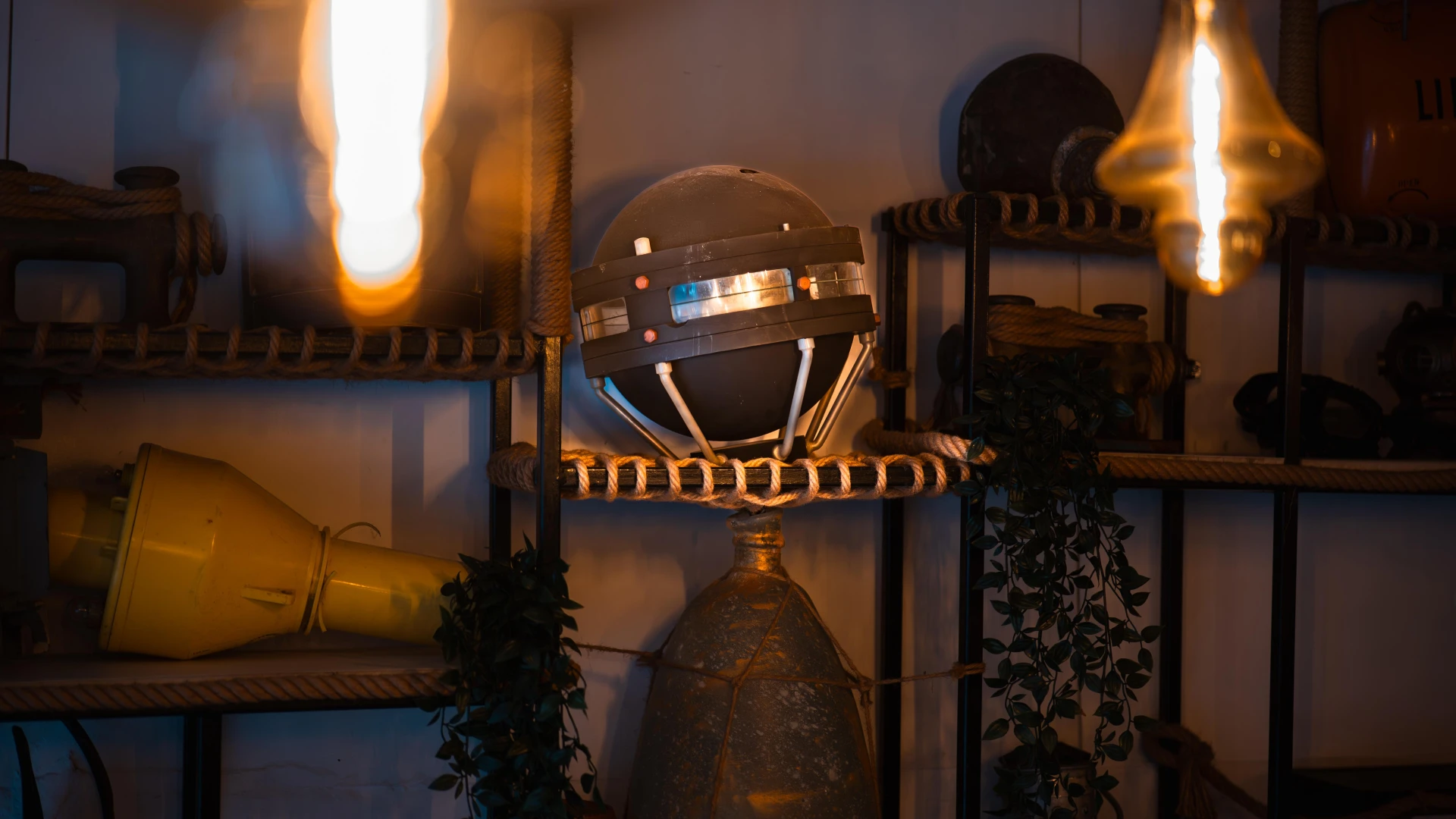
This spherical marine compass is a crucial instrument for maritime navigation, accurately indicating the cardinal points and helping crews maintain the correct course. Used on commercial and military vessels, this innovative design ensures optimal function in all weather conditions. A remarkable relic of navigation history, restored and preserved to showcase the evolution of maritime technology.
This marine inclinometer, used on commercial ships, accurately measures the vessel's tilt angle during navigation. Essential for maritime safety, it helps crews monitor ship stability and adjust cargo based on sea conditions. Built from durable materials, the inclinometer remains a standard instrument in the maritime industry. This historical model, once crucial for global navigation, is now displayed at Terasa cu Ancore.
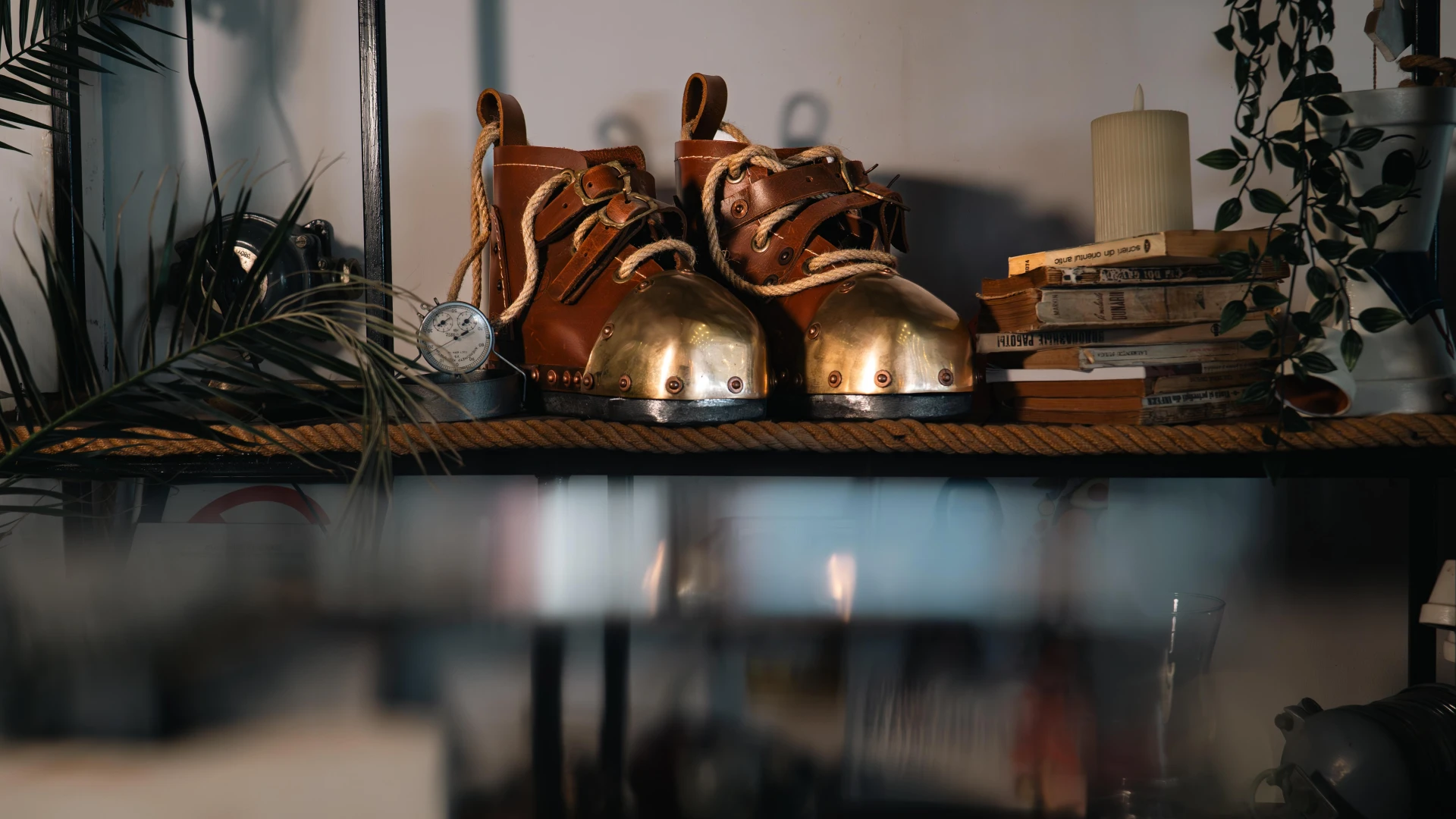
These English heavy diving boots, featuring a bronze toe cap and lead sole, weigh 10 kg each, ensuring firm footing on the seafloor. Used in industrial and military diving, they provided divers with stability underwater and prevented unintended buoyancy. Their robust design showcases British maritime engineering expertise. Now displayed at Terasa cu Ancore, these historical boots offer a glimpse into classic deep-sea diving gear.
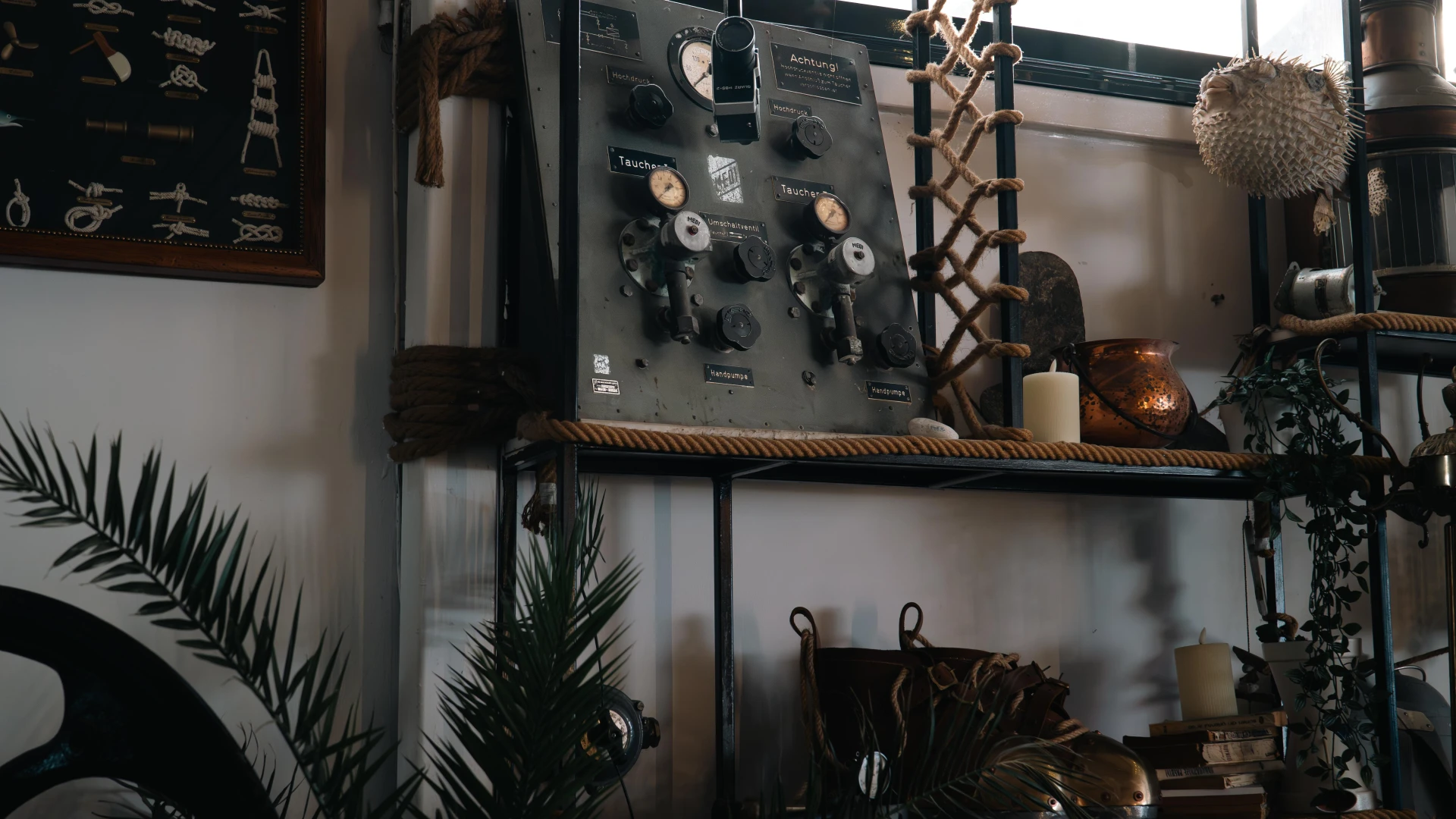
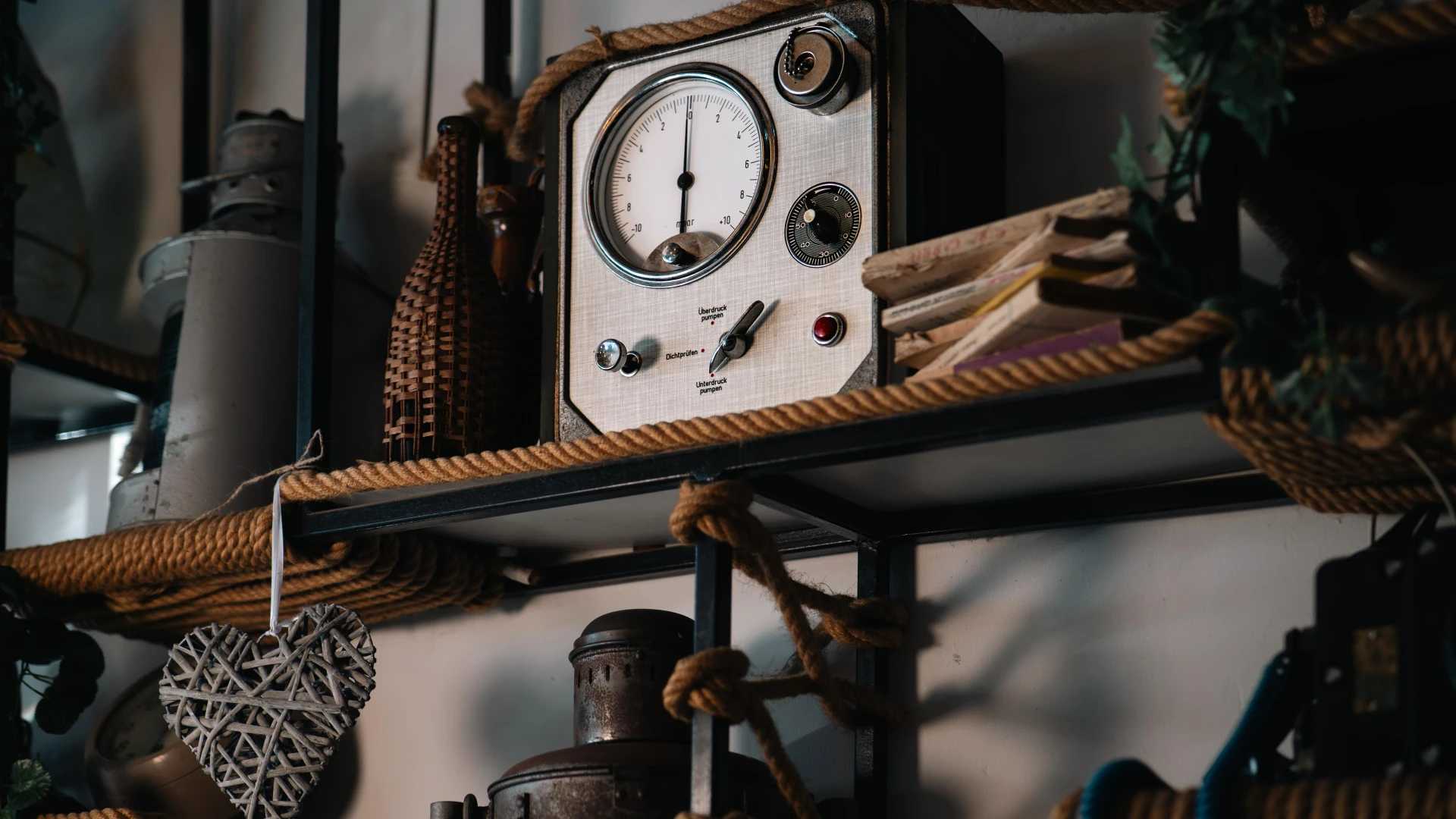
This manual air distribution panel, built in Germany 80 years ago, supplied two divers simultaneously from a single hand-operated air pump. Equipped with pressure gauges and adjustable valves, it was essential for surface-supplied diving, allowing precise air control. A rare and fascinating piece of historical diving technology.
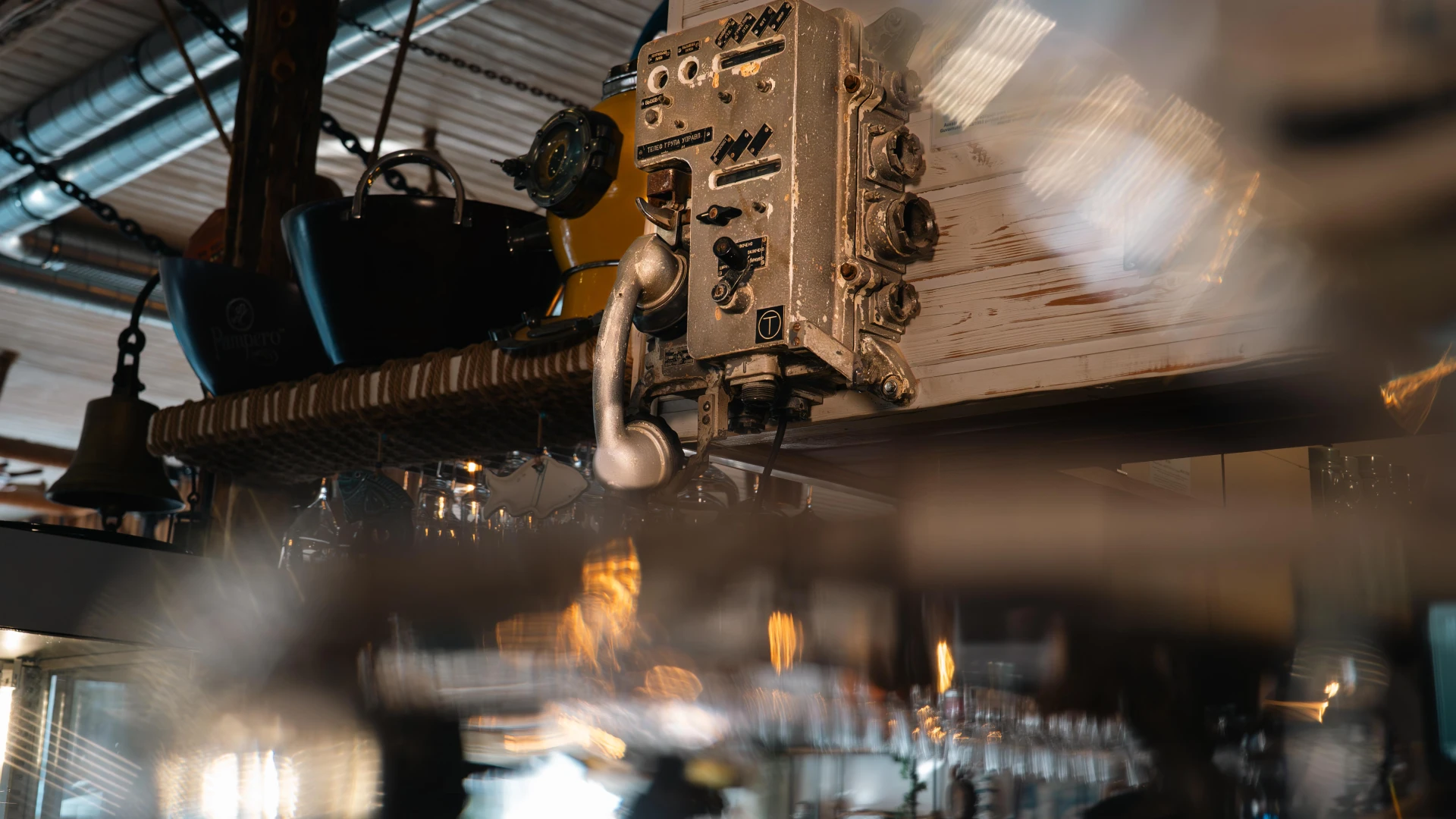
These authentic naval switches, once used on commercial ships, have been restored and repurposed for the Terasa cu Ancore bar. Fully functional and preserving their industrial aesthetic, these controls provide a tangible connection to maritime history. A unique detail that enhances the venue's nautical ambiance.
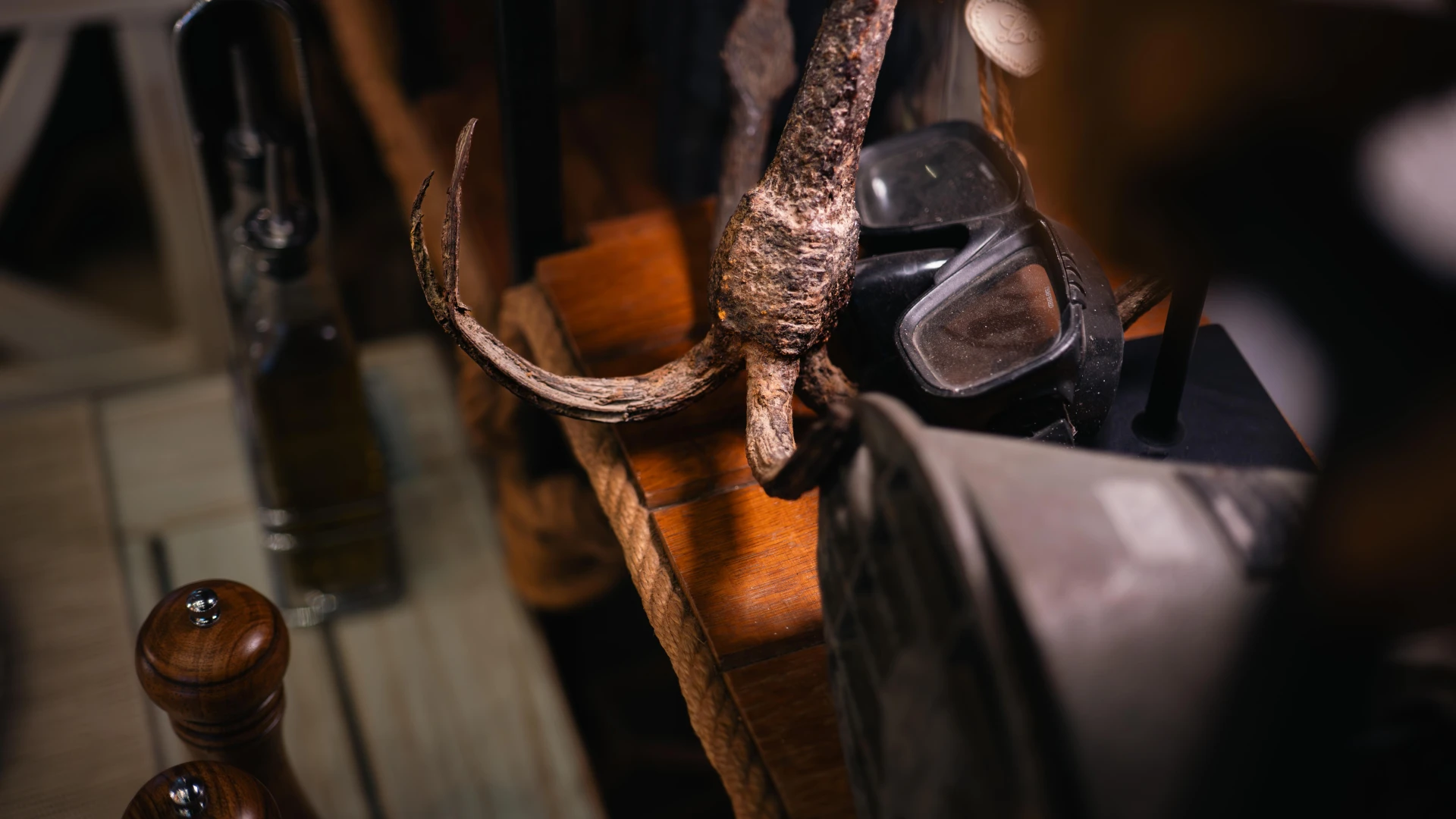
The mooring bitt is a fundamental naval component used to secure ropes and mooring lines on ships. Made of solid metal, it ensured vessel stability during docking and anchoring operations. This particular bitt was recovered by the NemoProDiving commercial diving team, preserving its maritime legacy.