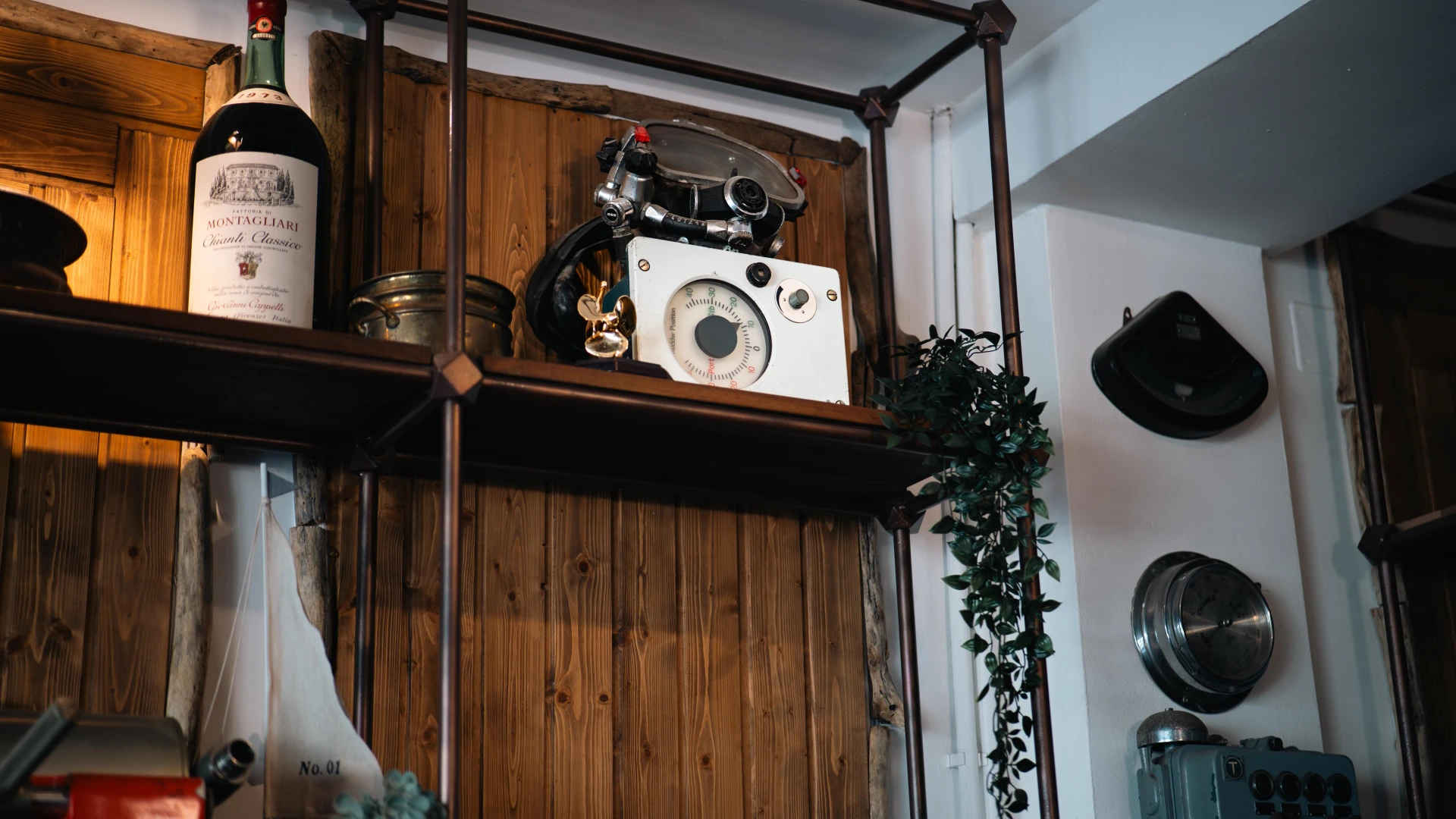
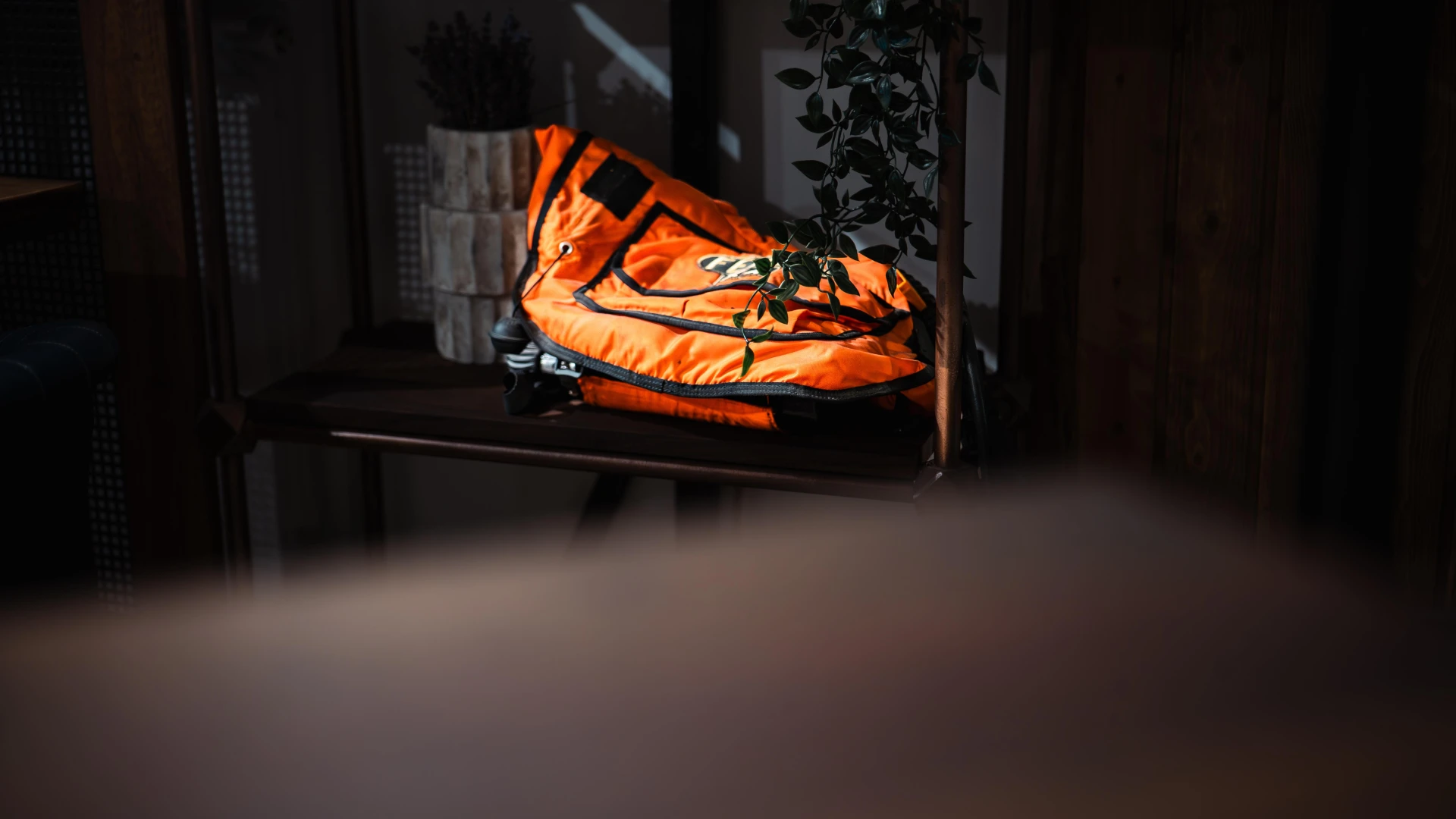
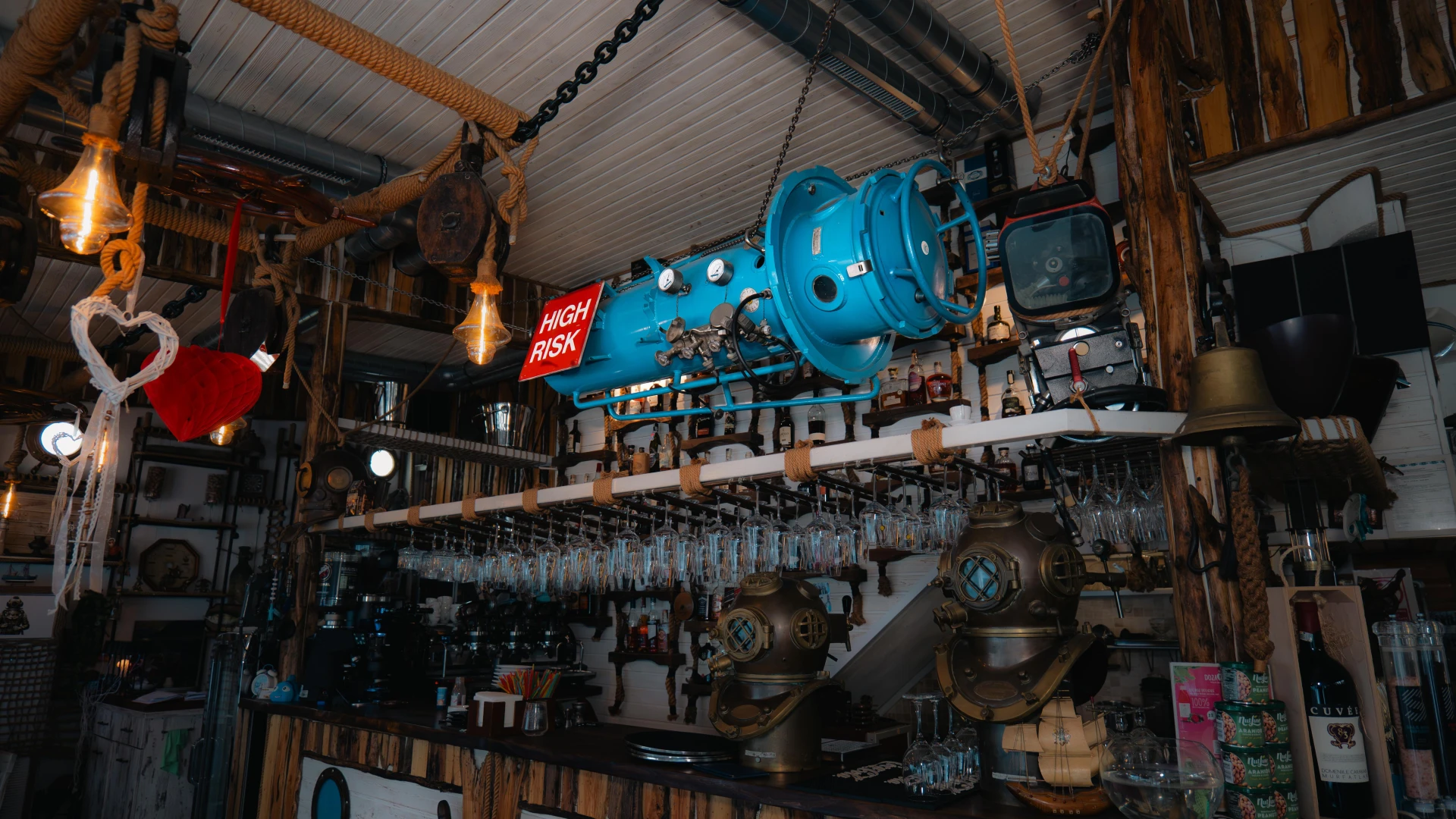
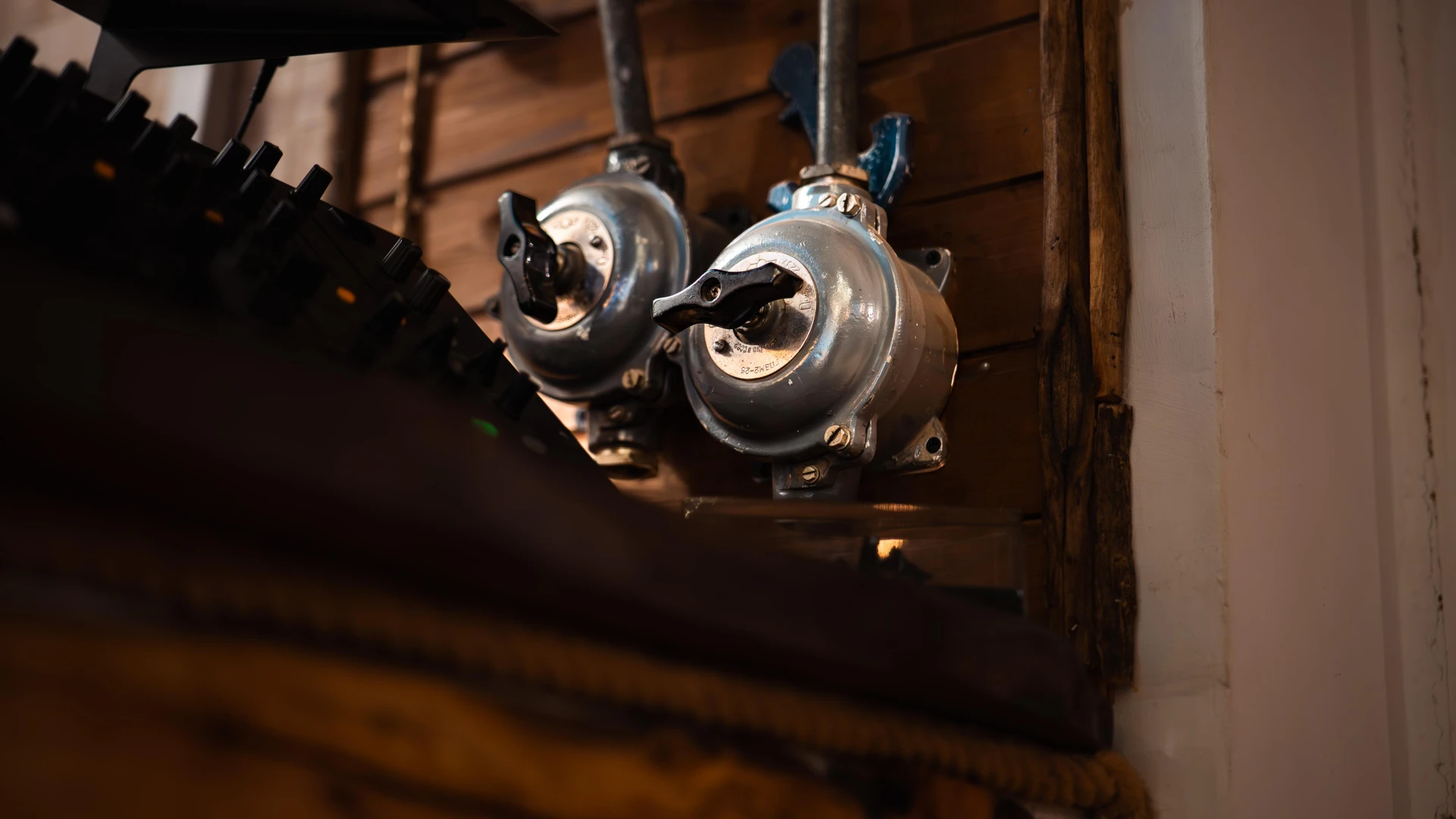
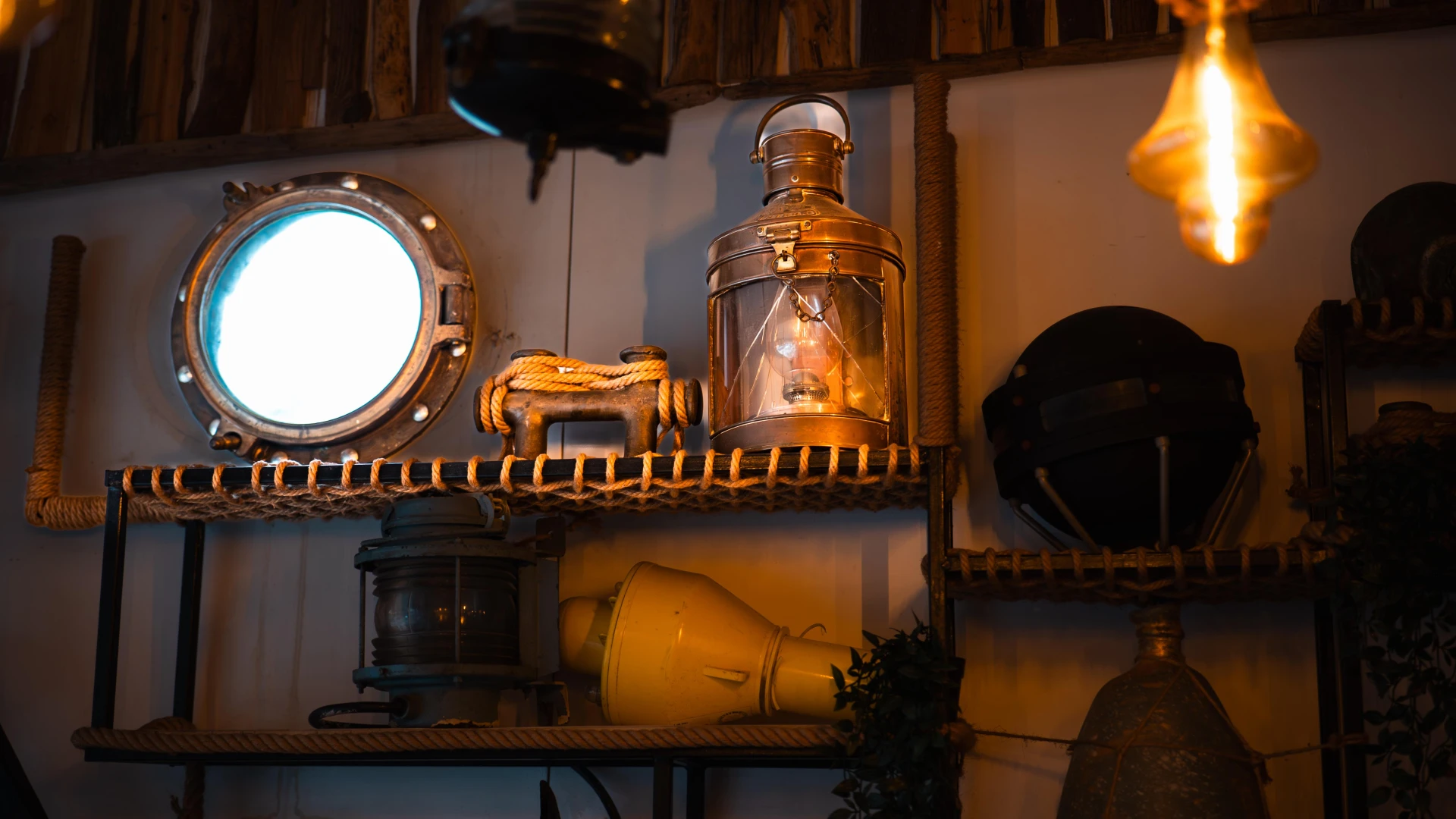
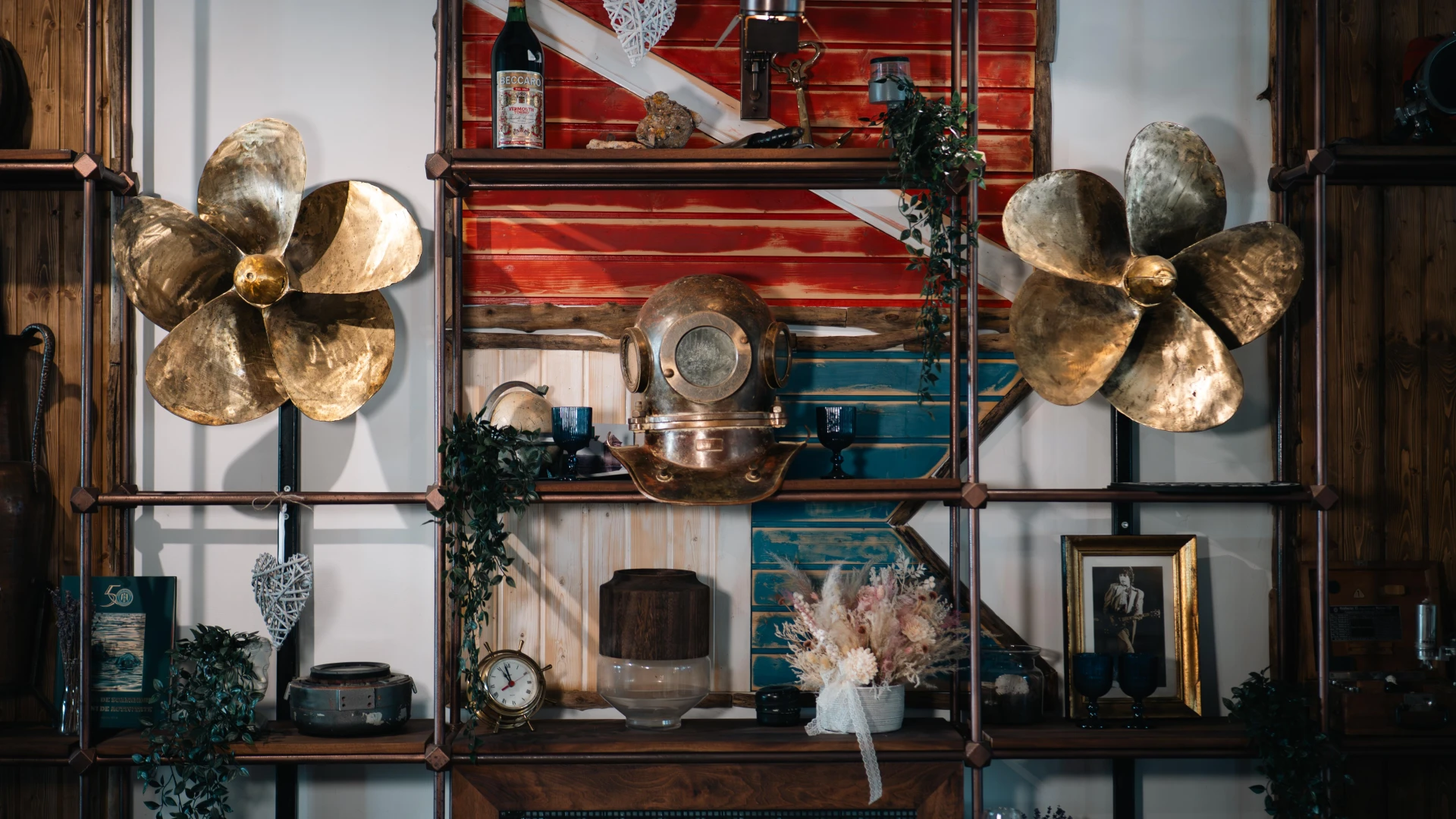
This professional diving mask, used in technical underwater operations, ensured controlled breathing and safety for divers in extreme environments. Featuring adjustable valves, it allowed optimal air regulation, crucial for subsea missions. Alongside it, a rudder position indicator, a vital navigation tool, helped commercial ship crews monitor and adjust the ship's direction with high precision. These historical maritime artifacts are now displayed at Terasa cu Ancore.
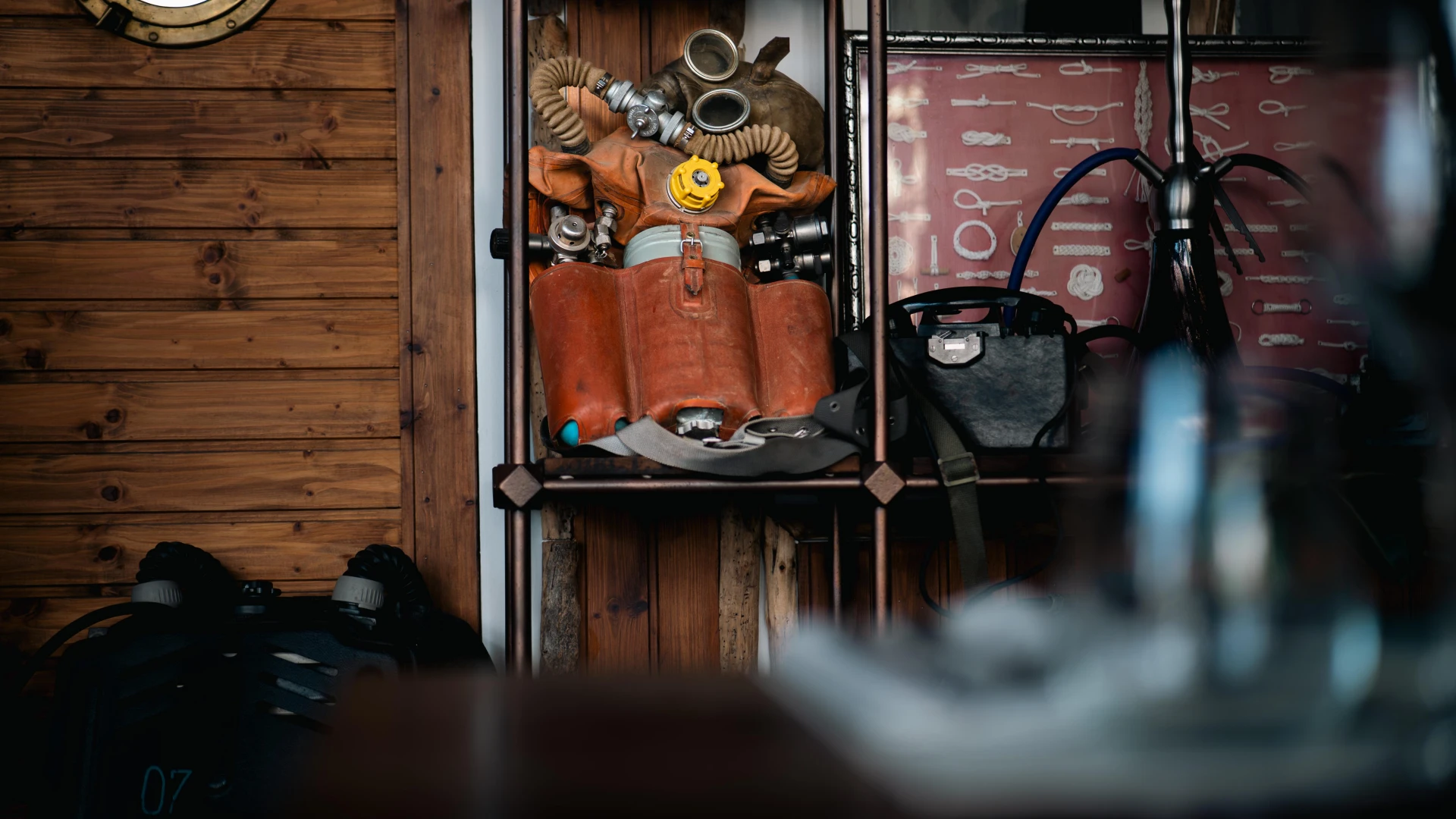
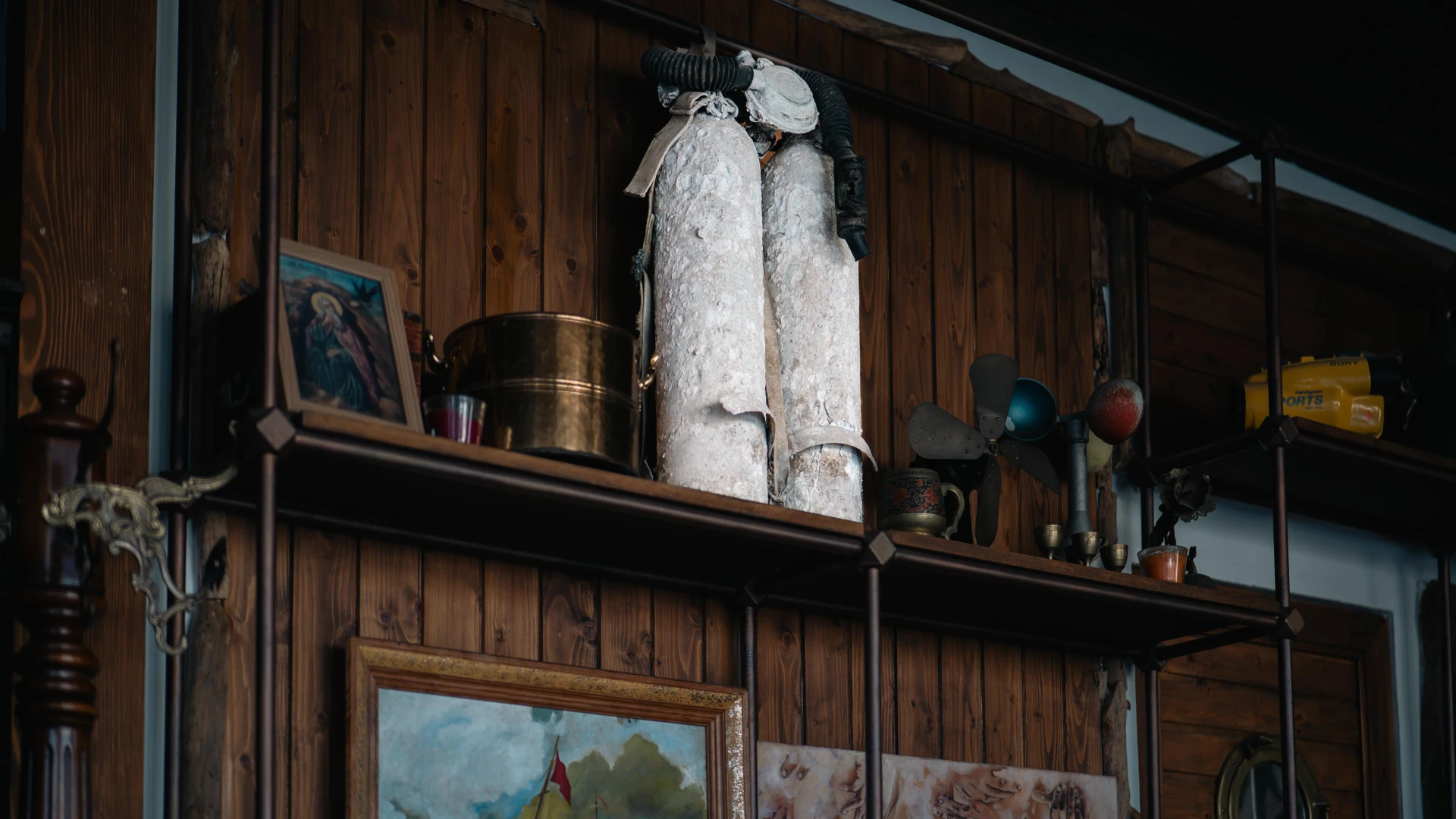
This French-made Spirotechnique bi-bouteille tank was designed for professional and military diving. Built for reliability and extended autonomy, it allowed divers to operate at greater depths with an optimal air supply. Featuring a sturdy design and balanced distribution system, this equipment set the standard in diving technology. Now displayed at Terasa cu Ancore, this rare piece showcases underwater exploration advancements.
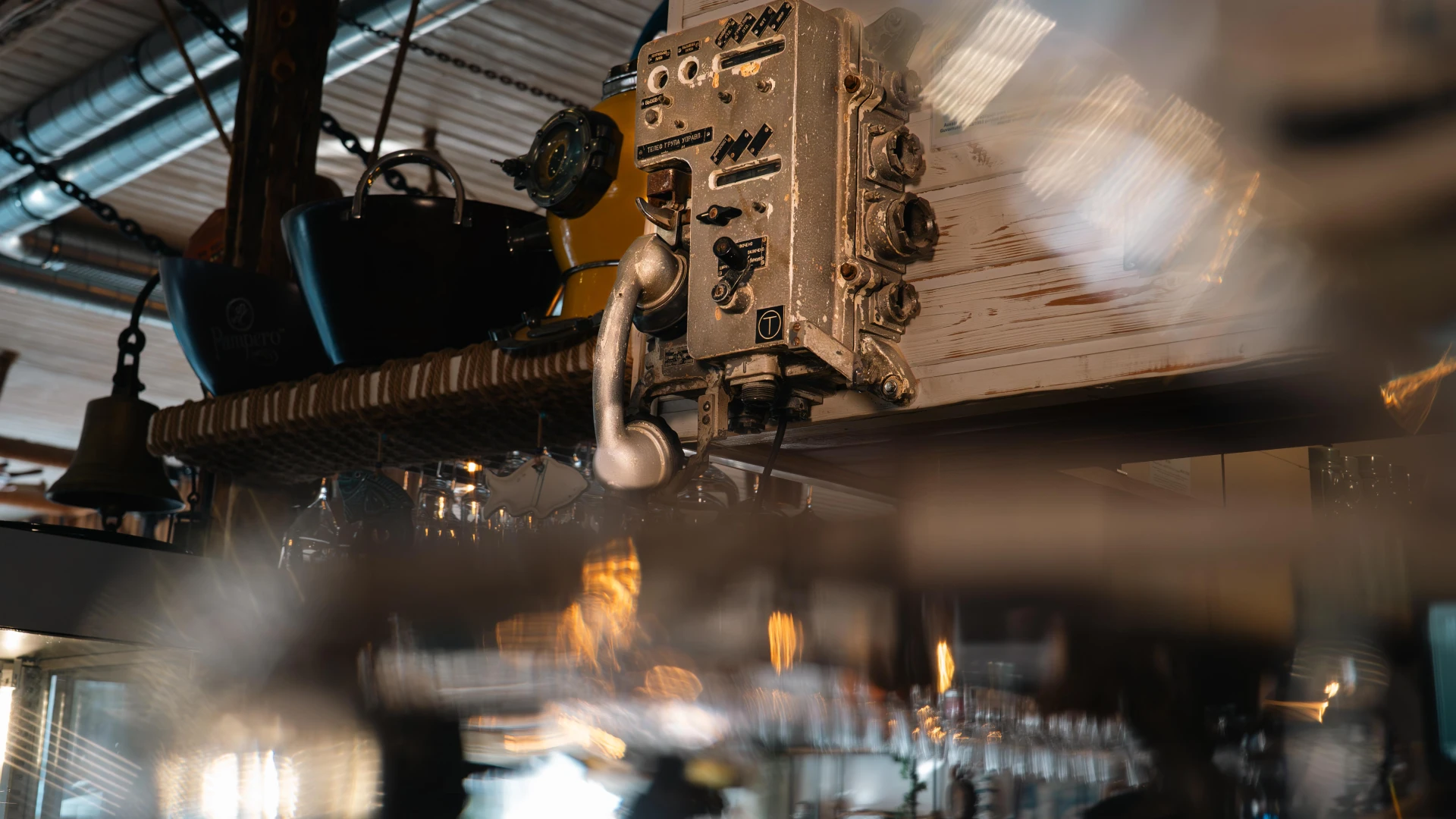
This naval telephone switchboard, equipped with a dynamo, was used on military, commercial ships, and submarines to ensure reliable internal communications. Designed for maximum reliability in extreme conditions, it allowed crew members to stay connected across key ship compartments, even in the event of a power failure. Its robust system and moisture-resistant technology made it a standard in maritime communications. Now displayed at Terasa cu Ancore, it showcases the evolution of naval technology.
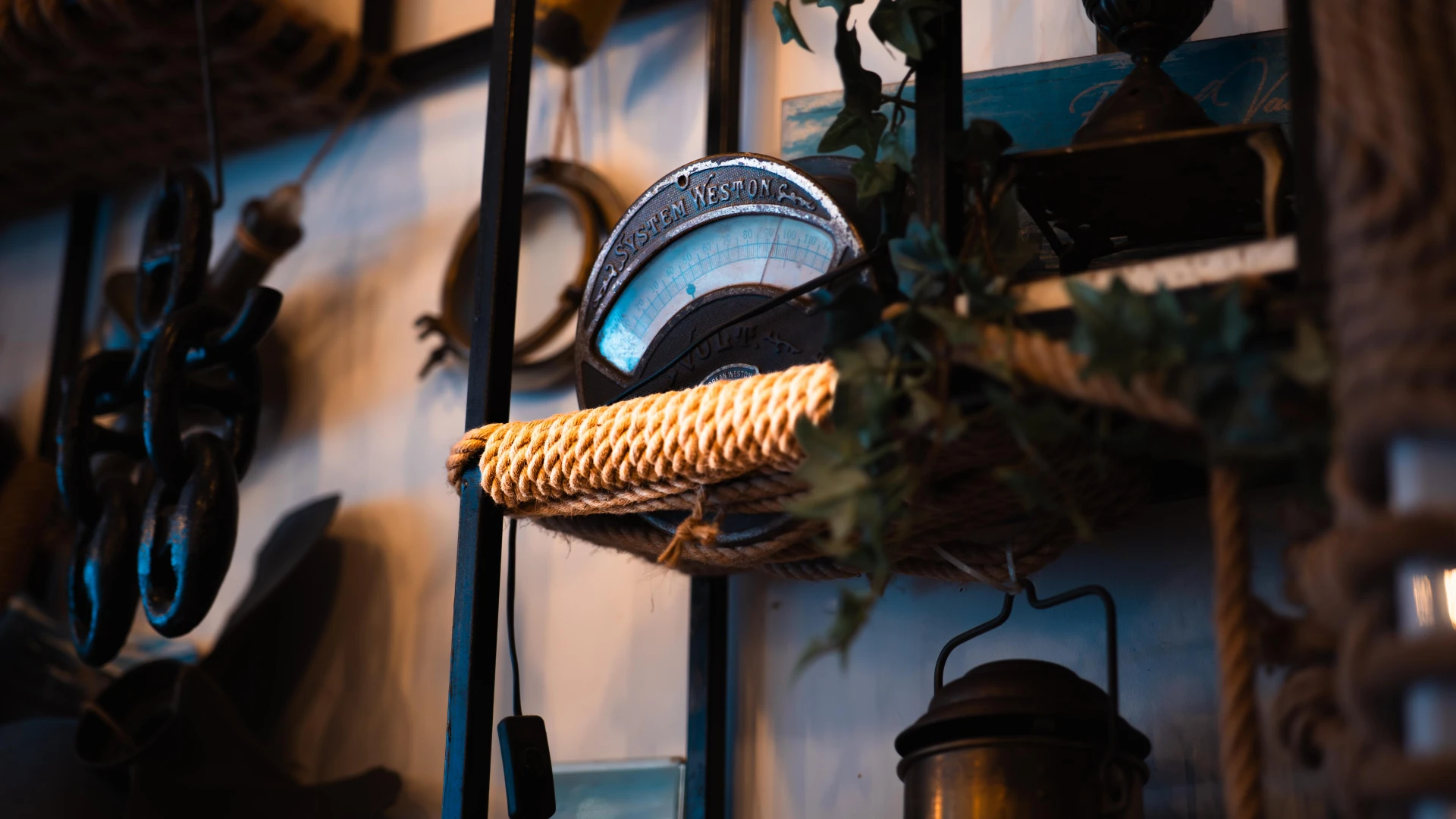
This marine inclinometer, used on commercial ships, accurately measures the vessel's tilt angle during navigation. Essential for maritime safety, it helps crews monitor ship stability and adjust cargo based on sea conditions. Built from durable materials, the inclinometer remains a standard instrument in the maritime industry. This historical model, once crucial for global navigation, is now displayed at Terasa cu Ancore.
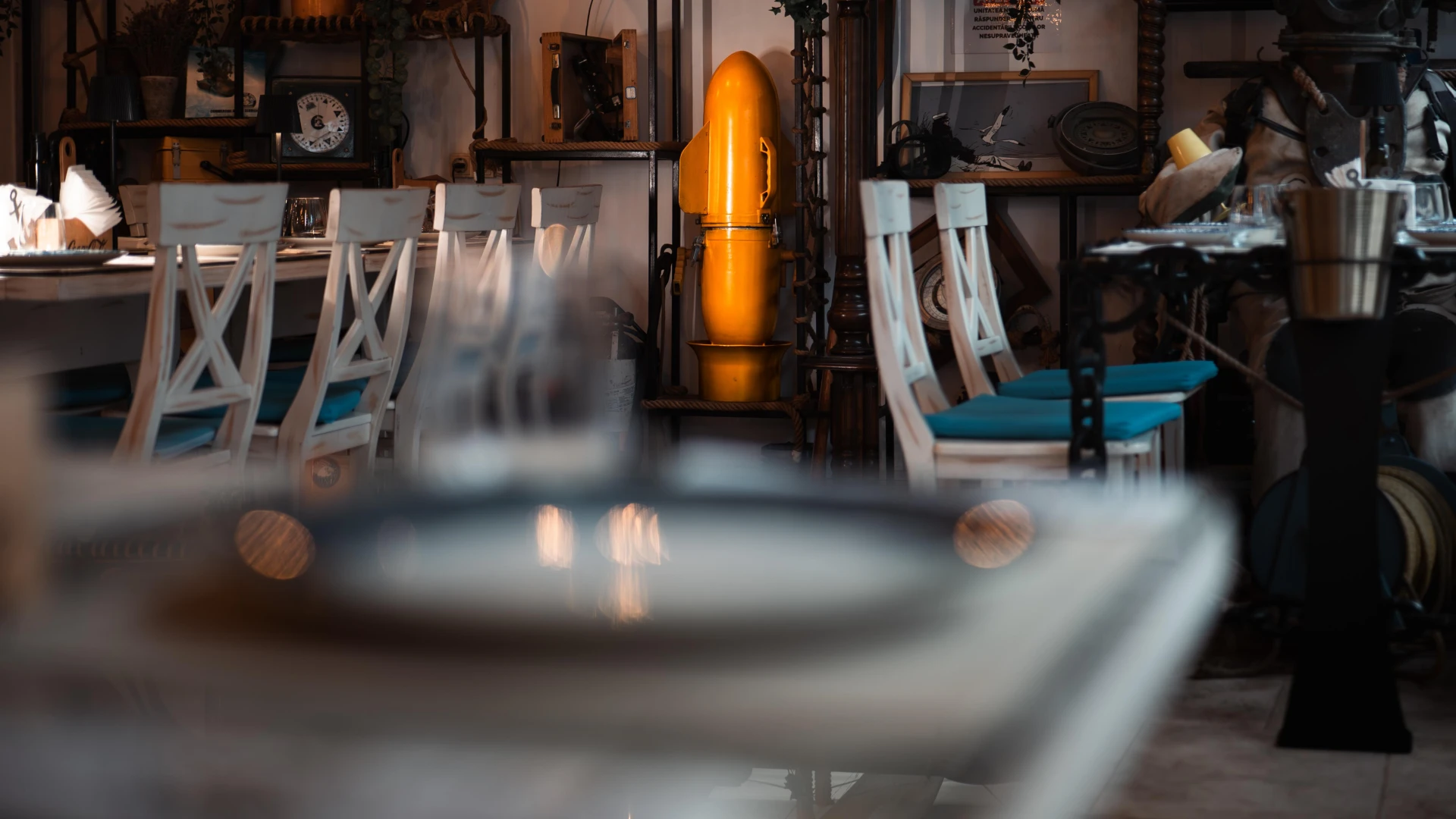
This underwater scooter is an essential device for rapid movement underwater, used by military and technical divers. Its hydrodynamic design minimizes effort and maximizes dive autonomy. Deployed in rescue operations, exploration, and underwater construction, this model is optimized for maneuverability and safety in various marine conditions.
This naval telephone exchange was a vital communication system used on military and commercial ships, ensuring efficient crew coordination. Built to withstand extreme humidity and vibrations, it was commonly installed on submarines and warships for reliable signal transmission even in harsh conditions. Now a historical naval artifact, this resilient piece of maritime technology is displayed at Terasa cu Ancore, showcasing traditional naval communication methods.
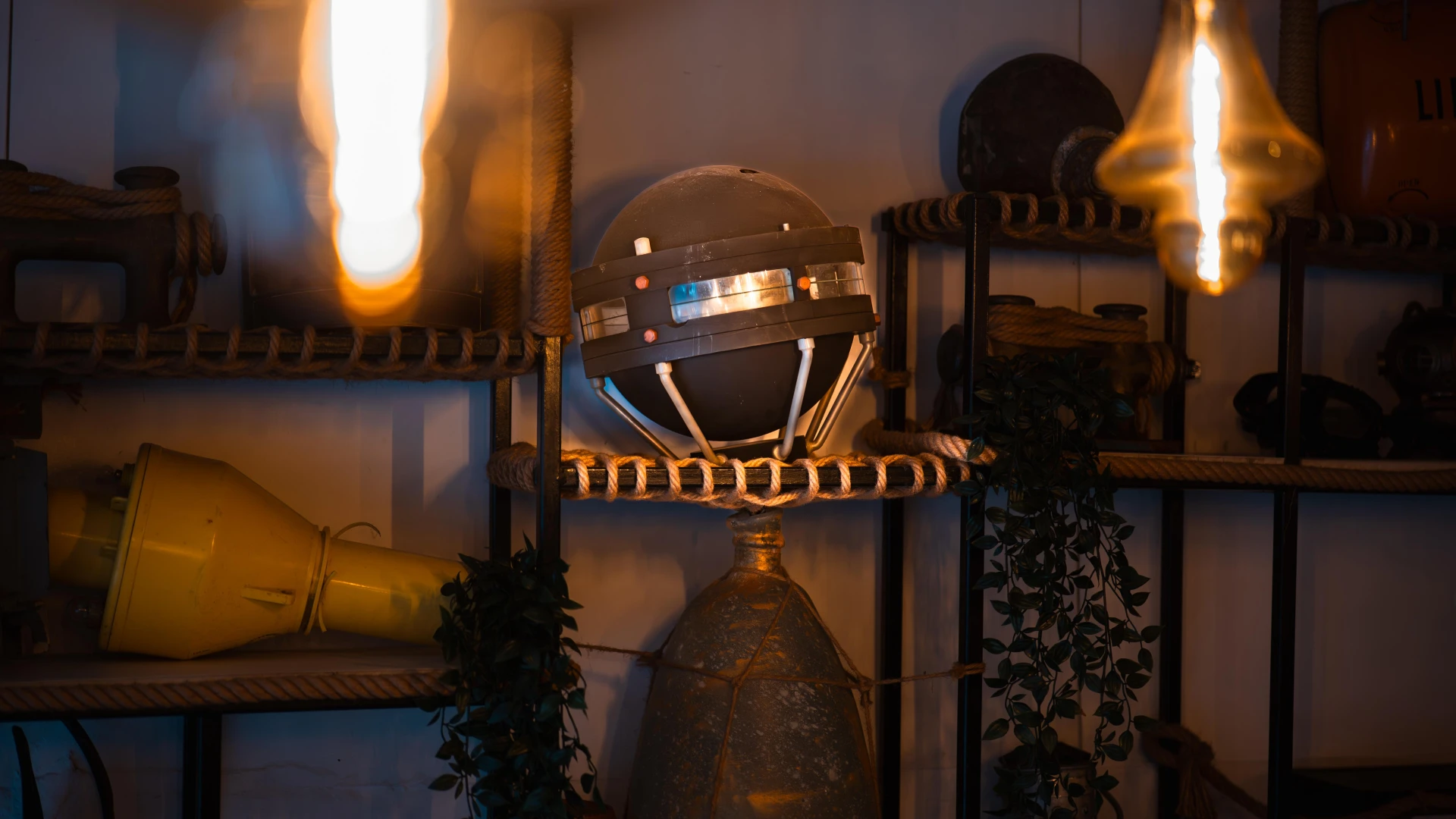
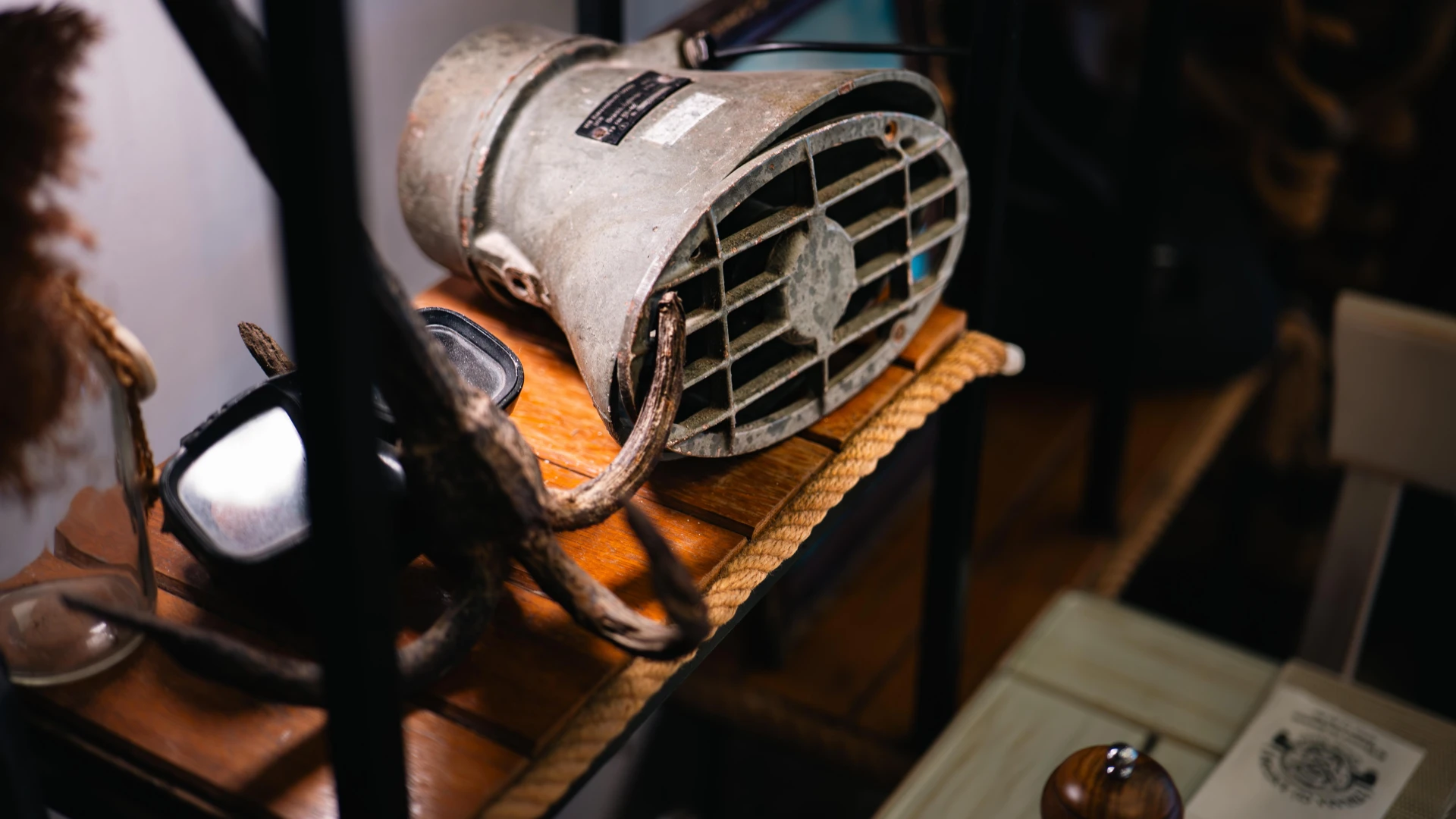
This naval speaker was part of traditional onboard communication systems, used on commercial and military vessels. Built to withstand harsh maritime conditions, it ensured clear message transmission among the crew. Its durable design highlights the importance of coordination and safety at sea, making it a crucial element of shipboard life. Now preserved at Terasa cu Ancore.
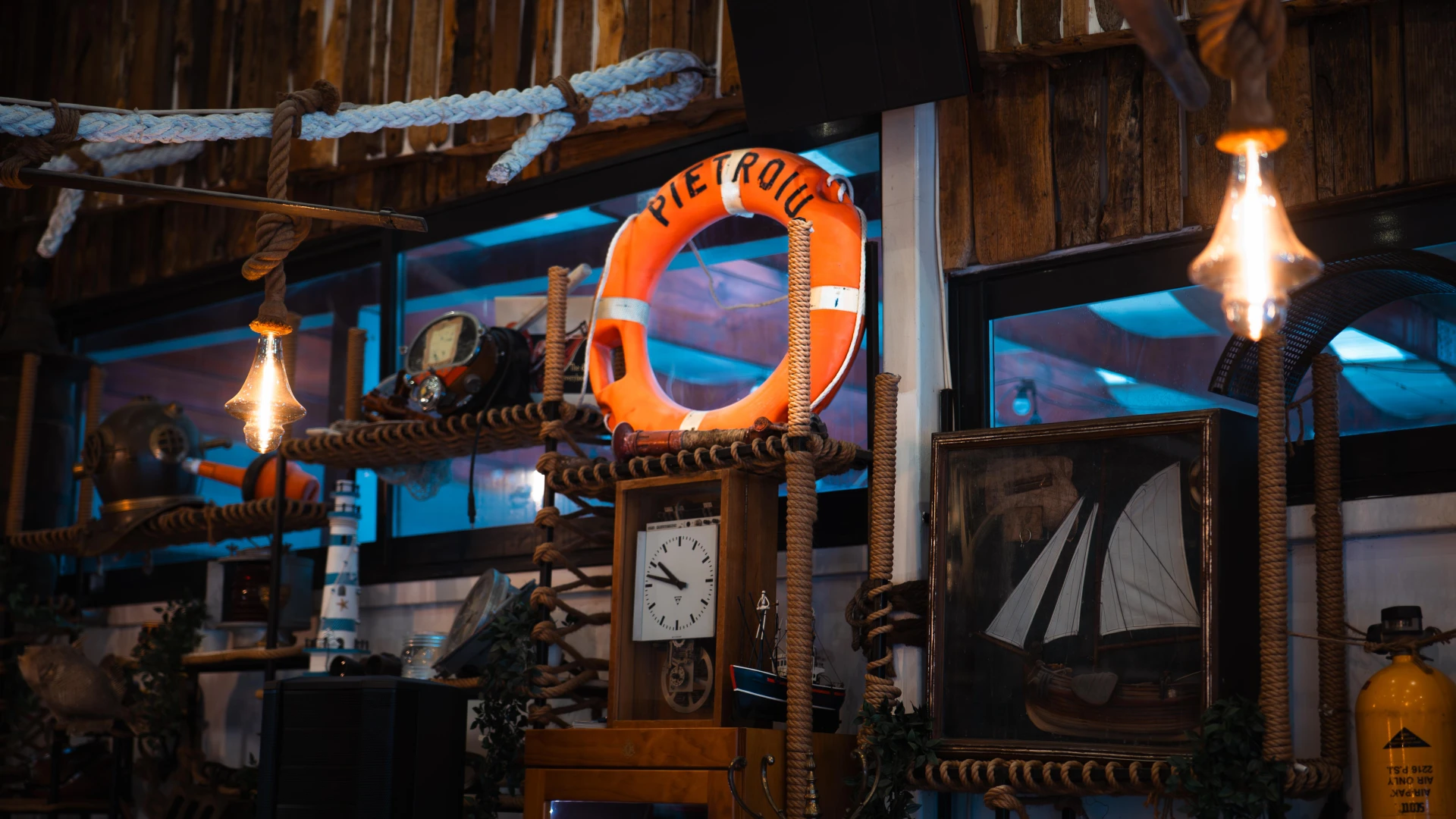
This Pragotron ship clock, manufactured in former Czechoslovakia, was used by a ship commander in the control room of a commercial vessel. The ZPA Pragotron model was known for its accuracy and was widely used in train stations, factories, and public institutions across Eastern Europe from the 1950s-60s. Its industrial design and robust mechanism showcase the reliability and technology of its era. A genuine maritime historical piece.
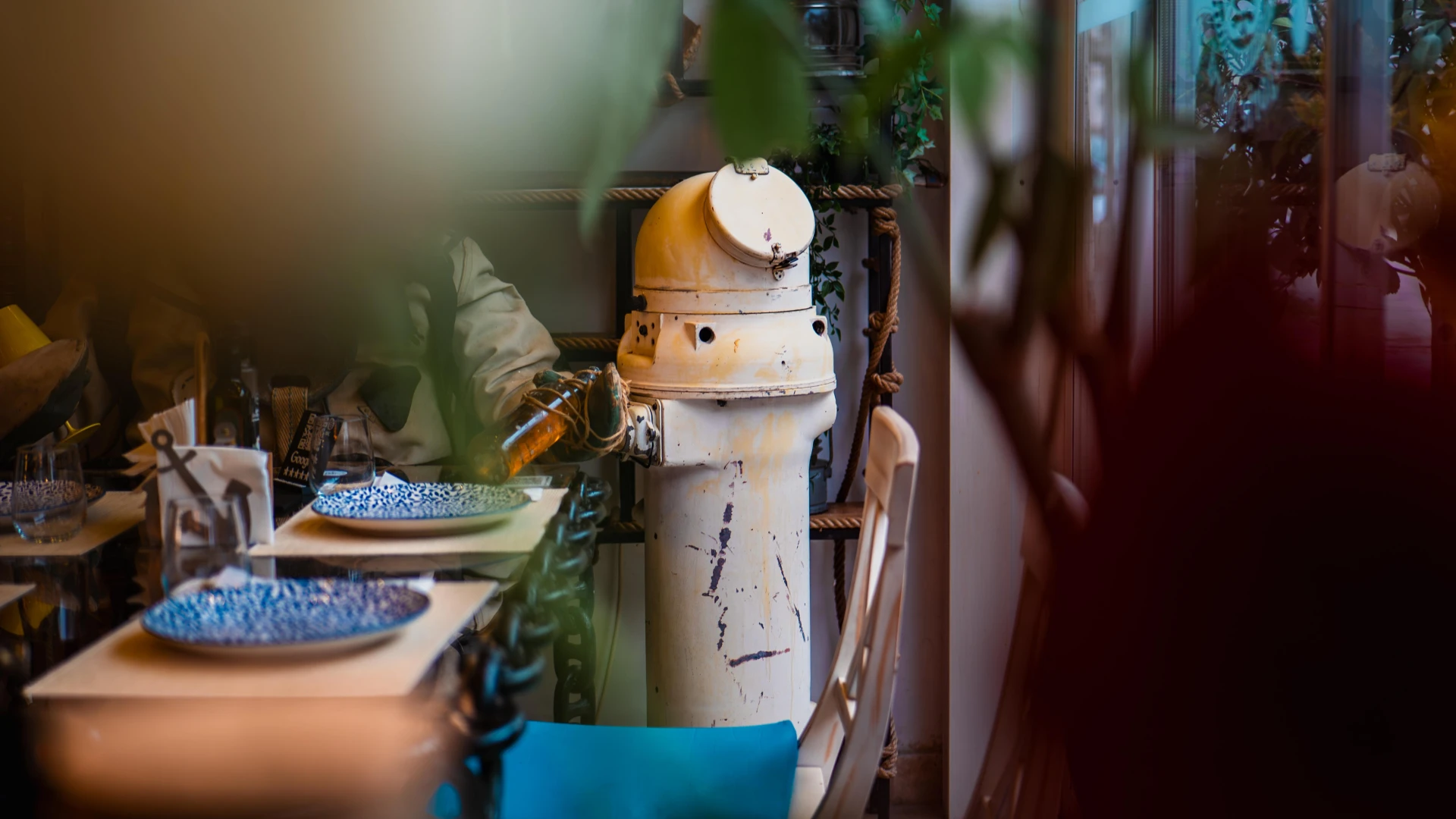
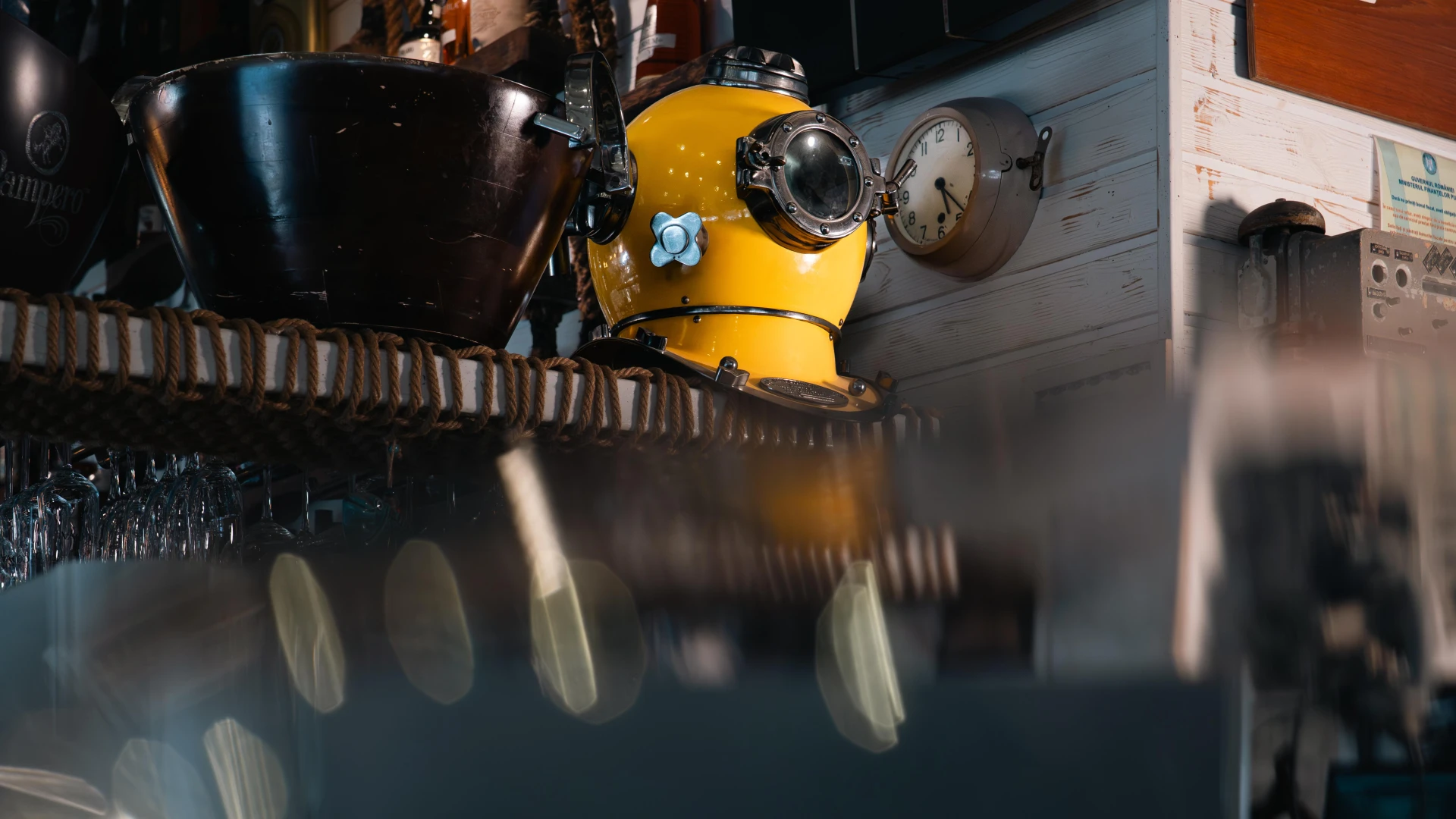
This heavy diving helmet, painted in a distinctive yellow, was used by American divers for military and commercial underwater operations. Designed for enhanced safety and visibility, it represents a crucial part of deep-sea exploration history. Alongside it, a vintage naval clock, once used on ships to track maritime operations, adds a touch of authenticity to this historical maritime collection at Terasa cu Ancore.
This wooden nautical pulley, over 200 years old, was an essential tool on sailing ships, used to hoist sails and lift heavy objects. Crafted from solid wood and metal, this robust mechanism was widely employed on merchant and military vessels, showcasing durability and efficiency in extreme maritime conditions. A true relic of traditional naval engineering.
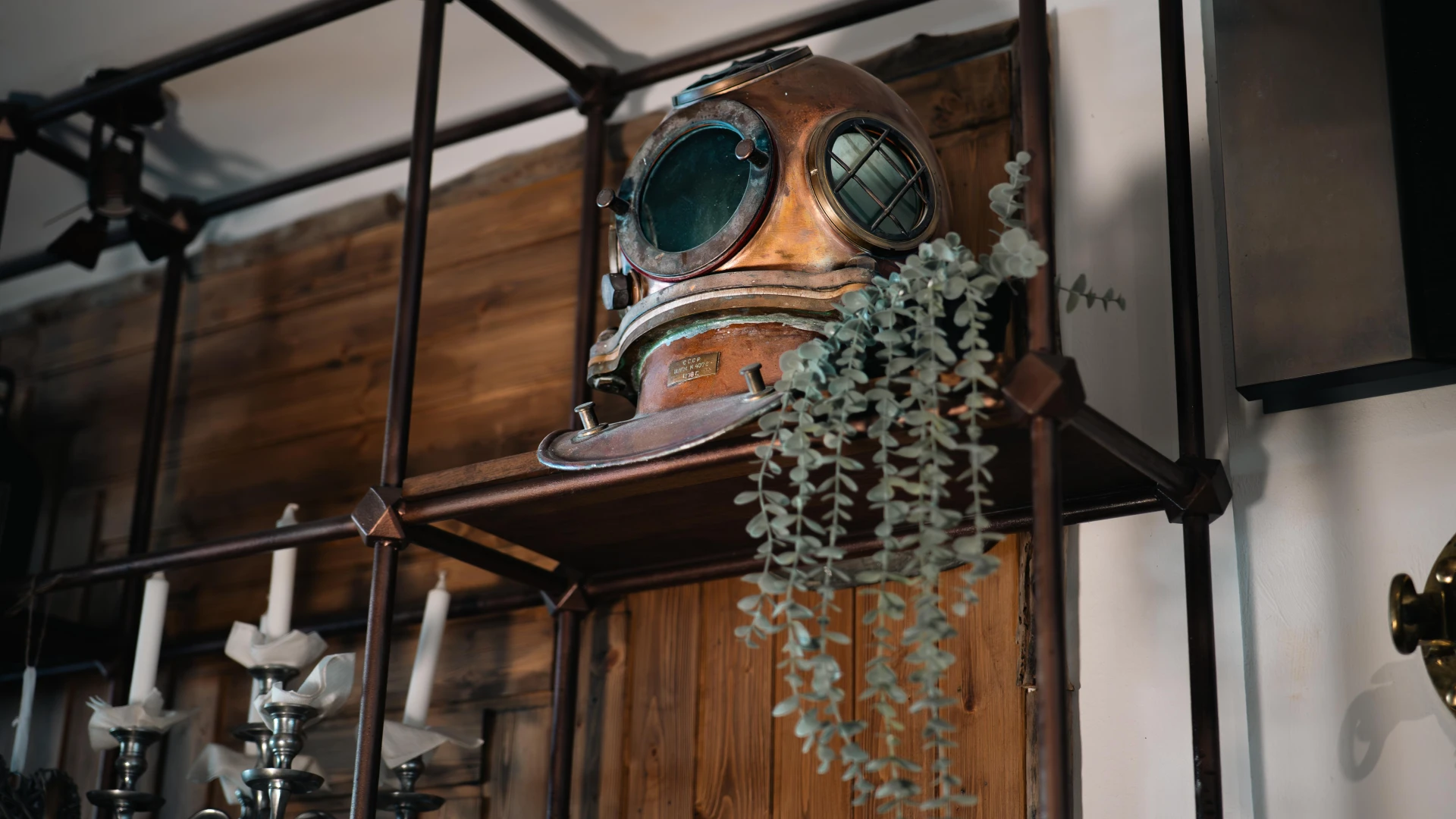
This Soviet diving helmet, a vintage model used in military and industrial underwater operations, showcases the durability and engineering of its era. Made from copper and brass, it was designed for deep-sea dives, ensuring maximum protection. Alongside it, the two propellers belonged to a high-speed military vessel, engineered for agility and superior performance at sea. These remarkable artifacts are now displayed at Terasa cu Ancore, preserving maritime and diving history.
This professional diving mask, used in technical underwater operations, ensured controlled breathing and safety for divers in extreme environments. Featuring adjustable valves, it allowed optimal air regulation, crucial for subsea missions. Alongside it, a rudder position indicator, a vital navigation tool, helped commercial ship crews monitor and adjust the ship's direction with high precision. These historical maritime artifacts are now displayed at Terasa cu Ancore.
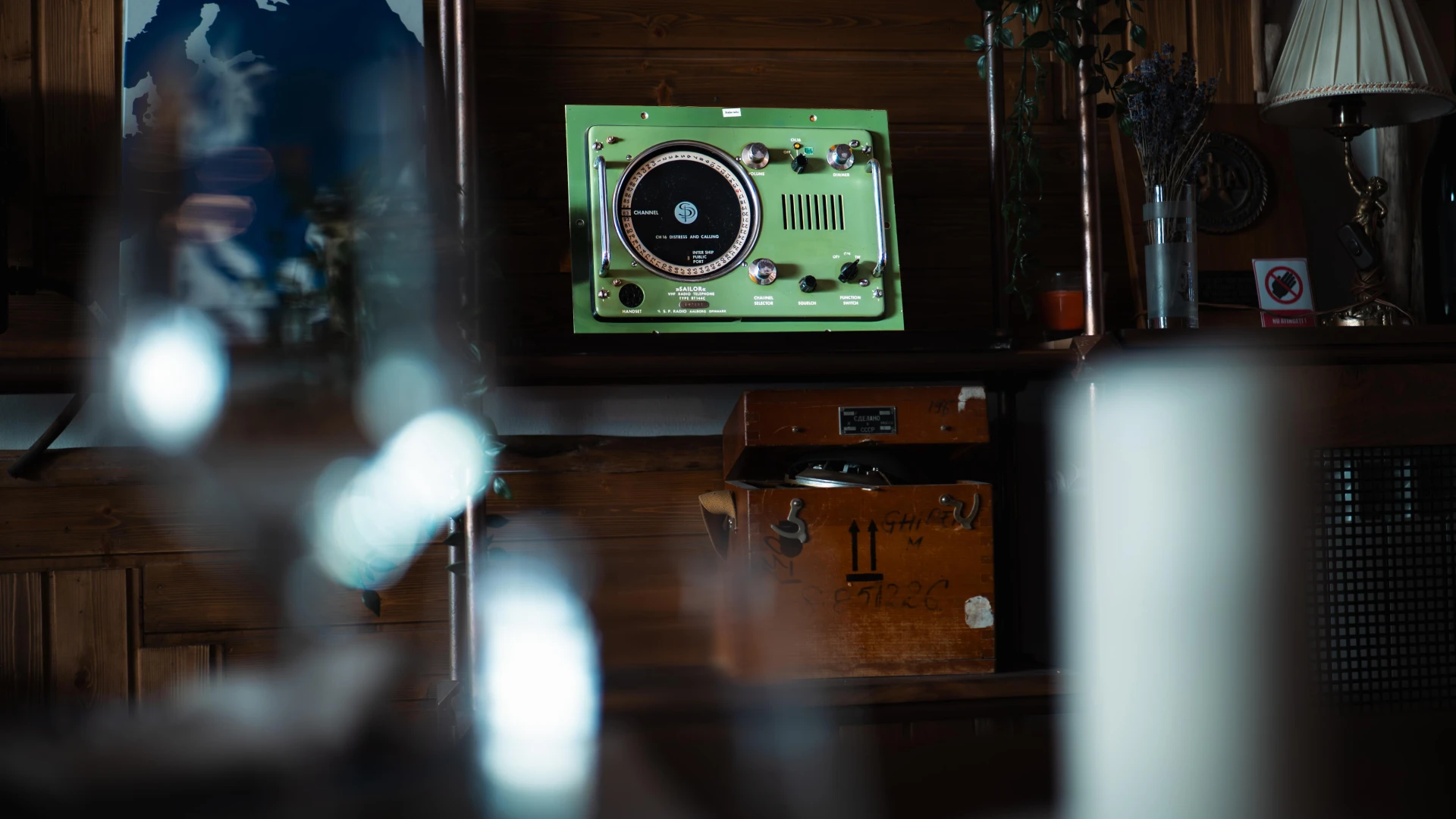
This watertight maritime telephone was a crucial device for emergency communication on military and commercial ships. Built with a shockproof and waterproof metal casing, it was used on decks and in engine rooms, ensuring clear transmission of commands even in extreme conditions. Featuring a moisture-proof system, this robust model played a key role in secure onboard communications for decades.
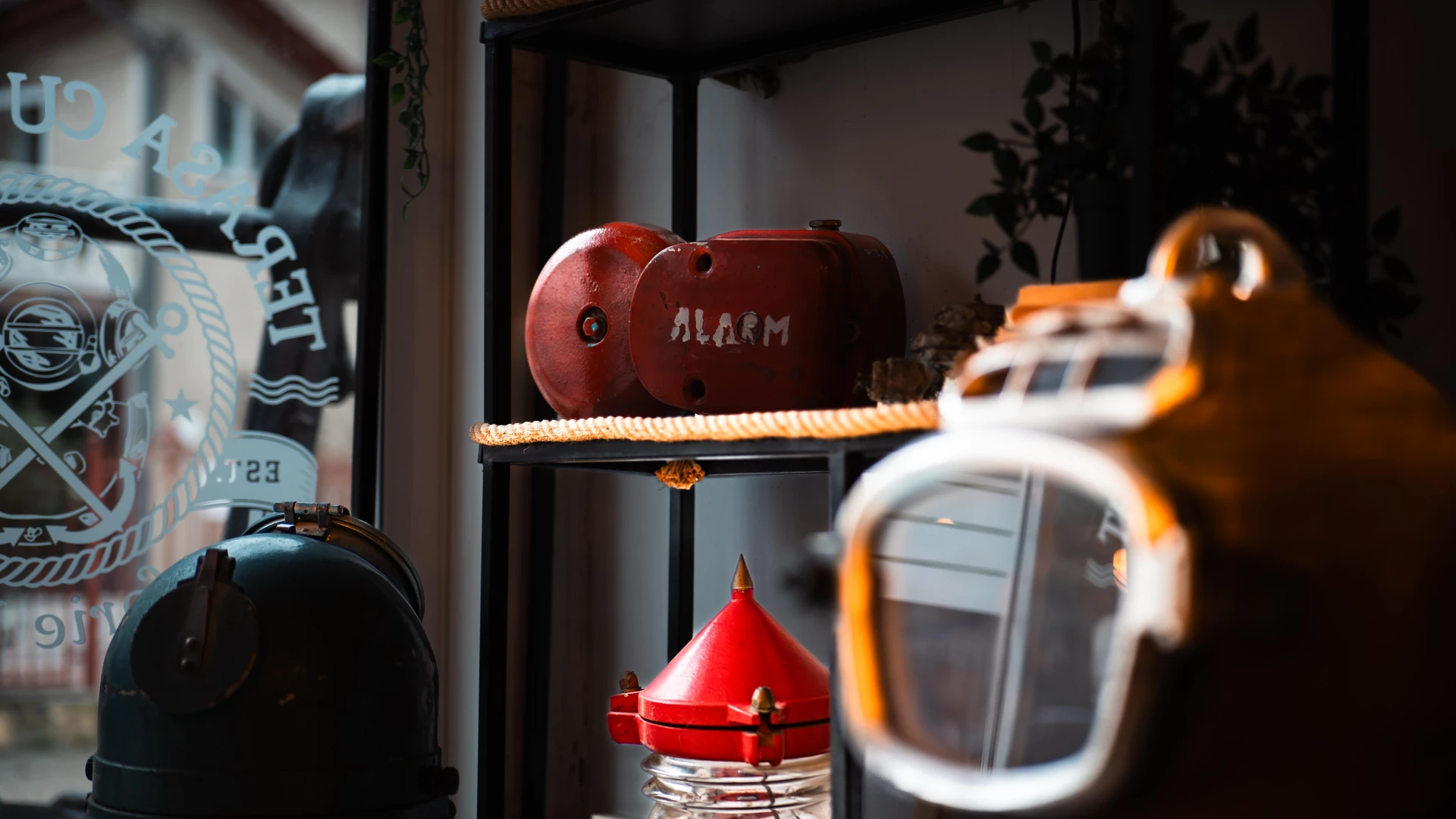
This ship alarm bell was used on commercial vessels to signal emergency situations or critical onboard maneuvers. Built from weather-resistant metal, it ensured fast and effective communication among crew members. No matter the sailing conditions, this alarm system was a vital safety feature, warning both crew and passengers of potential dangers.
This Sony underwater housing is a crucial tool for filming and underwater photography, shielding cameras from water pressure. Used by professional divers and marine explorers, it ensures safety at great depths, capturing breathtaking imagery beneath the waves.
This English manual compressor, crafted from mahogany wood and bronze pistons, was used to supply air to heavy divers. Featuring two powerful pistons, it could support two divers simultaneously during underwater operations. Its durable design and reliable mechanism made it an essential tool for historical deep-sea explorations. A rare piece of maritime engineering.
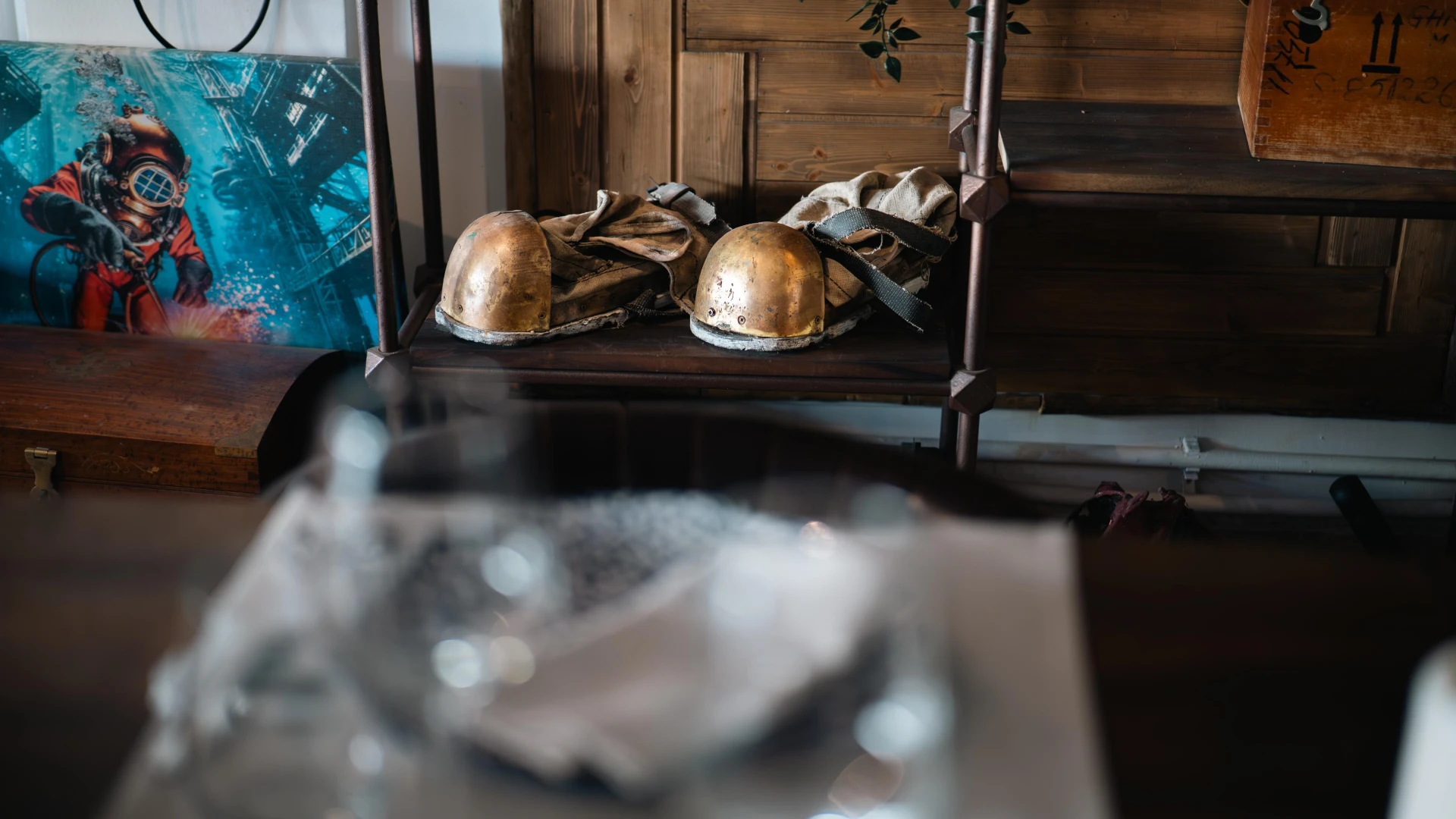
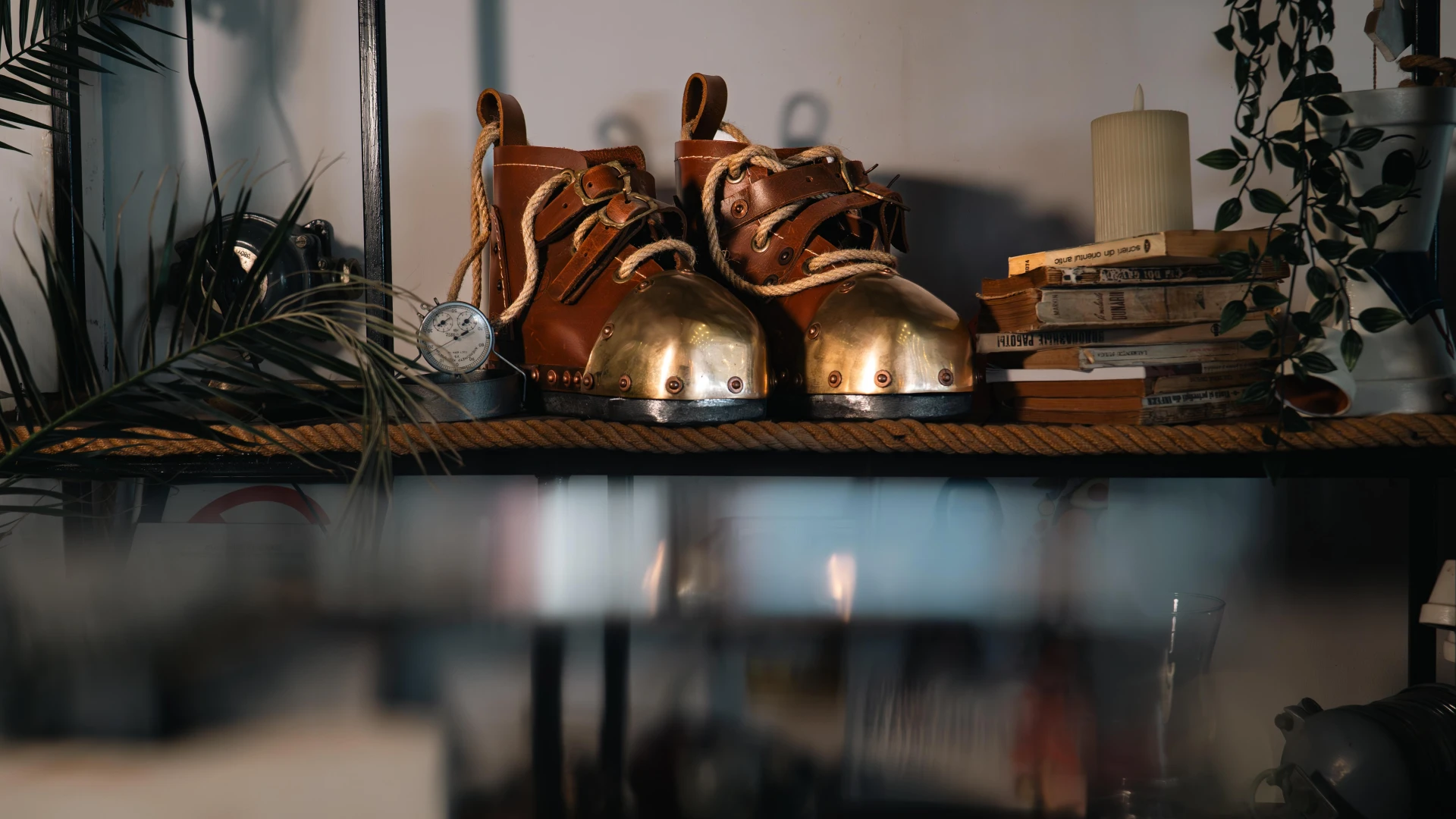
These English heavy diving boots, featuring a bronze toe cap and lead sole, weigh 10 kg each, ensuring firm footing on the seafloor. Used in industrial and military diving, they provided divers with stability underwater and prevented unintended buoyancy. Their robust design showcases British maritime engineering expertise. Now displayed at Terasa cu Ancore, these historical boots offer a glimpse into classic deep-sea diving gear.
This ship bell played a crucial role in acoustic communication onboard, signaling dangers, watch shifts, and maneuvers. Recovered from a sunken vessel by the NemoProDiving team, it stands as a true symbol of seafaring history. Made of solid bronze, it has withstood the test of time, echoing the maritime past of sailors.
This La Spirotechnique helmet, a French prototype for deep-sea diving, operates with surface-supplied air and a helium-oxygen gas mix. Featuring a large, watertight visor, it provides optimal visibility in extreme underwater conditions. Used in technical and research diving, this rare piece marks a significant step in the evolution of deep-sea equipment.
This American naval inclinometer is a crucial device for measuring a ship’s inclination during navigation. Used on commercial and military vessels, it helped crews maintain balance and safety in rough waters. Engineered with maritime precision, the Weston System inclinometer became a standard in naval operations, ensuring stability and control on the open sea.
The Mistral regulator is a classic underwater breathing device, widely used by professional divers and military teams. Designed to provide a steady airflow, this French model was renowned for its dual-hose system, making it an iconic piece of historical diving equipment.
These unique beer dispensers are made from authentic American heavy diving helmets, repurposed into a stunning bar feature. Originally used in commercial diving, these brass helmets have been restored and integrated into the Terasa cu Ancore bar, offering a one-of-a-kind experience for beer lovers. A true tribute to maritime heritage and the world of underwater exploration.
The wood used in the decor of Terasa cu Ancore was reclaimed by divers from NemoProDiving from the bottom of dams during commercial diving operations. It originates from Bacău Poiana Uzului, Firiza Baia Mare, and Porțile de Fier 1 & 2 Dams. After extraction, it was dried, restored, and repurposed, giving the location a unique and authentic maritime touch.
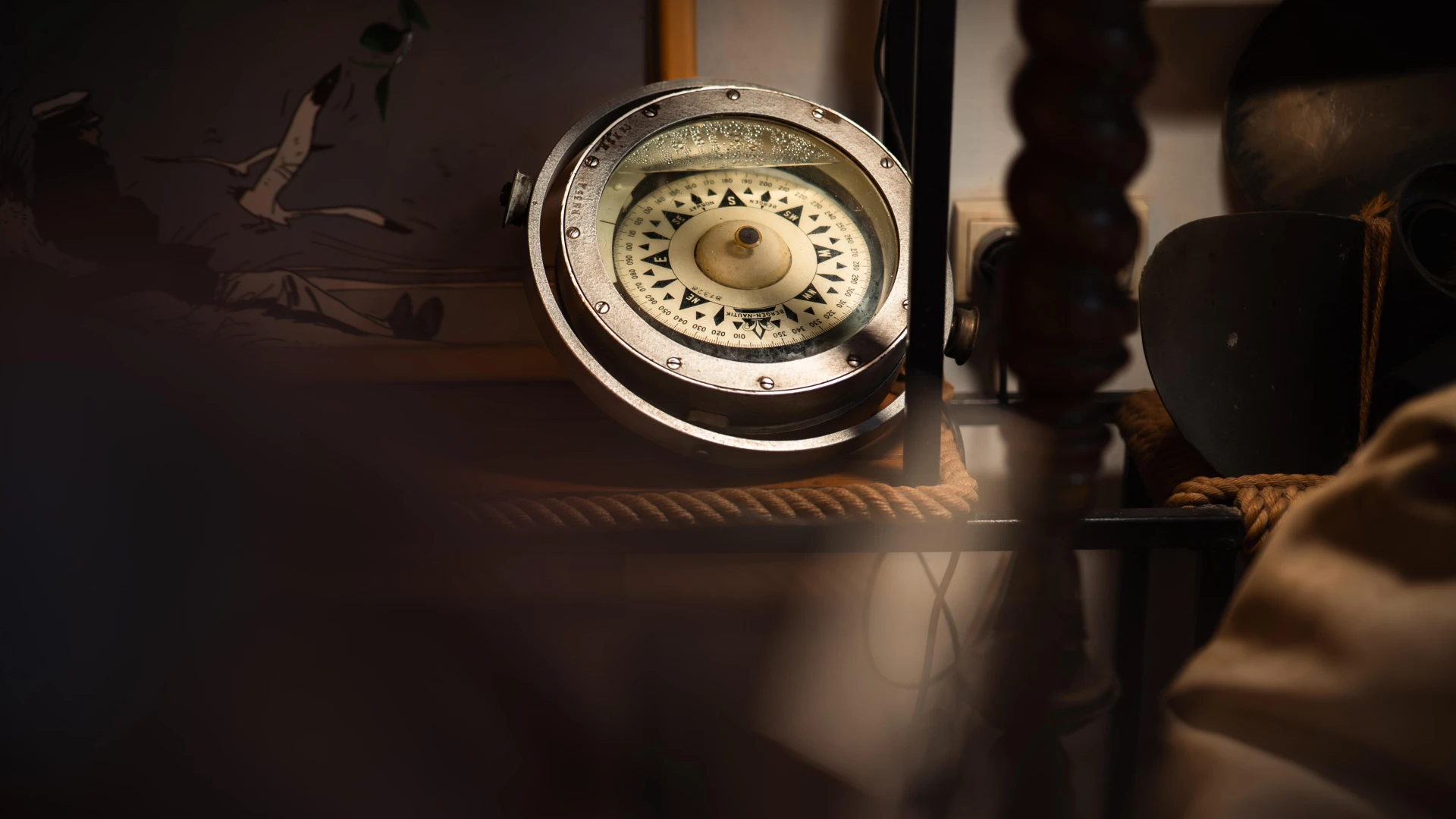
This military ship compass was a crucial tool for precision maritime navigation, used on warships and commercial vessels to maintain accurate direction in challenging conditions. Built from durable metal and engineered for maximum stability, it ensured the safety of crews for decades. A symbol of maritime exploration, essential in both classic and modern navigation.
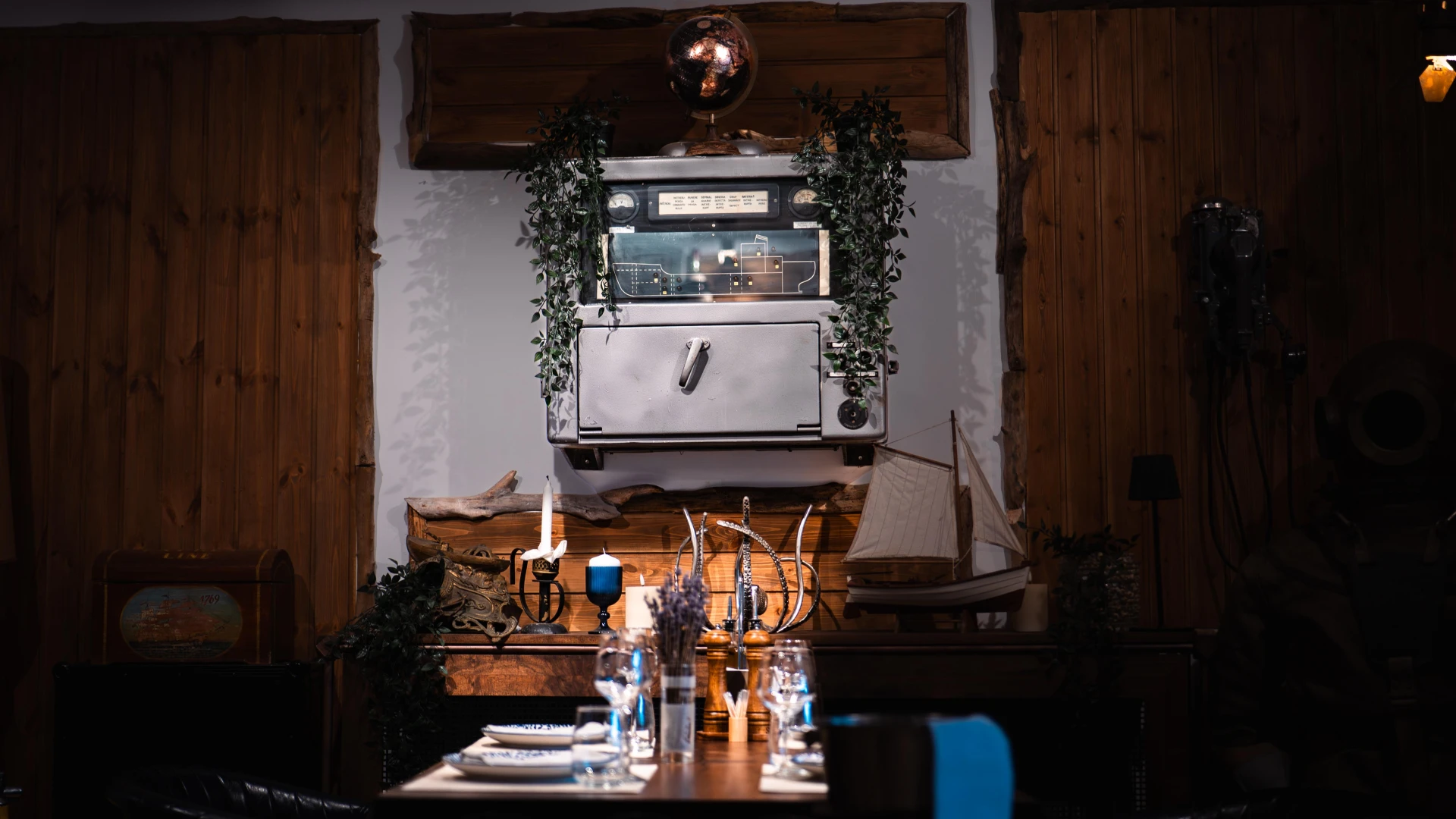
This Russian naval emergency panel was used for detecting and alerting the crew about hull breaches and structural damages. The system displayed affected areas and provided warnings for immediate action to prevent sinking. A crucial piece of maritime safety, now displayed at Terasa cu Ancore.
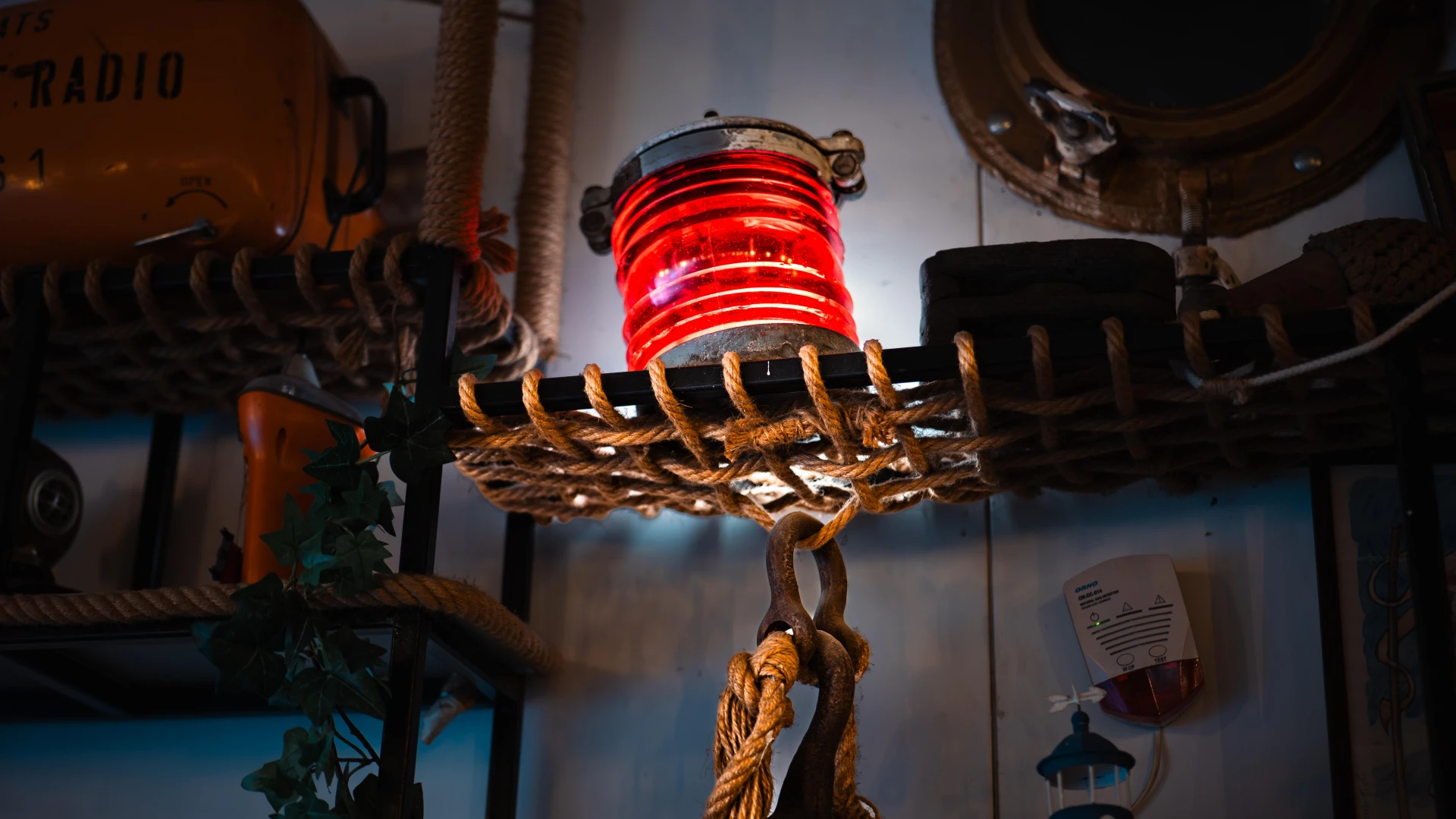
This red navigation light was used for indicating a vessel’s direction at night or in low visibility conditions. Placed on port or starboard, it played a critical role in collision prevention and compliance with international maritime regulations. Built with thick resistant glass and a durable metal casing, this light remains a symbol of safety and orientation at sea.