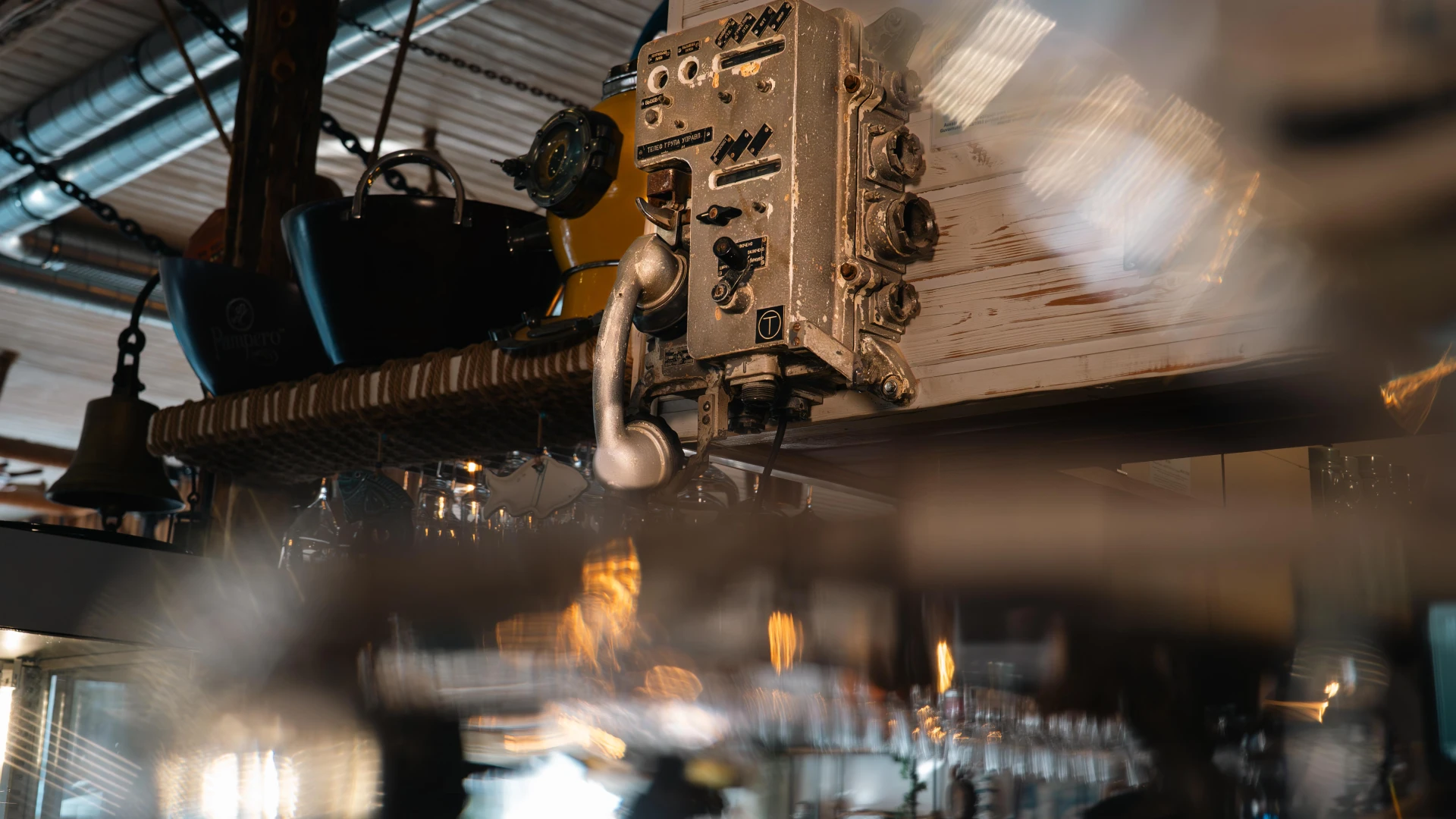
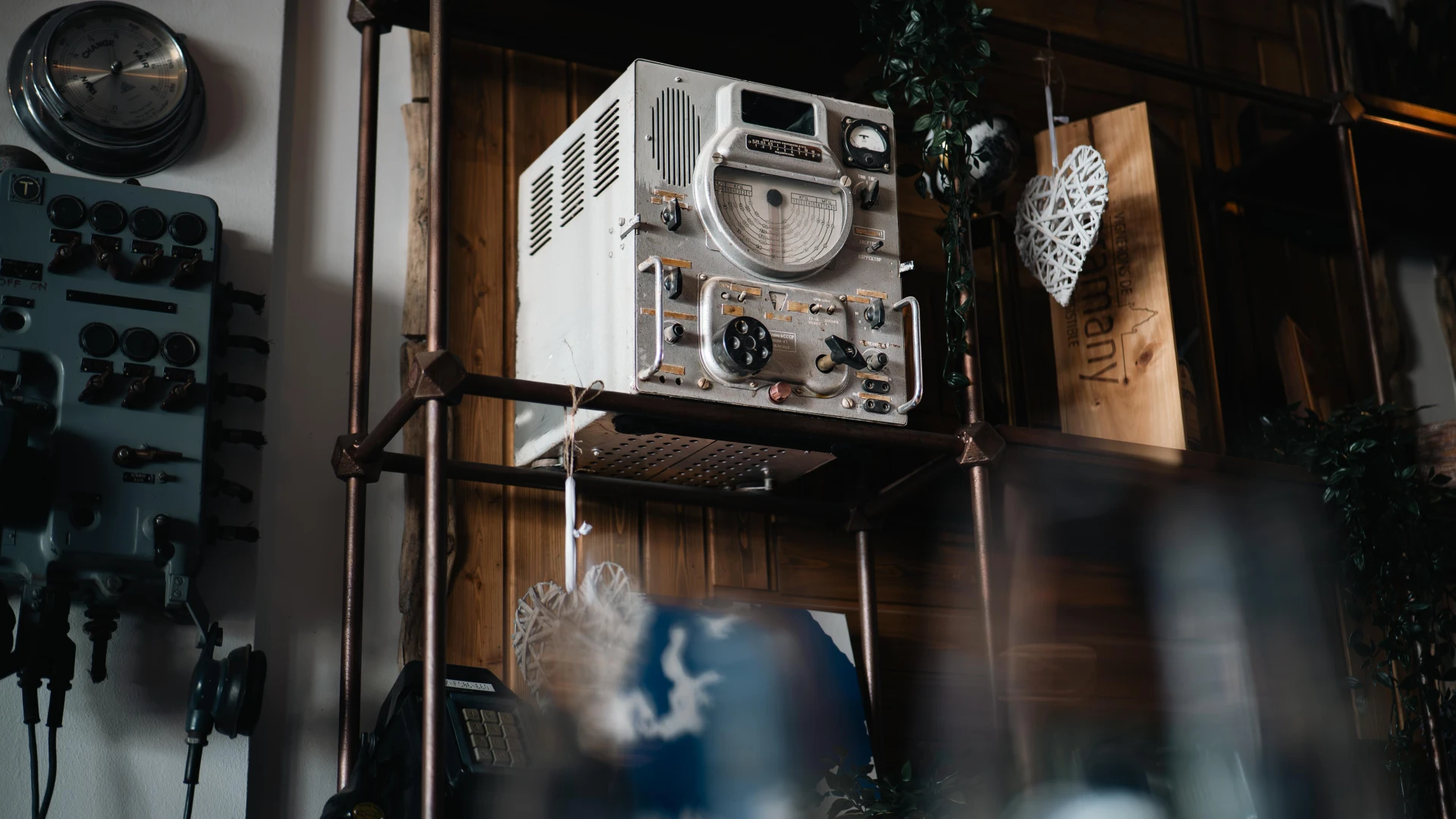
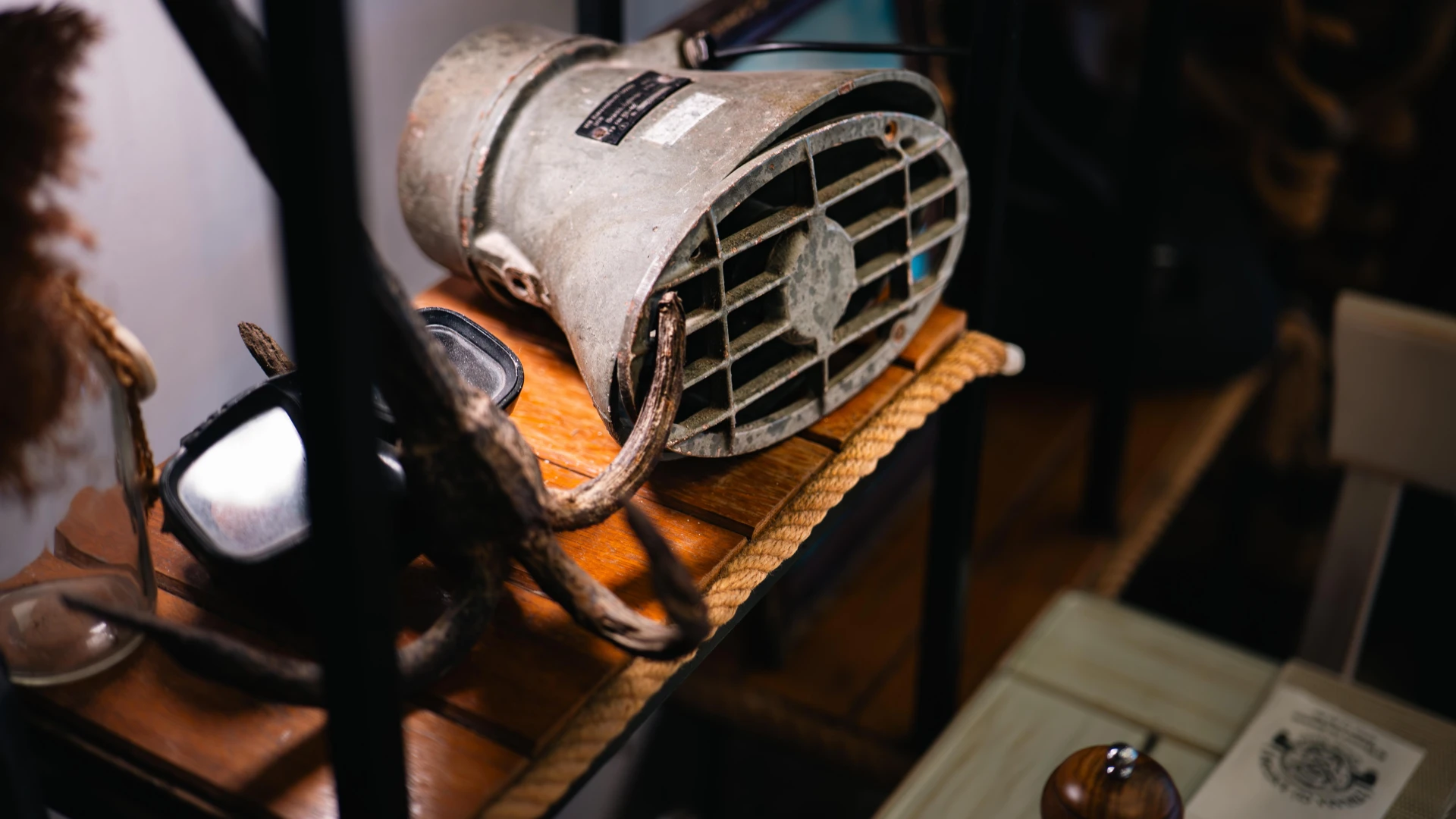
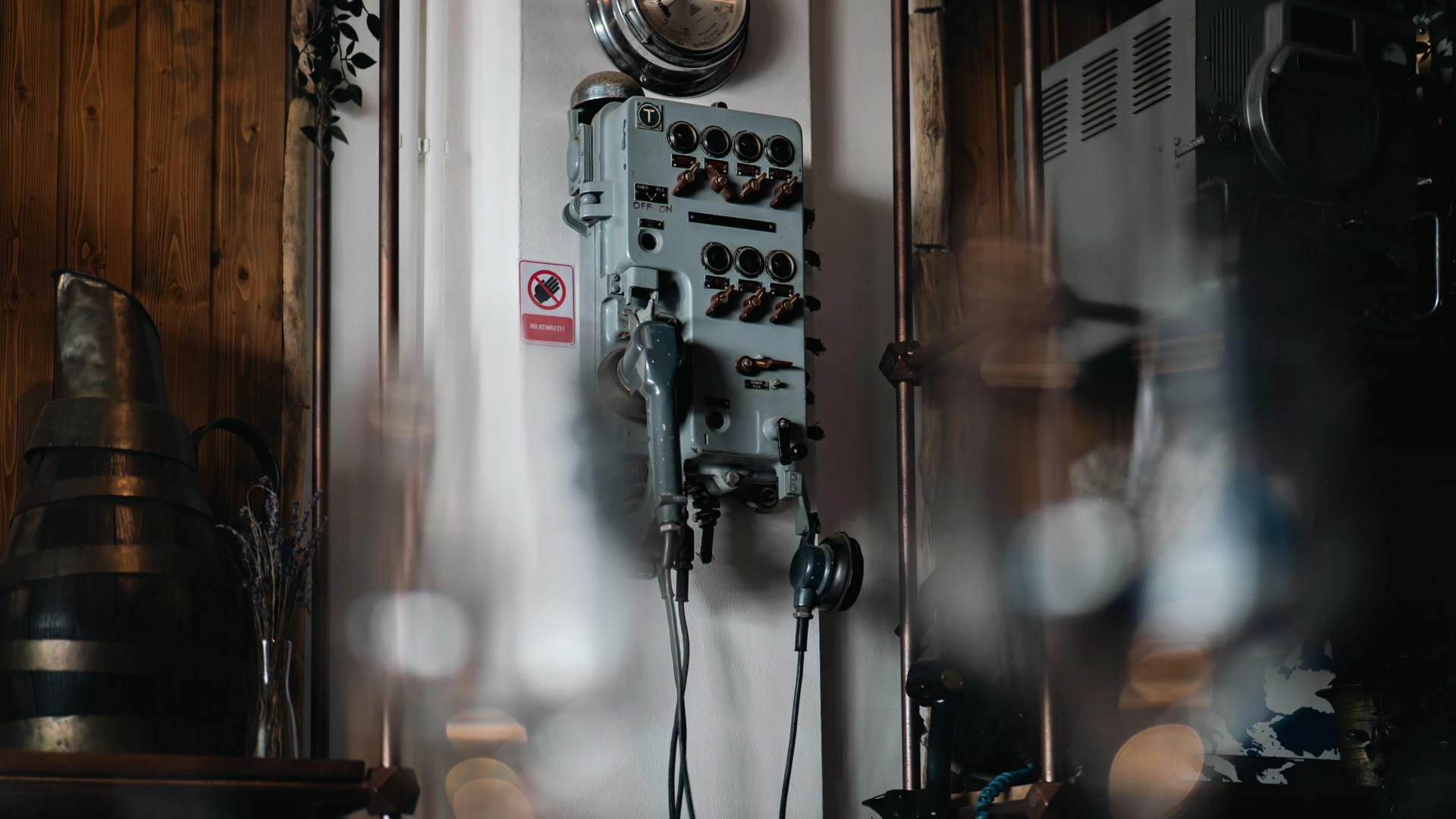
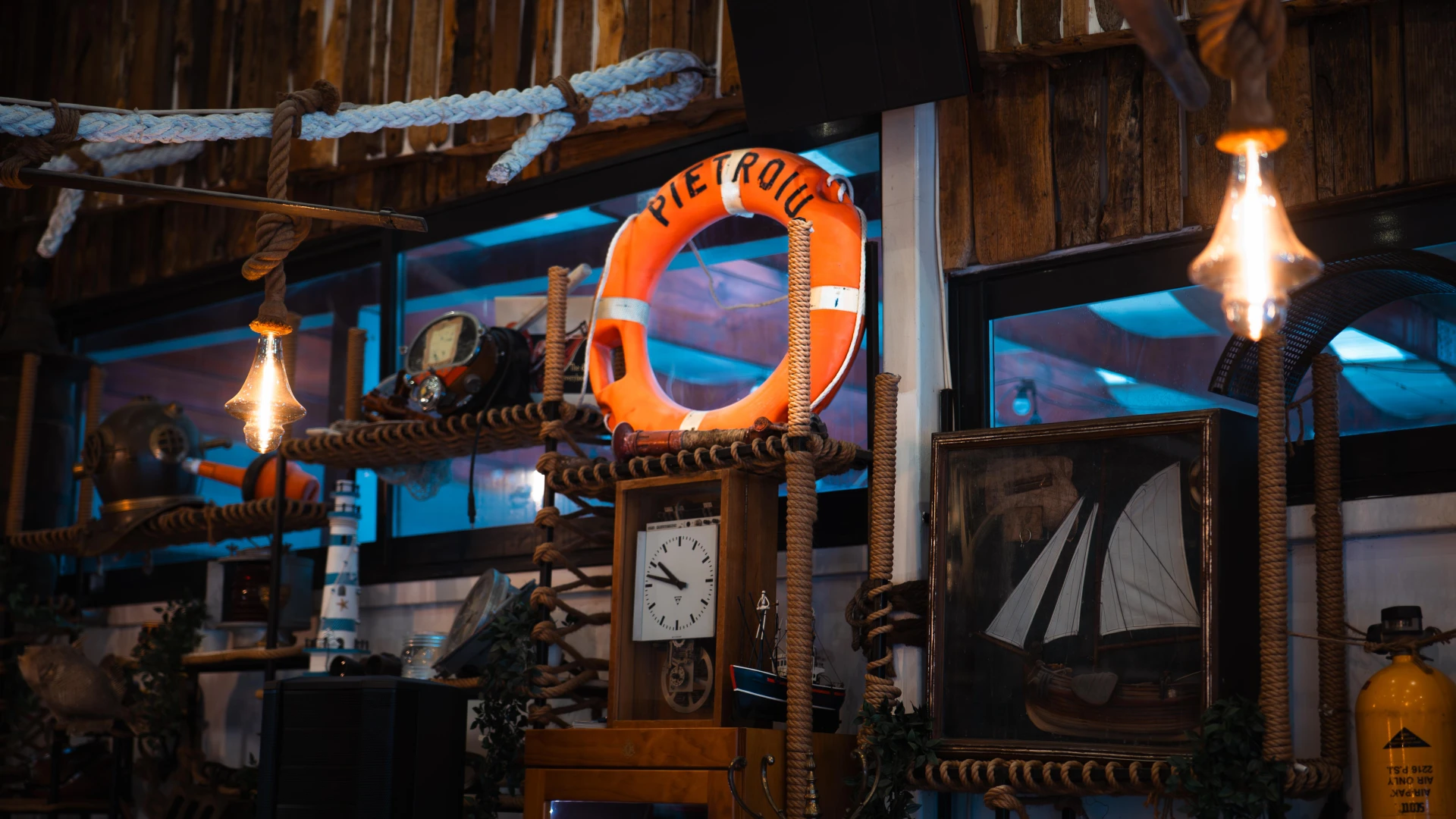
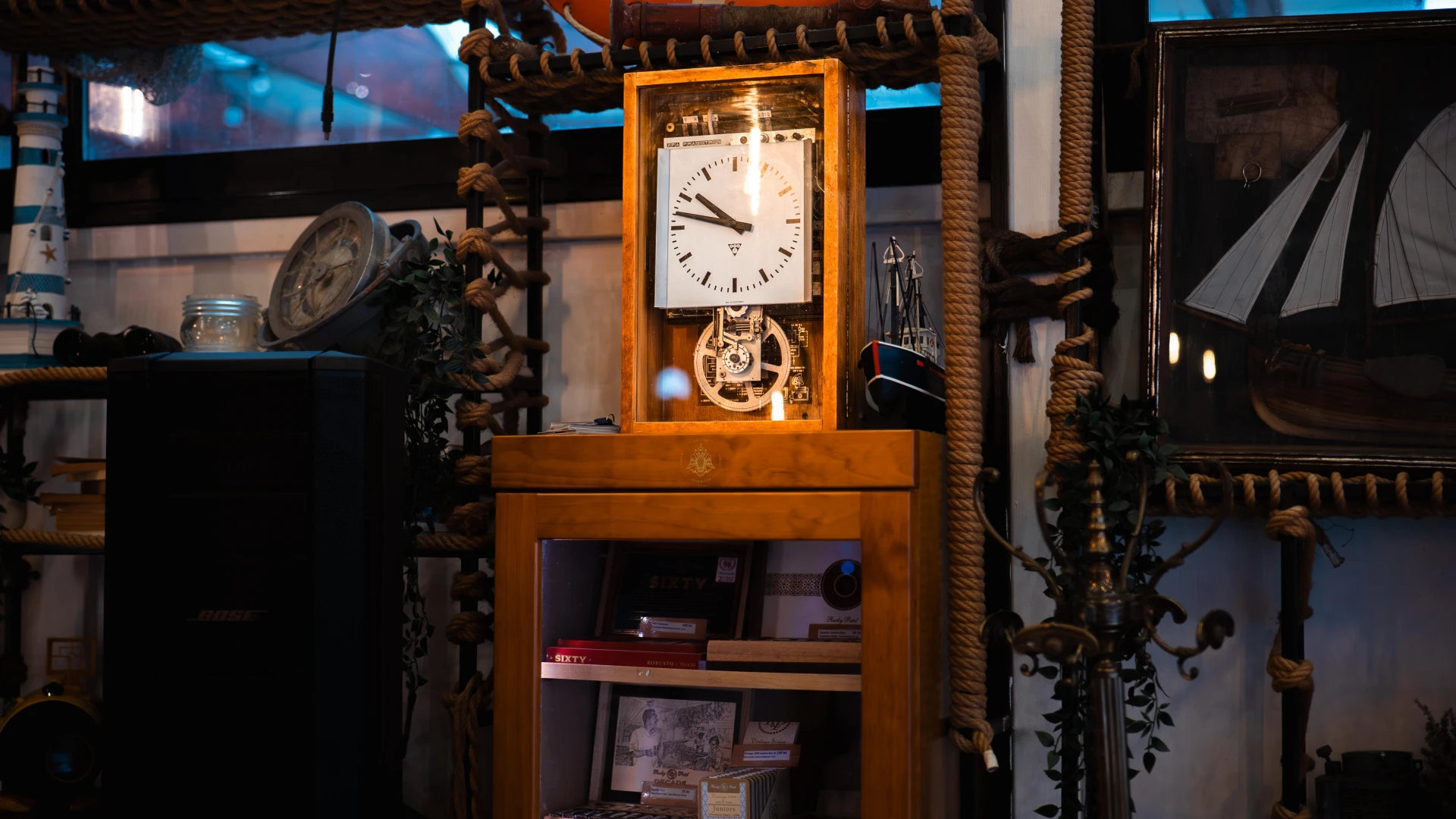
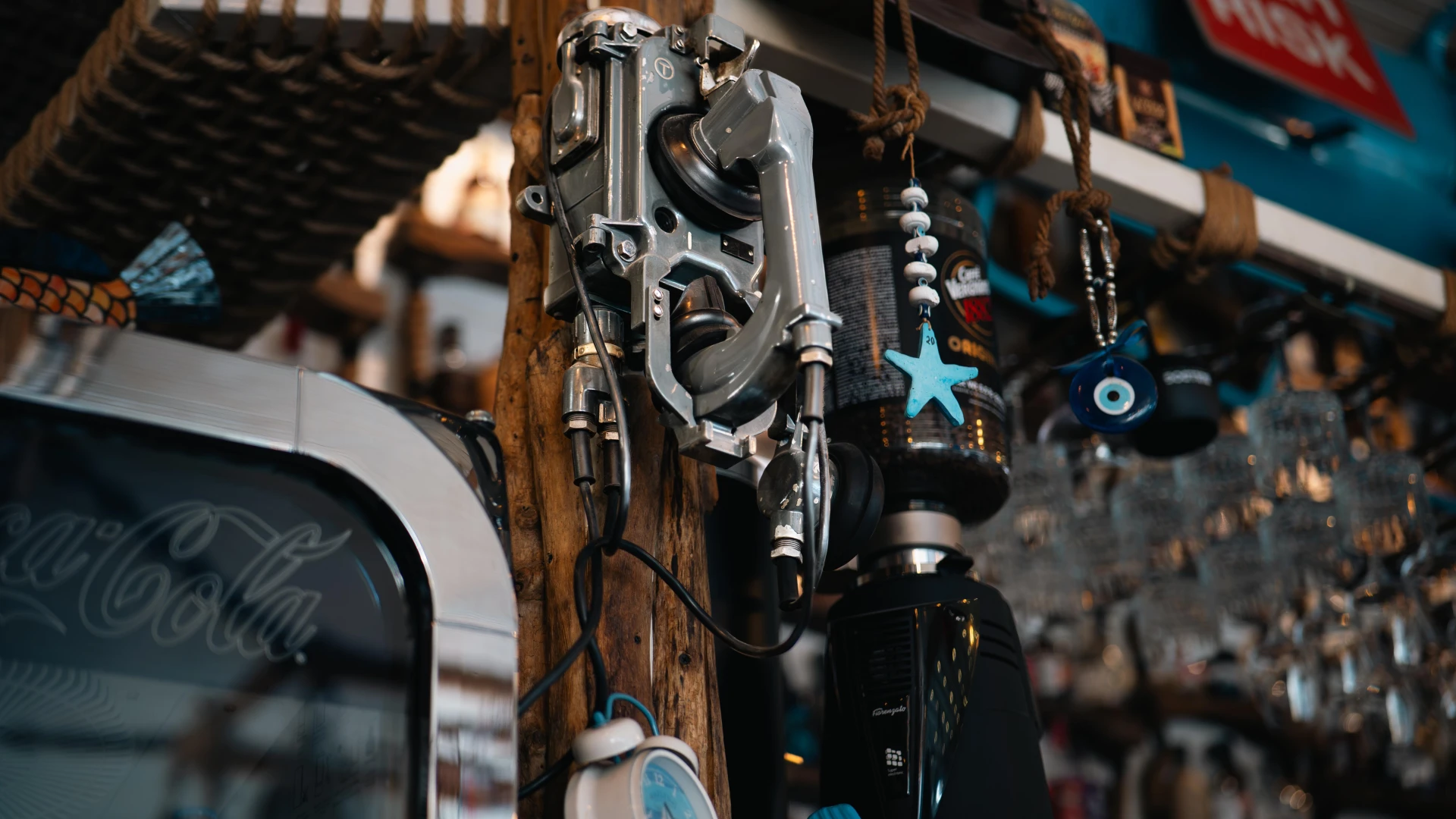
This naval telephone exchange was a vital communication system used on military and commercial ships, ensuring efficient crew coordination. Built to withstand extreme humidity and vibrations, it was commonly installed on submarines and warships for reliable signal transmission even in harsh conditions. Now a historical naval artifact, this resilient piece of maritime technology is displayed at Terasa cu Ancore, showcasing traditional naval communication methods.
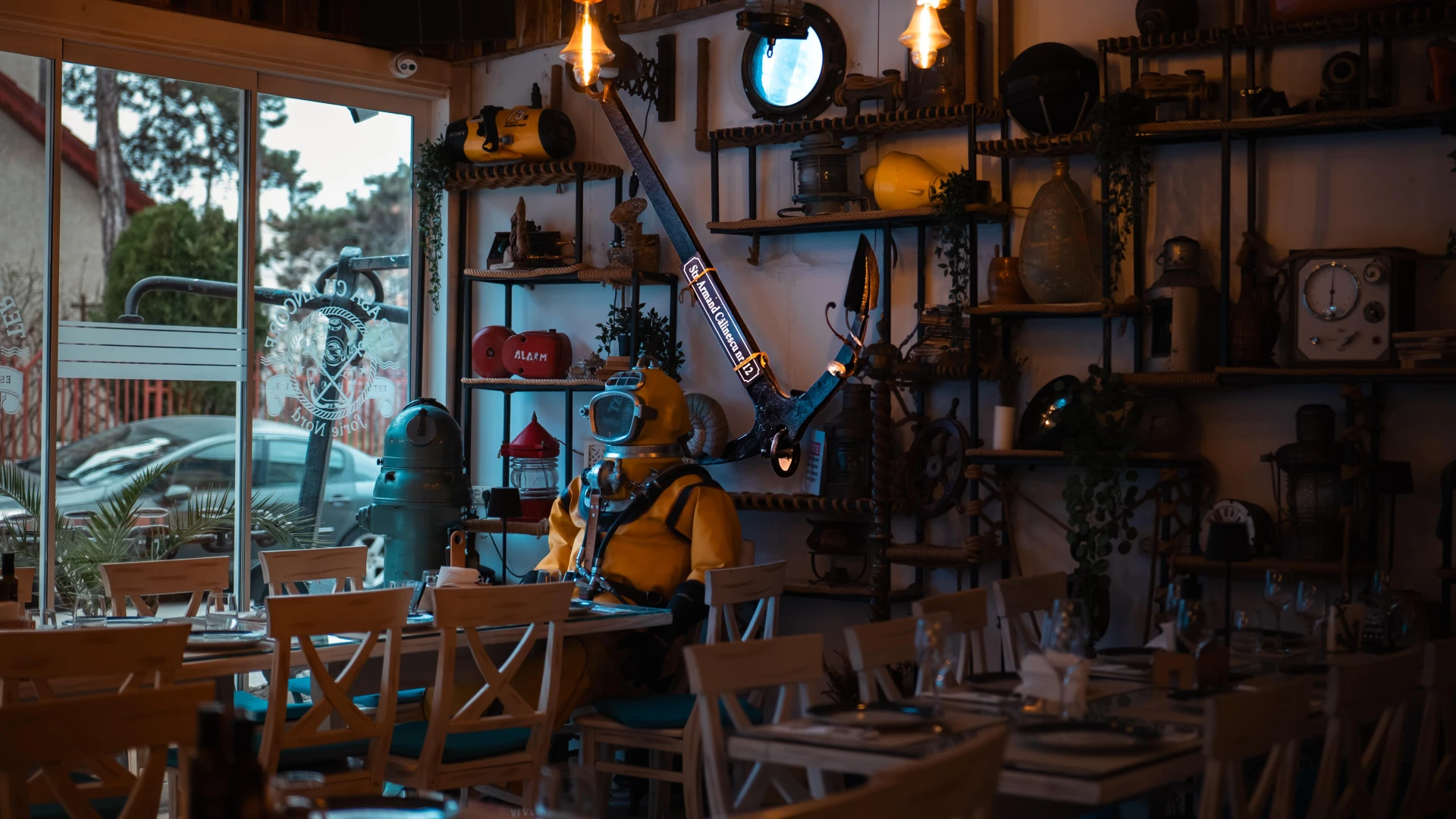
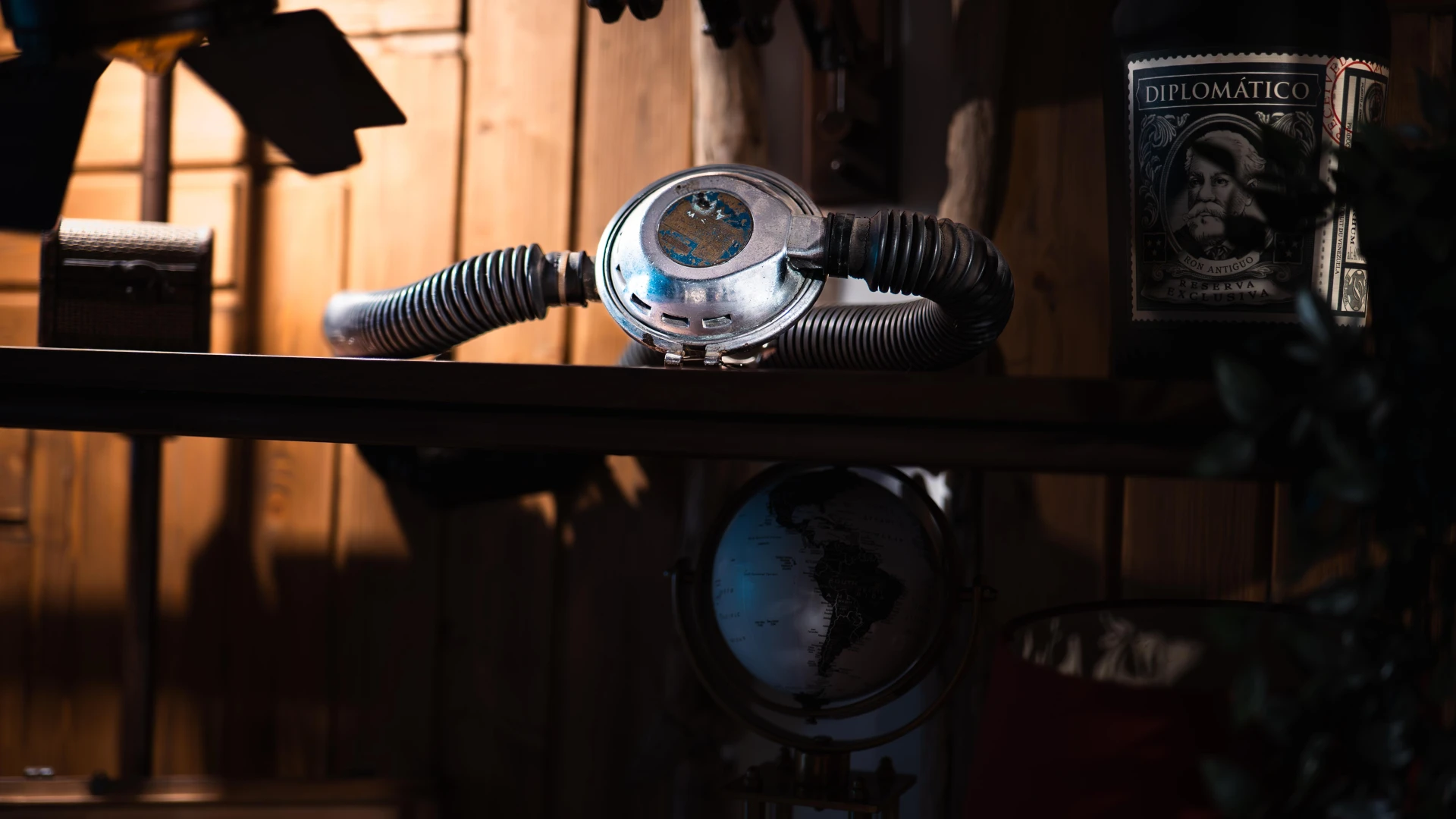
This Russian air compressor, designed for a single diver, was used on small boats and vessels. Built from durable metal, it was manually operated to provide breathable air during dives. Its compact and efficient design made it ideal for individual underwater missions, ensuring a steady air supply in demanding environments. A crucial relic of past diving technology.
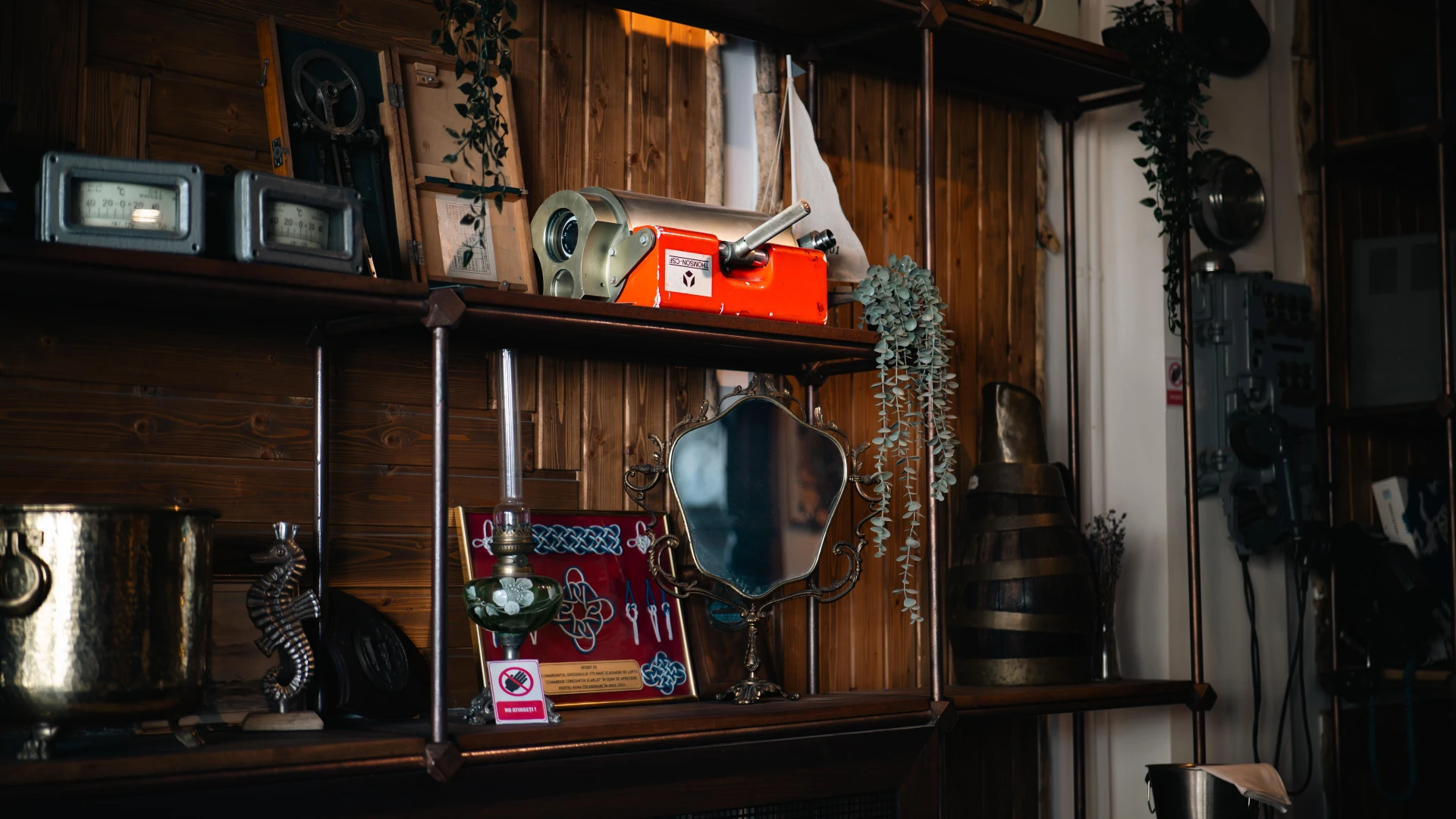
This underwater camera housing, designed by Spirotechnique, was used for marine exploration and underwater operations. It features surface-supplied power, while its optical and electronic system was developed by Thomson-CSF, ensuring high-quality imaging even at great depths. Equipped with a buoyancy compensator and ergonomic handle, it provided stable control underwater. A remarkable innovation in diving technology, now displayed at Terasa cu Ancore.
This ship’s helm, recovered by the NemoProDiving commercial diving team, once guided a now-sunken vessel. Made of solid wood and metal, it symbolizes control and maritime mastery. Designed for precise navigation, each spoke helped steer the ship safely through challenging waters. A true nautical relic, honoring the craftsmanship of ancient seafarers.
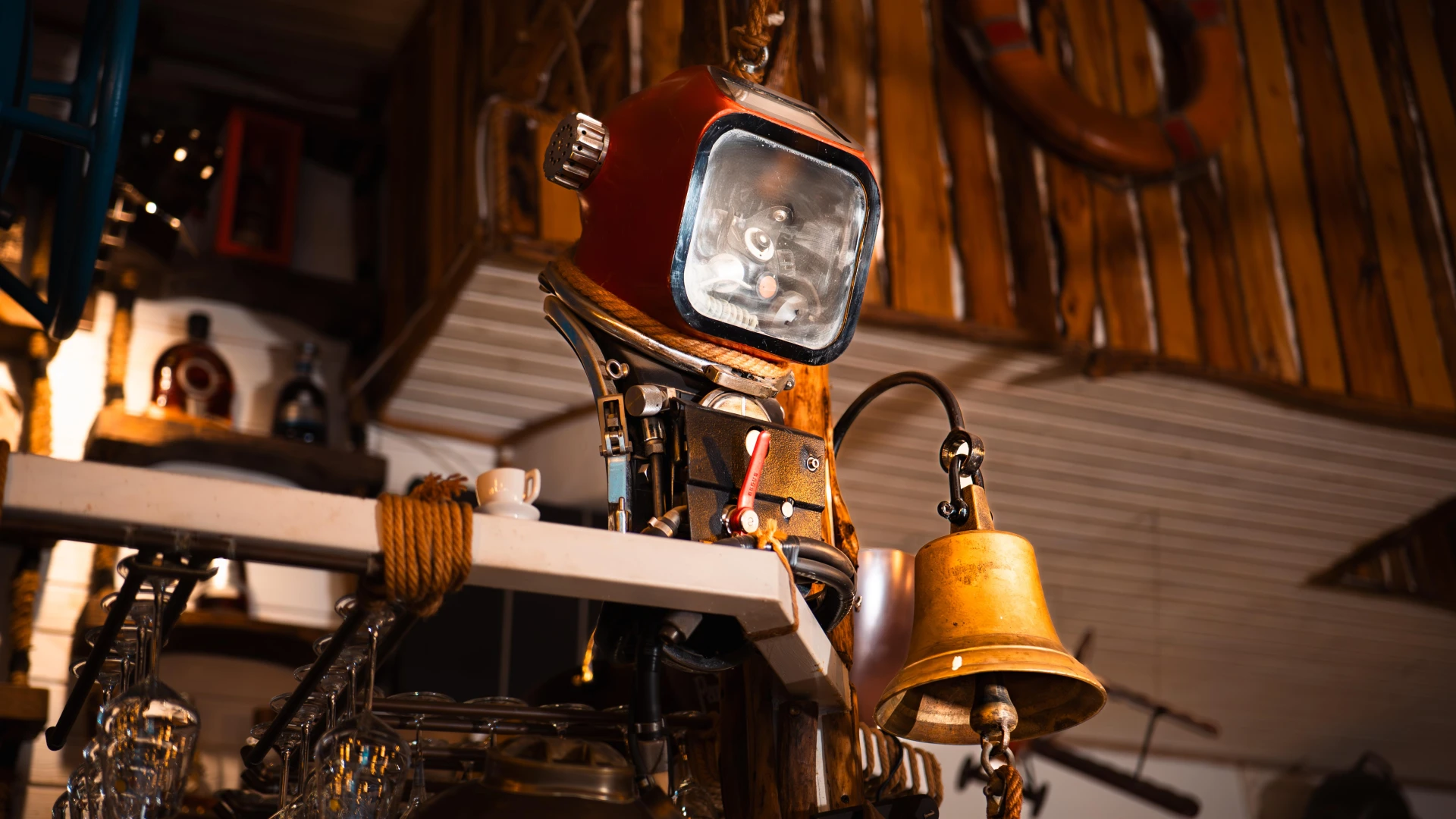
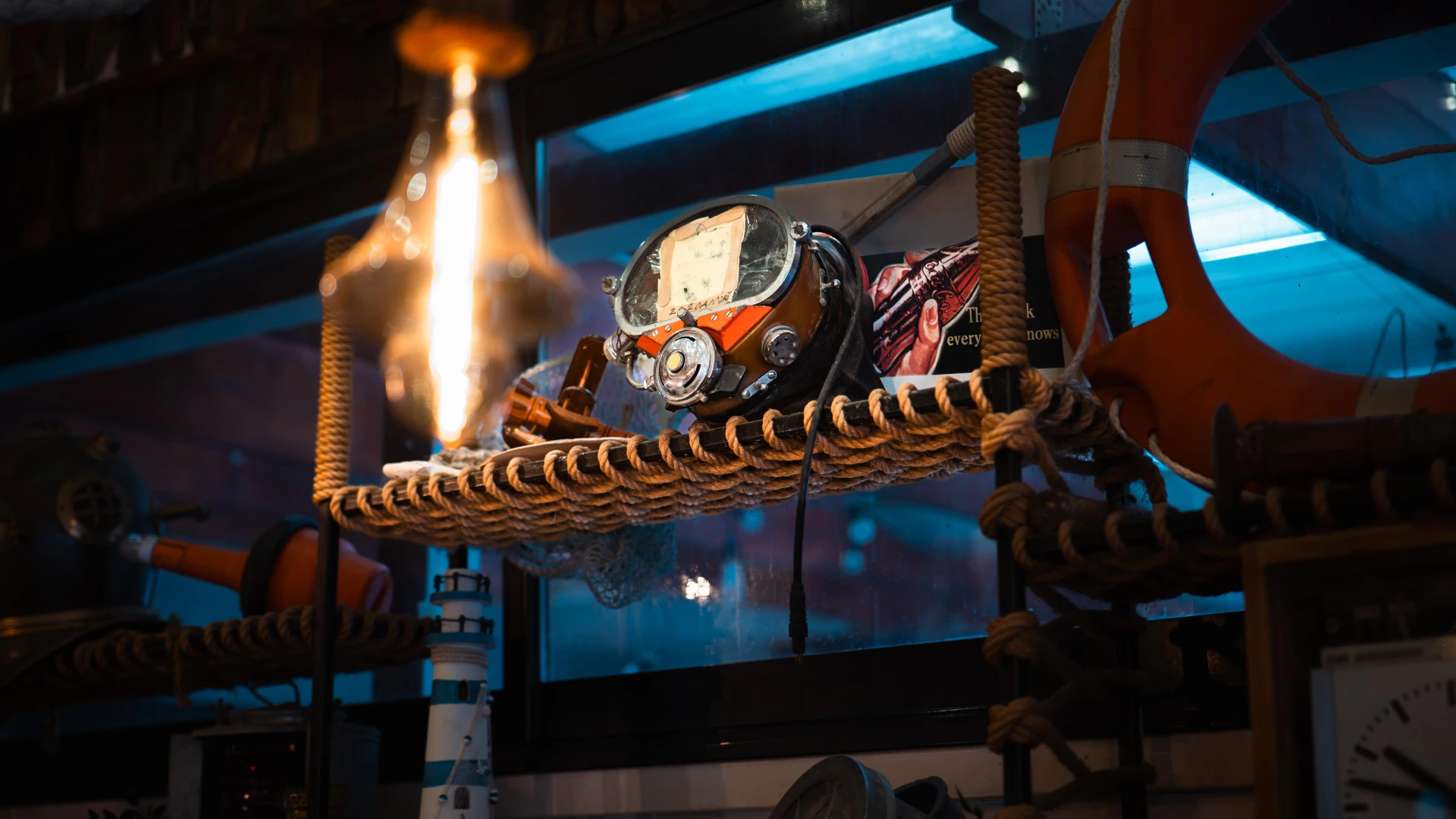
This La Spirotechnique helmet, a French prototype for deep-sea diving, operates with surface-supplied air and a helium-oxygen gas mix. Featuring a large, watertight visor, it provides optimal visibility in extreme underwater conditions. Used in technical and research diving, this rare piece marks a significant step in the evolution of deep-sea equipment.
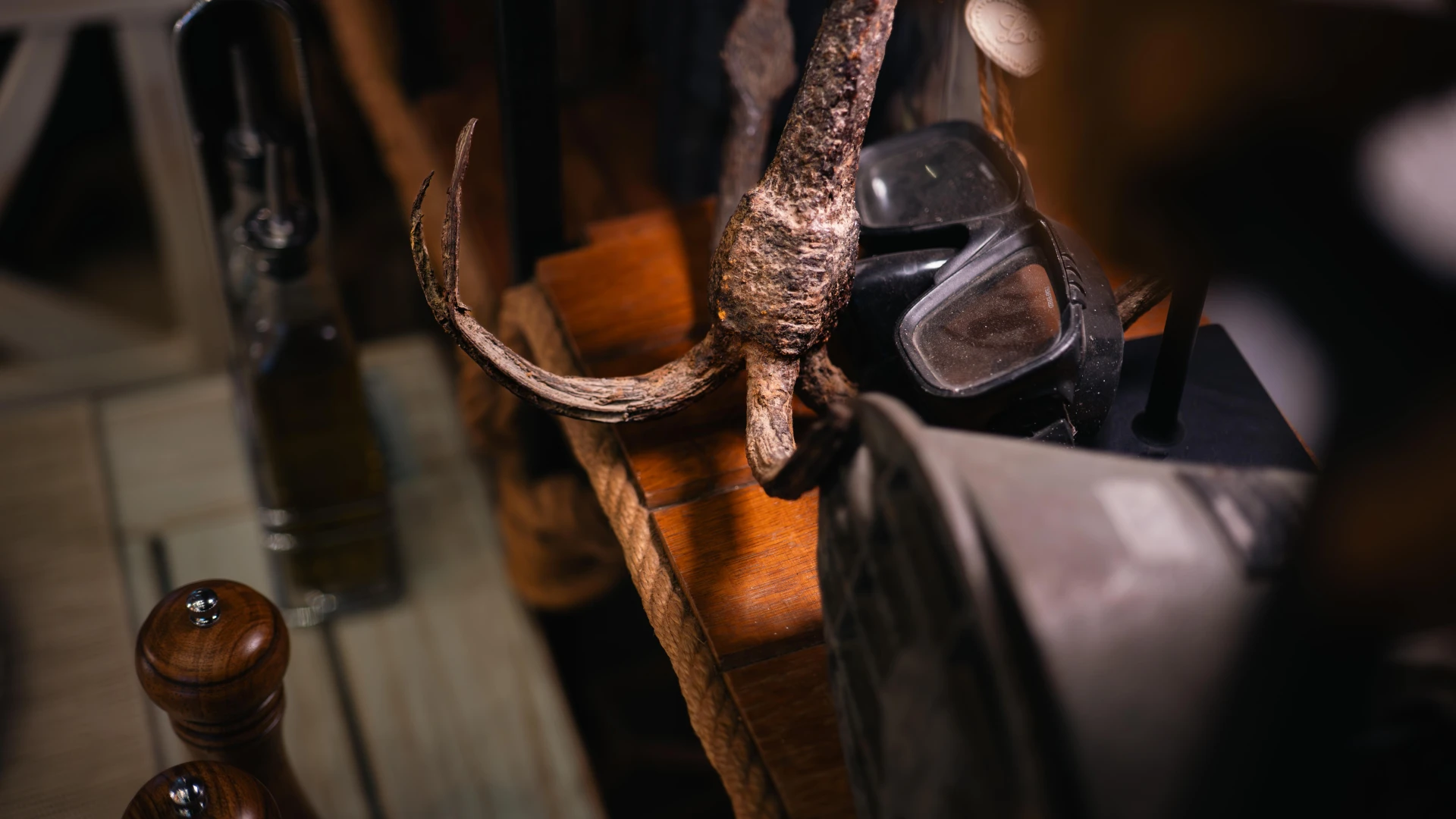
This Admiralty anchor is a crucial element in maritime navigation, widely used on commercial and military vessels to ensure stability during anchoring. With its classic design, it is renowned for its reliability and durability in all sea conditions. Recovered and restored, this historical piece stands as a reminder of maritime traditions and the importance of safety at sea.
This naval telephone switchboard, equipped with a dynamo, was used on military, commercial ships, and submarines to ensure reliable internal communications. Designed for maximum reliability in extreme conditions, it allowed crew members to stay connected across key ship compartments, even in the event of a power failure. Its robust system and moisture-resistant technology made it a standard in maritime communications. Now displayed at Terasa cu Ancore, it showcases the evolution of naval technology.
This naval coil phone, used on commercial ships and military submarines, ensured effective communication in high-noise environments and extreme conditions. Its self-powered transmission system made it indispensable for emergency situations, and it is still in use today for specific maritime applications. Compact and durable, this device showcases the reliability of classic naval equipment. Displayed at Terasa cu Ancore, it stands as a key artifact in maritime communication history.
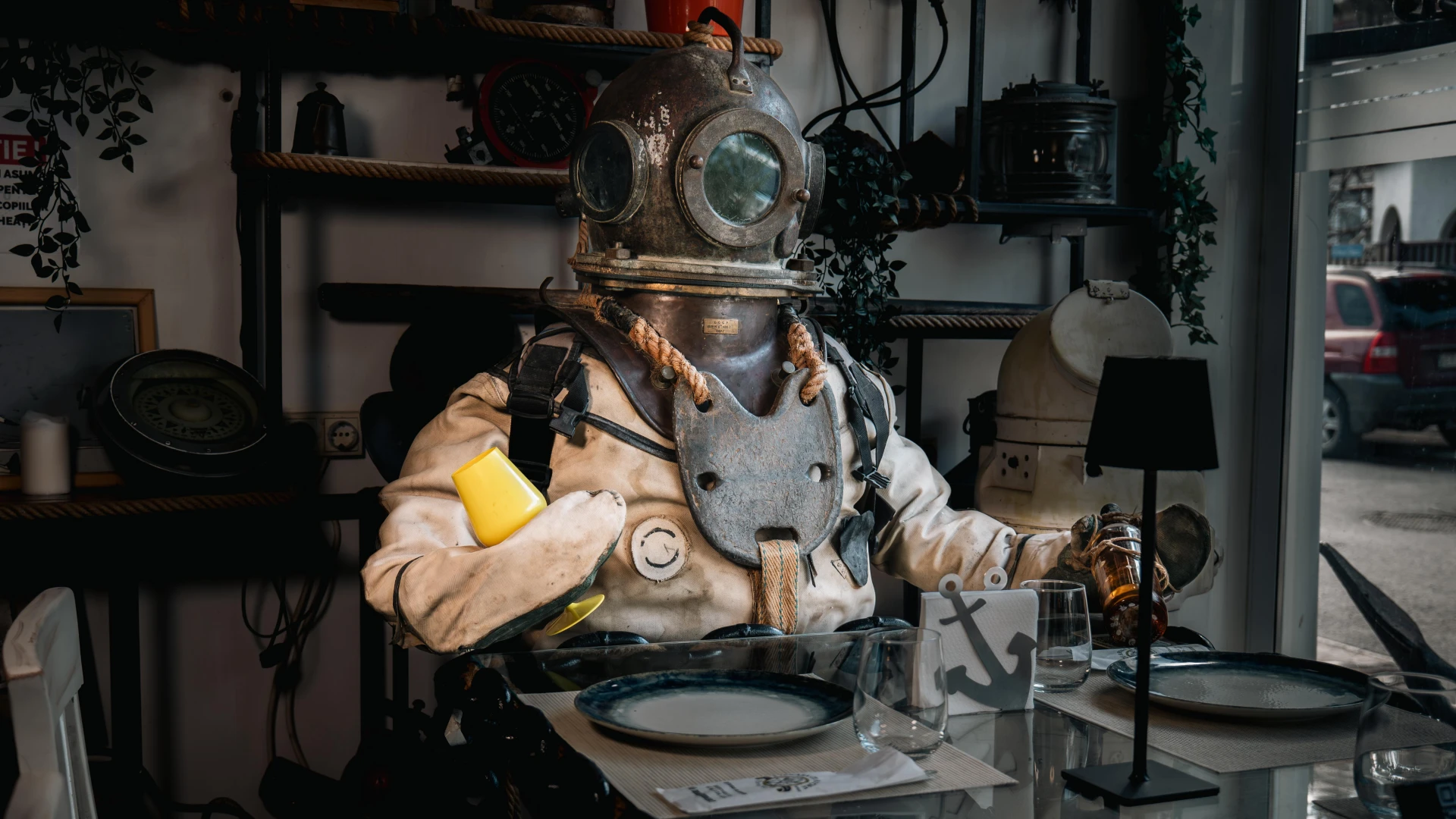
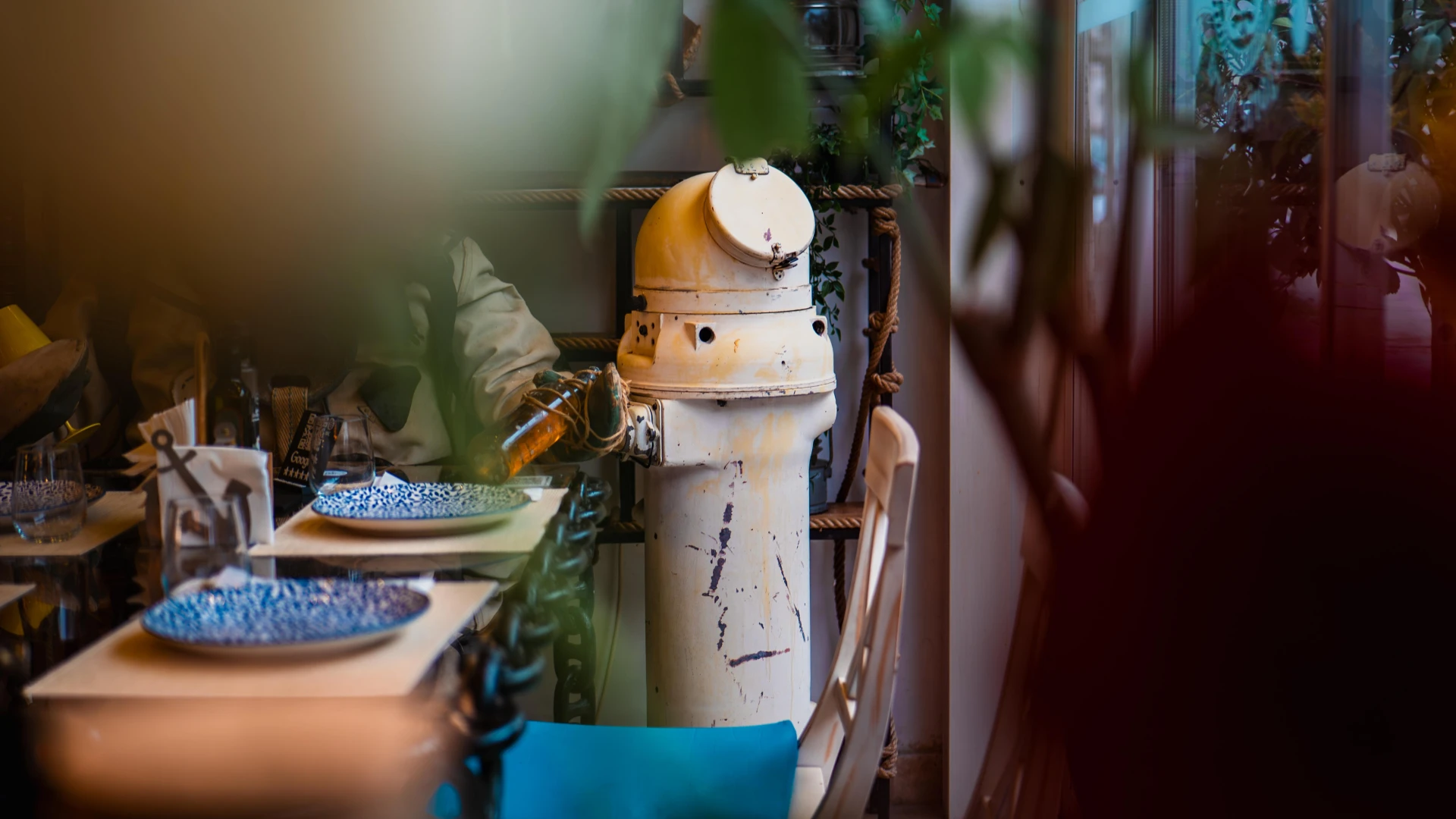
This Soviet diving helmet, a vintage model used in military and industrial underwater operations, showcases the durability and engineering of its era. Made from copper and brass, it was designed for deep-sea dives, ensuring maximum protection. Alongside it, the two propellers belonged to a high-speed military vessel, engineered for agility and superior performance at sea. These remarkable artifacts are now displayed at Terasa cu Ancore, preserving maritime and diving history.
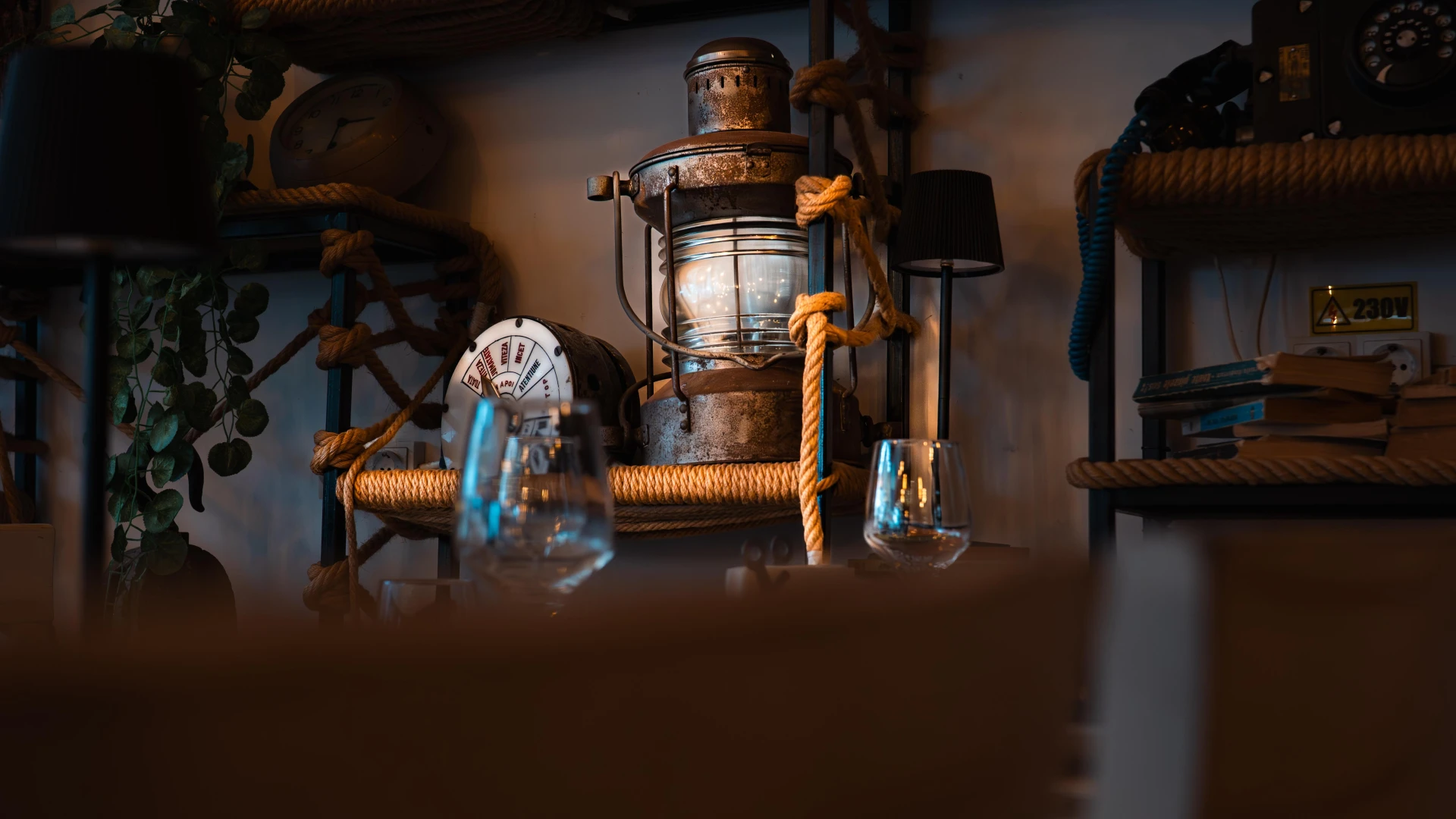
This engine order telegraph was a key component in navigational command aboard merchant and military vessels. Constructed from durable metal with an enameled panel, it facilitated communication between the bridge and engine room, ensuring precise speed and direction adjustments. A true testament to classic maritime engineering, this rare artifact recalls an era when manual operations demanded skill and accuracy from the crew.
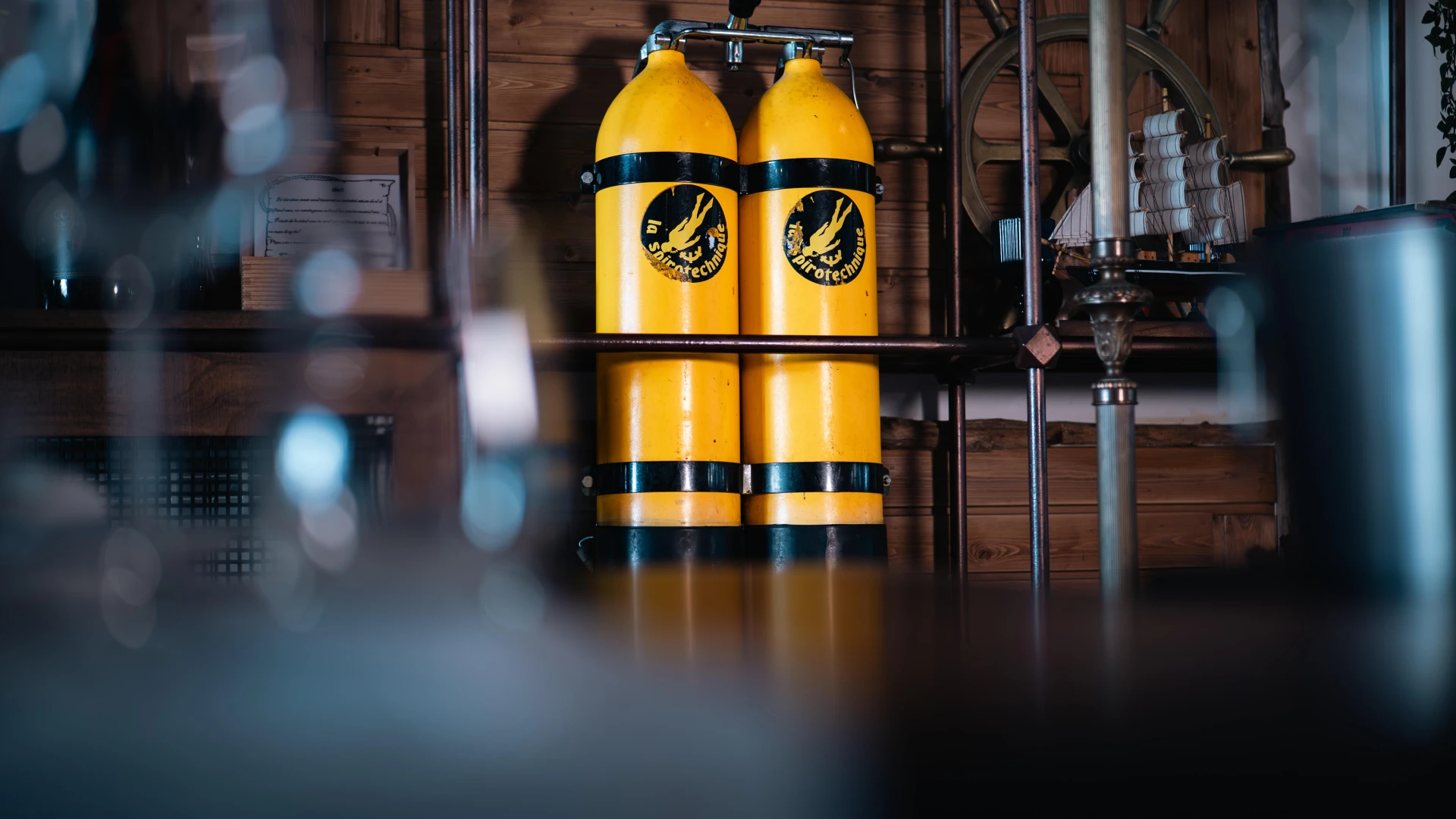
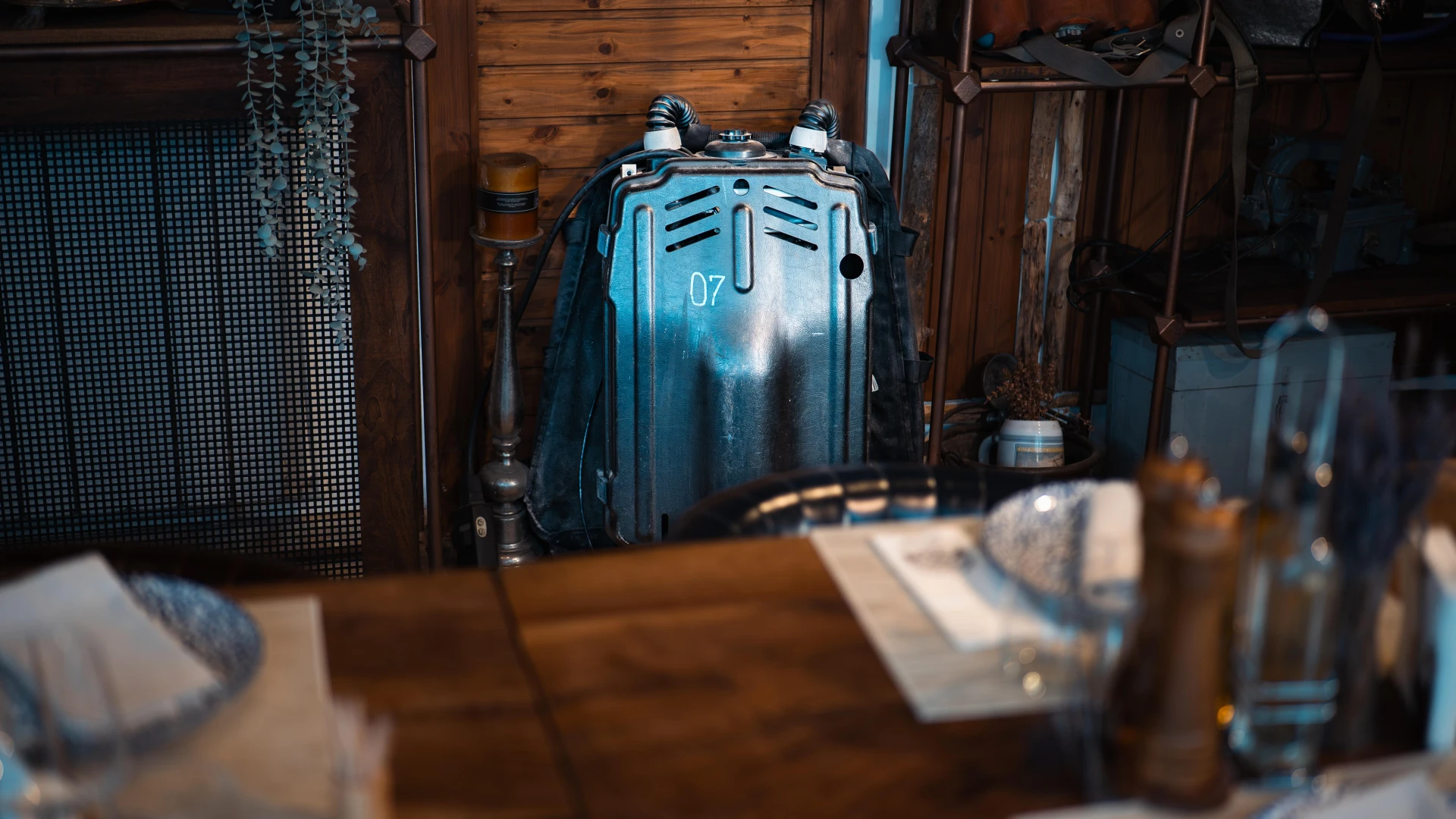
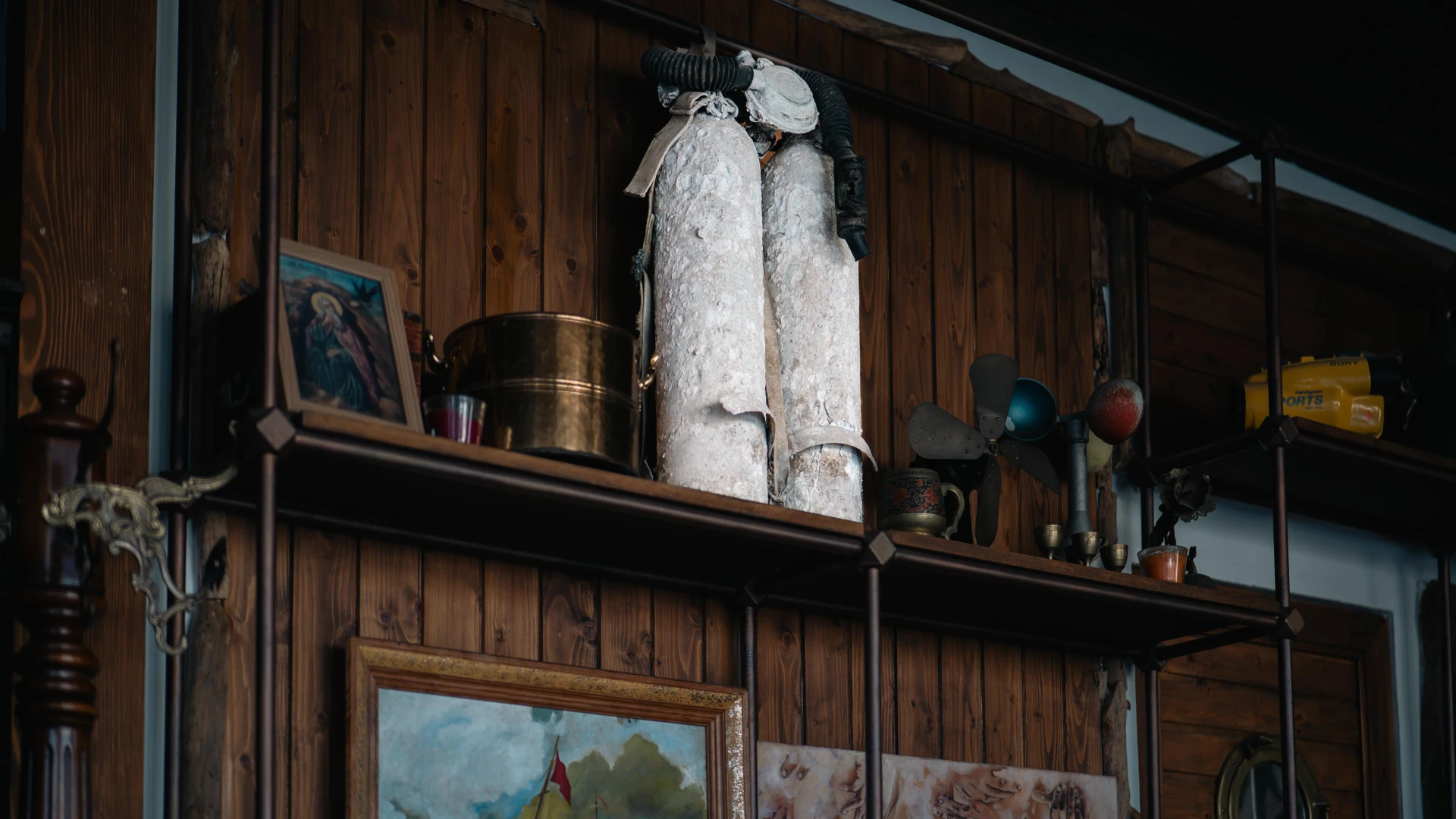
This French-made Spirotechnique bi-bouteille tank was designed for professional and military diving. Built for reliability and extended autonomy, it allowed divers to operate at greater depths with an optimal air supply. Featuring a sturdy design and balanced distribution system, this equipment set the standard in diving technology. Now displayed at Terasa cu Ancore, this rare piece showcases underwater exploration advancements.
The Aalborg RT 144C marine radio, manufactured in Denmark, was used for VHF communication on commercial and military vessels. With a durable design and adjustable frequencies, this system ensured clear and stable transmissions, even in harsh maritime conditions. As a crucial tool for safe navigation, it enabled ships to stay connected with ports and other vessels. This historic piece, a symbol of reliability in maritime radio communication, is now displayed at Terasa cu Ancore.
This English stern/bow lantern, crafted from solid brass, was used on ships for signaling and nighttime illumination. Its sturdy design and corrosion-resistant materials ensured long-term functionality in harsh maritime conditions. The thick glass shielded the internal flame from wind and water, providing sailors with a reliable source of light during dark nights at sea. A historic maritime artifact that preserves the elegance of its era.
This naval telephone exchange was a vital communication system used on military and commercial ships, ensuring efficient crew coordination. Built to withstand extreme humidity and vibrations, it was commonly installed on submarines and warships for reliable signal transmission even in harsh conditions. Now a historical naval artifact, this resilient piece of maritime technology is displayed at Terasa cu Ancore, showcasing traditional naval communication methods.
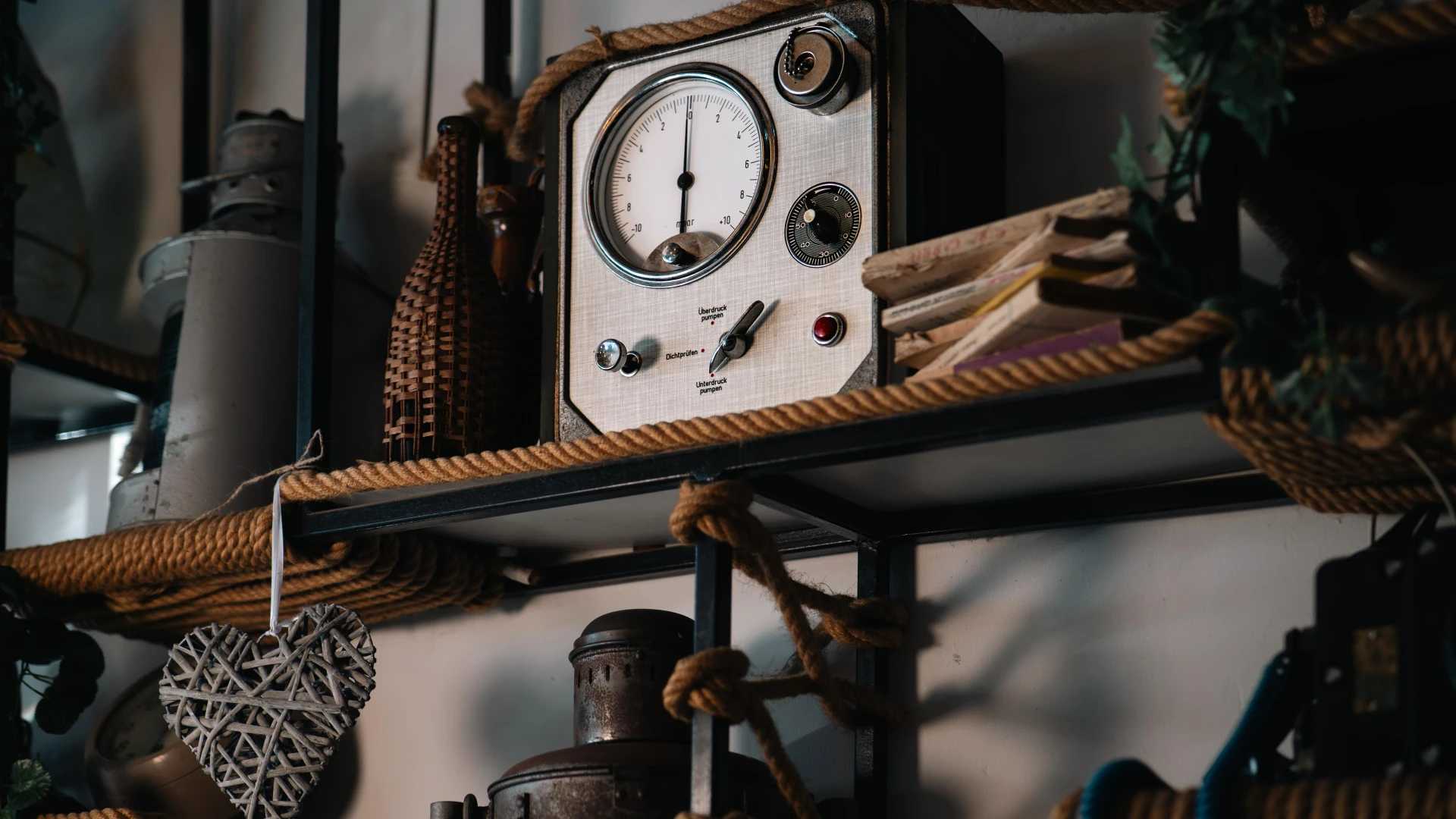
This manual air distribution panel, built in Germany 80 years ago, supplied two divers simultaneously from a single hand-operated air pump. Equipped with pressure gauges and adjustable valves, it was essential for surface-supplied diving, allowing precise air control. A rare and fascinating piece of historical diving technology.
Designed for extreme missions, this Dräger heavy diving suit (1960-1970) was used for contaminated water operations and surface-supplied underwater work. Made from materials resistant to chemicals and biological hazards, this suit provided maximum protection and complete sealing. A true symbol of industrial diving, it played a crucial role in high-risk technical interventions, proving unmatched reliability and safety.
This bronze ship wheel, dating back to the 1950s, belonged to a steam-powered commercial vessel, representing the golden age of maritime trade. Crafted with exceptional engineering, it played a crucial role in steering and maneuvering ships through vast oceanic routes. Built for endurance and precision, these wheels were designed to withstand the harshest sea conditions. Today, this historic artifact is displayed at Terasa cu Ancore, preserving the legacy of classic navigation.
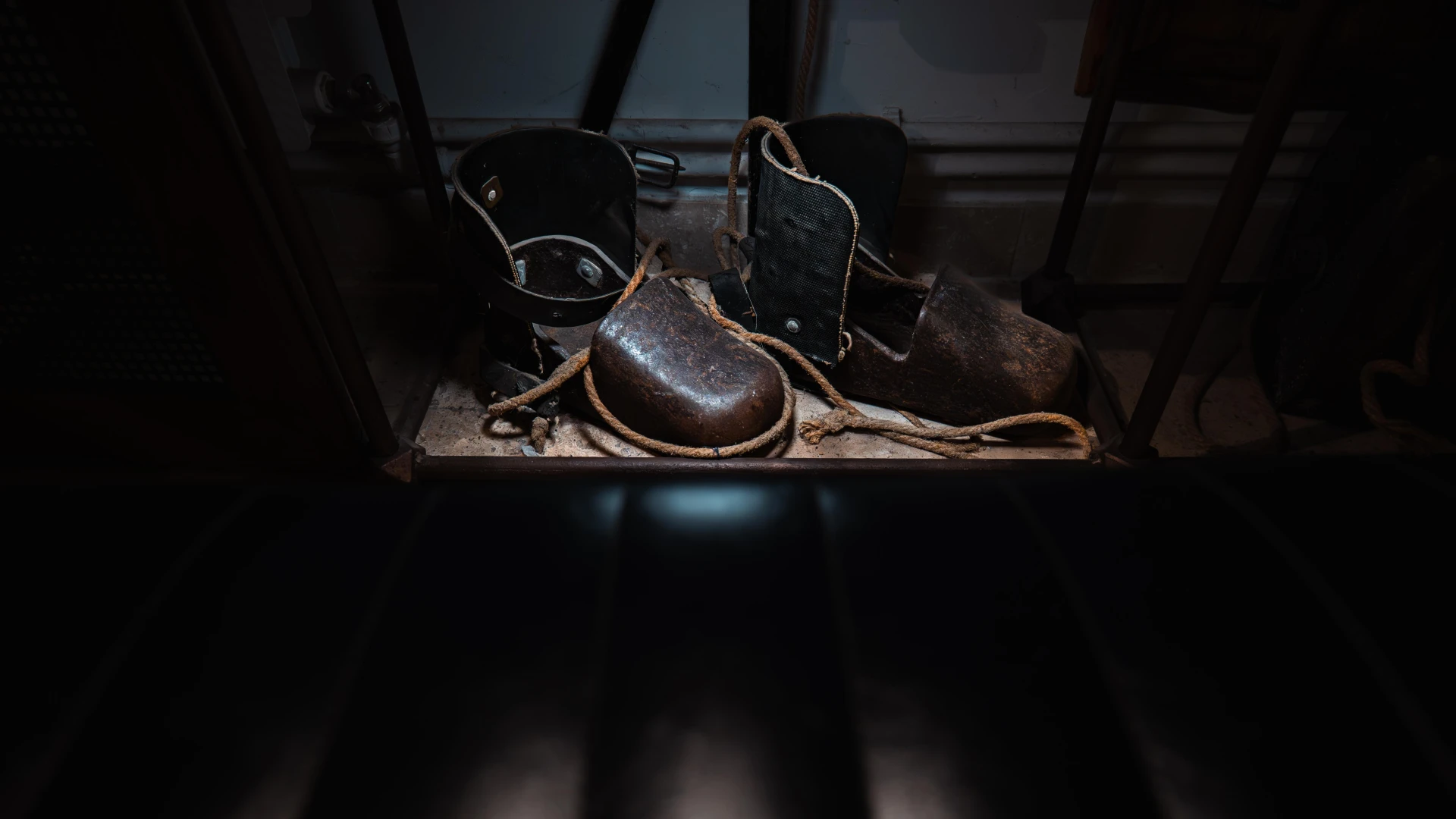
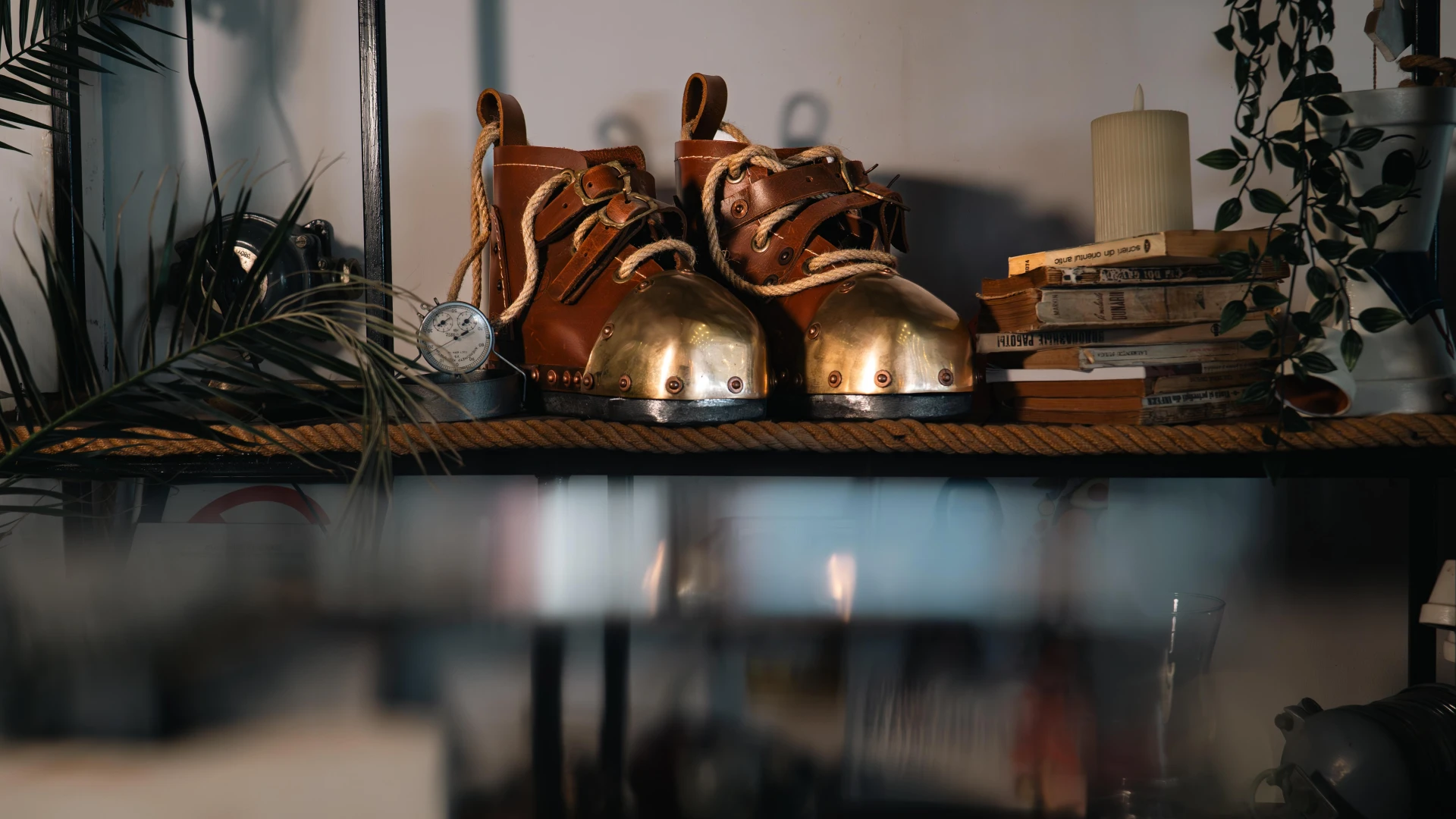
These English heavy diving boots, featuring a bronze toe cap and lead sole, weigh 10 kg each, ensuring firm footing on the seafloor. Used in industrial and military diving, they provided divers with stability underwater and prevented unintended buoyancy. Their robust design showcases British maritime engineering expertise. Now displayed at Terasa cu Ancore, these historical boots offer a glimpse into classic deep-sea diving gear.
This Russian heavy diving gear includes a suit that is over 100 years old, originally used in industrial underwater operations, paired with a Russian helmet from 1981. The lead-plated vest provides stability at depth, while the robust metal helmet ensures protection and underwater communication. This set is a remarkable example of Soviet maritime engineering, used successfully by professional divers in extreme underwater conditions.
This wooden nautical pulley, over 200 years old, was an essential tool on sailing ships, used to hoist sails and lift heavy objects. Crafted from solid wood and metal, this robust mechanism was widely employed on merchant and military vessels, showcasing durability and efficiency in extreme maritime conditions. A true relic of traditional naval engineering.
This military ship compass was a crucial tool for precision maritime navigation, used on warships and commercial vessels to maintain accurate direction in challenging conditions. Built from durable metal and engineered for maximum stability, it ensured the safety of crews for decades. A symbol of maritime exploration, essential in both classic and modern navigation.
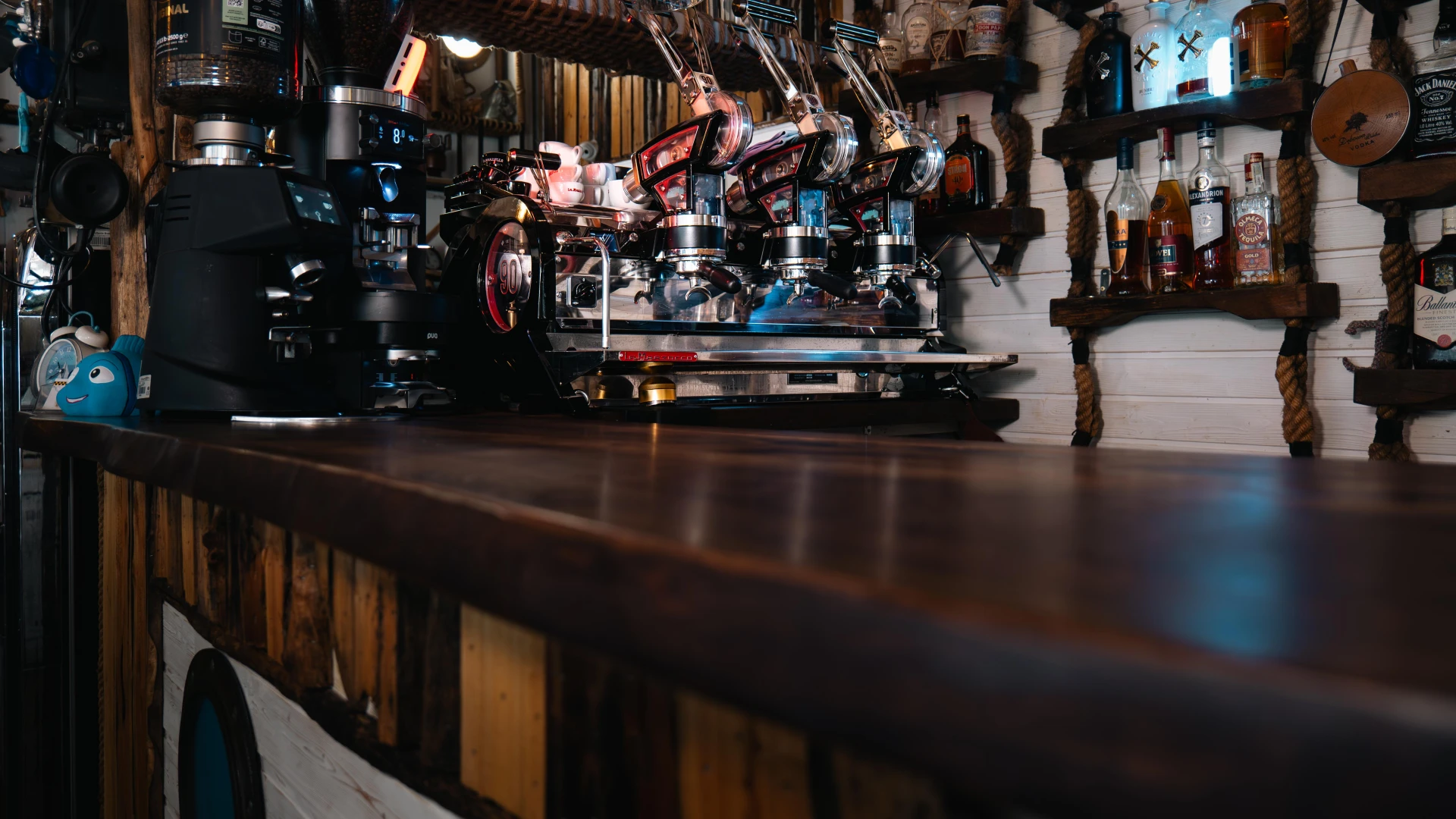
Designed for those who seek perfection in coffee brewing, La Marzocco Leva is a masterpiece of Italian engineering in professional espresso machines. Released as a limited anniversary edition with only 90 units worldwide, this model redefines coffee extraction through an innovative manual lever system, providing unparalleled control over pressure and water flow. Its pressure profiling technology allows baristas to fine-tune every parameter for a flawless espresso shot. Built with high-precision components and premium materials, the Leva ensures durability and outstanding performance. A collector’s item, now part of the Terasa cu Ancore experience, where tradition and innovation blend in a truly authentic atmosphere.
This ship bell played a crucial role in acoustic communication onboard, signaling dangers, watch shifts, and maneuvers. Recovered from a sunken vessel by the NemoProDiving team, it stands as a true symbol of seafaring history. Made of solid bronze, it has withstood the test of time, echoing the maritime past of sailors.
This red navigation light was used for indicating a vessel’s direction at night or in low visibility conditions. Placed on port or starboard, it played a critical role in collision prevention and compliance with international maritime regulations. Built with thick resistant glass and a durable metal casing, this light remains a symbol of safety and orientation at sea.
These heavy diving boots, an English model crafted from leather, bronze, and lead, were essential for professional divers, ensuring stability on the ocean floor. Weighing 10 kg per boot, they were a vital part of historical deep-sea diving gear, used in maritime operations and underwater engineering. A remarkable relic of classic diving history.
This Sony underwater housing is a crucial tool for filming and underwater photography, shielding cameras from water pressure. Used by professional divers and marine explorers, it ensures safety at great depths, capturing breathtaking imagery beneath the waves.